







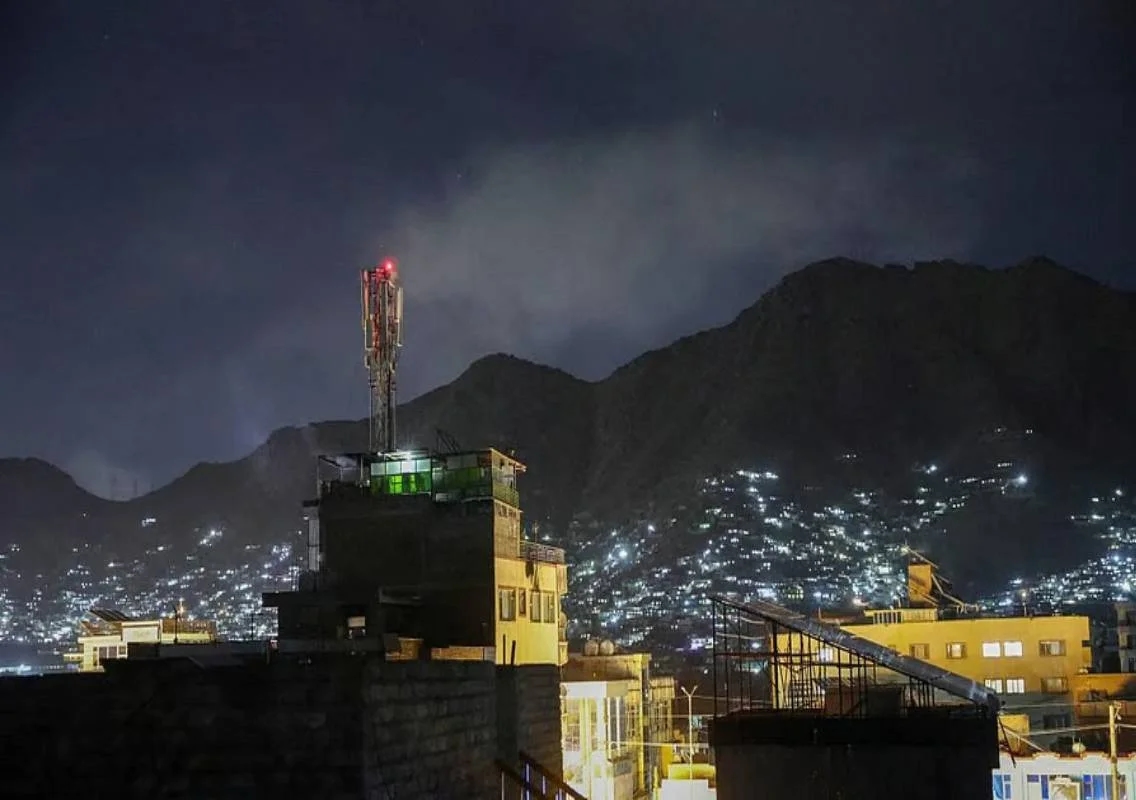


Kabul: At least 400 people were killed and around 250 others injured after a Pakistani air strike reportedly hit a drug rehabilitation hospital in Afghanistan’s capital Kabul, according to a spokesperson of the Afghan Taliban government on Tuesday.
The strike, which triggered a massive explosion and fire, caused widespread destruction at the facility, raising fears that the death toll could increase further as rescue operations continue. However, Pakistan has strongly denied targeting any civilian infrastructure, calling the claims “false” and “misleading”.
Massive destruction and rescue efforts underway
According to Afghan authorities, large sections of the hospital were destroyed in the strike, leaving dozens trapped under debris. Emergency response teams rushed to the scene to extinguish the blaze and search for survivors.
“Large parts of the hospital have been destroyed, and there are fears of heavy casualties,” the Taliban spokesperson said in a statement posted on social media platform X.
He added that the death toll had reached at least 400, with nearly 250 people injured, many of them in critical condition. Rescue workers are continuing efforts to recover bodies and provide urgent medical aid to the injured.
Officials also cautioned that the casualty figures could not yet be independently verified, indicating that the final toll may change as more information emerges.
Pakistan rejects allegations
Pakistan’s Ministry of Information and Broadcasting dismissed Afghanistan’s claims, asserting that the operation targeted only militant infrastructure and not civilian facilities.
In an official statement, Islamabad said the air strikes were aimed at “military installations and terrorist support infrastructure”, including storage sites for technical equipment and ammunition allegedly used by Afghan Taliban and Tehrik-i-Taliban Pakistan (TTP) militants.
“Pakistan’s targeting is precise and carefully undertaken to ensure no collateral damage is inflicted,” the statement said. It further accused Afghan authorities of misreporting facts to gain sympathy and support.
Pakistan maintained that the facilities targeted in Kabul and Nangarhar provinces were being used to plan and execute attacks against Pakistani civilians.
Rising tensions between neighbours
The latest strike marks a significant escalation in tensions between Pakistan and Afghanistan, whose relations have deteriorated sharply in recent months.
Fighting between the two countries intensified last month when Pakistan launched air strikes inside Afghan territory, claiming to have targeted militant strongholds. In response, Afghanistan condemned the attacks as a violation of its sovereignty and accused Pakistan of targeting civilians.
The Afghan Taliban government has repeatedly denied allegations that it provides safe haven to militants operating against Pakistan. It has instead argued that rising militancy is an internal issue for Pakistan.
On the other hand, Islamabad has insisted that cross-border militant activity originating from Afghan soil poses a serious threat to its national security.
Mediation efforts and renewed conflict
The conflict had shown signs of easing in recent weeks, with diplomatic efforts led by countries such as China attempting to de-escalate tensions between the two neighbours.
However, the latest incident suggests a breakdown in those efforts, raising concerns about a potential cycle of retaliatory strikes and further instability in the region.
Security analysts warn that continued escalation could not only worsen humanitarian conditions but also destabilise the broader South Asian region.
Uncertainty over facts and growing concern
With both sides presenting conflicting narratives, the true nature of the target remains unclear. While Afghan authorities insist a civilian rehabilitation facility was hit, Pakistan maintains that only militant infrastructure was targeted.
Independent verification of the incident remains limited, adding to the uncertainty and confusion surrounding the strike.
Meanwhile, the reported scale of casualties has triggered concern among international observers, who are likely to call for restraint and an impartial investigation into the incident.
Conclusion
The deadly air strike in Kabul has once again highlighted the fragile and volatile relationship between Pakistan and Afghanistan. With hundreds reportedly killed and injured, the humanitarian impact is severe, regardless of the intended target.
As both nations continue to exchange accusations, the urgent need for de-escalation and credible investigation becomes increasingly critical to prevent further loss of life and regional instability.