







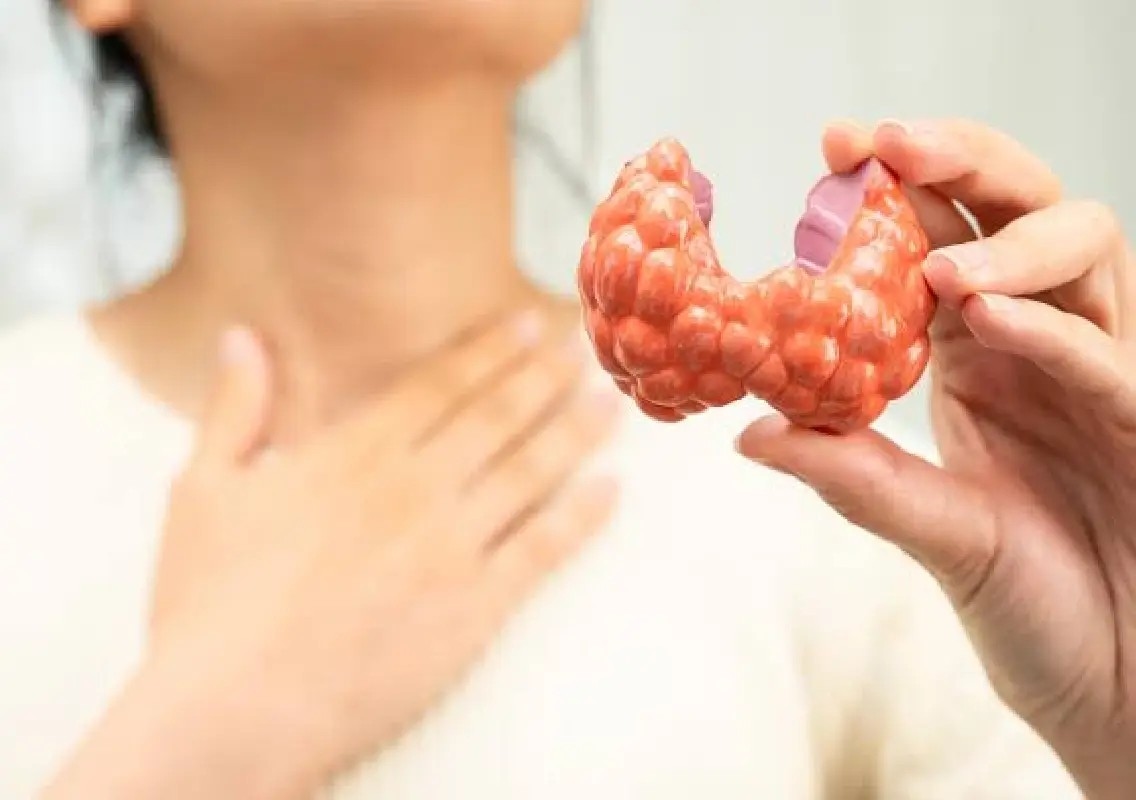


A routine health check-up helped doctors detect a rare endocrine disorder in a 72-year-old woman, eventually leading to the discovery of an unusual parathyroid tumour hidden inside her thyroid gland.
Mrs Renuka (name changed) had been carrying out her daily activities normally when an annual health check-up showed dangerously high calcium and phosphorus levels.
Her daughter consulted a general physician, who advised a blood test for parathyroid hormone (PTH). The test showed elevated PTH levels, following which a Trivexin PET-CT scan revealed a small tumour near the right side of the thyroid.
A rare tumour hidden inside the thyroid
Further evaluation confirmed that Renuka was suffering from primary hyperparathyroidism, an endocrine disorder in which an overactive parathyroid gland produces excessive PTH.
The body normally has four tiny parathyroid glands located behind the thyroid. PTH helps regulate calcium levels in the blood. In Renuka’s case, one gland was producing excessive amounts of the hormone, causing calcium levels to rise by drawing calcium from the bones.
Doctors discovered an even rarer condition — the overactive parathyroid gland had developed completely inside the thyroid. This is known as an intrathyroidal parathyroid adenoma.
Patient wanted to avoid a neck scar
Doctors discussed conventional open surgery, laparoscopic surgery and robotic surgery with the family.
According to Dr Devesh Ballal, Consultant – Surgical Oncology and Robotic Surgery at Manipal Hospital Millers Road, the abnormal gland was embedded within the right thyroid lobe. Removing the adenoma therefore required removal of the affected portion of the thyroid as well.
Traditionally, such surgery involves an incision across the front of the neck. However, Renuka specifically wanted to avoid a visible neck scar.
Taking her preference into consideration, the surgical team planned an advanced minimally invasive endoscopic thyroid procedure using the axillary, or underarm, approach.
Surgery leaves no visible neck scar
Instead of operating through the neck, the surgeons accessed the thyroid through a small incision hidden in the patient’s right underarm.
The team removed the right thyroid lobe along with the abnormal parathyroid gland while carefully identifying and preserving the nerve responsible for vocal cord function.
Her PTH levels fell immediately after surgery, and she was started on calcium supplements.
During recovery, she developed mild pancreatitis following changes in calcium levels. The gastroenterology team treated the condition with medication and pain relief.
Her calcium levels subsequently returned to normal, her symptoms resolved and she did not experience post-operative neck pain.
Back home after two days
Renuka was discharged two days after surgery and has since returned home and resumed her normal activities.
Her daughter said her mother was feeling well by the day after surgery and experienced no significant pain from the laparoscopic incisions.
The case also highlights the importance of routine health screening. Renuka’s daughter said the condition had not produced obvious symptoms and was detected during a routine check-up.
She urged people not to skip annual health examinations, noting that even when a person feels healthy, routine blood tests can sometimes identify problems before they become serious.