


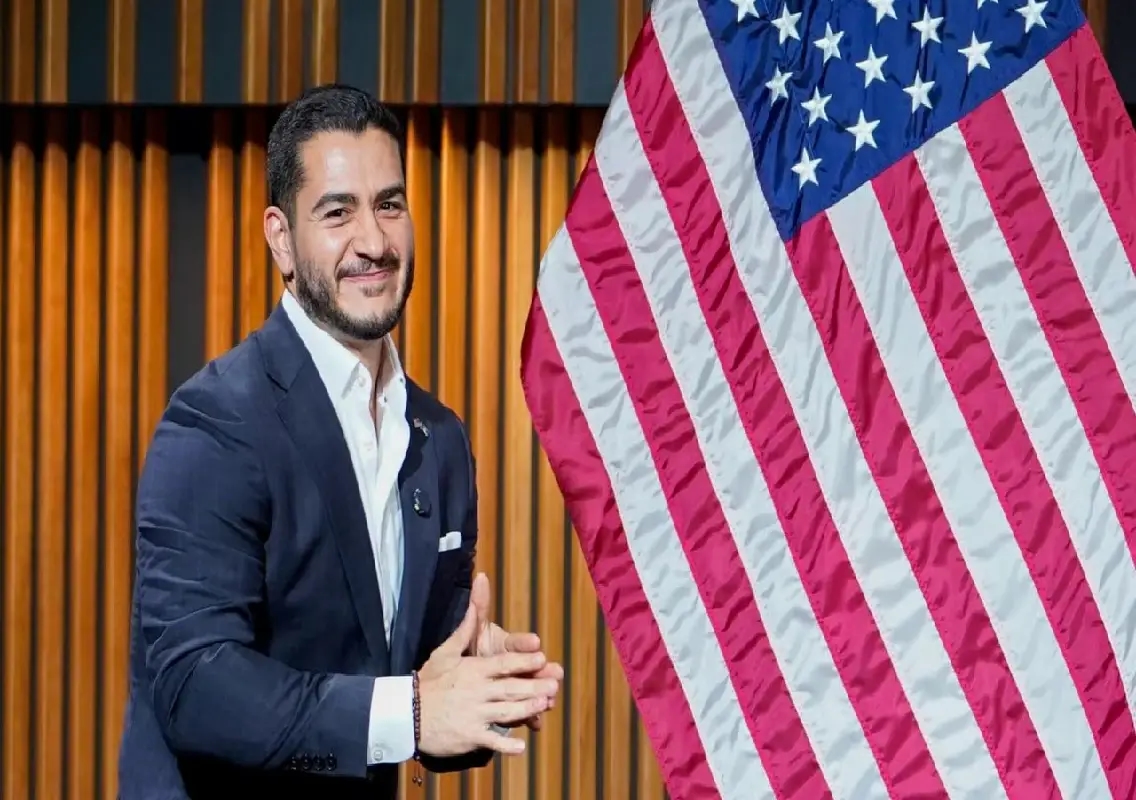


Detroit: Democrat Abdul El-Sayed has made history by defeating Republican Mike Rogers in Michigan’s closely watched US Senate election, becoming the first Muslim American elected to the United States Senate. His victory also helped the Democrats retain the Michigan seat and strengthen their position in the 2026 mid-term elections.
The 42-year-old former public health official defeated Rogers, a former congressman and FBI agent who had received the backing of President Donald Trump and national Republican leaders. The Associated Press called the race for El-Sayed, while media projections confirmed his victory. AP News+2
According to early results reported by NBC News, El-Sayed secured around 52.2% of the vote, with more than 24 lakh votes, against Rogers’ 45.8%, or over 21 lakh votes. The contest was among the most closely watched Senate races in the mid-term elections, with Republicans hoping to capture the seat following the retirement of Democratic Senator Gary Peters. NBC Bay Area+1
El-Sayed’s win marks a significant moment for Muslim representation in American politics and gives the Democratic Party’s progressive wing a prominent victory in a politically competitive state.
El-Sayed thanks Michigan voters
Following his victory, El-Sayed took to X to thank voters and said he was preparing to begin work in the Senate.
“It is my honor and privilege to be headed to the US Senate to serve the great state of Michigan. Michigan, we did what they said couldn’t be done. We won. Together. Now the real work begins,” he wrote.
Born in Michigan to Egyptian immigrant parents, El-Sayed previously served in public health administration, including as director of the Detroit health department and the Wayne County health department. He first came to wider political attention in 2018, when he contested the Democratic primary for governor of Michigan but did not secure the nomination.
His Senate campaign focused on reducing living costs for working families, expanding access to healthcare and limiting the influence of corporate money in politics. His platform included Medicare for All, a proposal for a government-funded universal healthcare system, and measures to address medical debt and economic inequality. Reuters+1
Rogers’ campaign and controversy over El-Sayed’s faith
Rogers, 63, entered the contest with strong support from Trump and prominent Republican figures. During the campaign, he and other Republicans attempted to portray El-Sayed as a radical candidate and questioned his position on national security and Islamic extremism.
Rogers also made repeated references to El-Sayed’s Muslim identity and alleged links to extremist groups. El-Sayed denied the allegations, and reports noted that claims of terrorist or extremist connections were not supported by evidence. Democrats criticised the attacks as Islamophobic. Reuters+2
Trump had also questioned El-Sayed’s loyalty to the United States and made allegations about his supposed extremist associations. El-Sayed rejected the claims and criticised the rhetoric directed at him during the campaign. Axios+1
Rogers also sought to appeal to Jewish voters who had concerns about El-Sayed’s criticism of Israel’s military campaign in Gaza and his opposition to US military aid to Israel. El-Sayed had described Israel’s actions in Gaza as genocide, a position that became a major point of contention during the campaign. Reuters+1
Cost of living and Iran war shape election debate
Despite the focus on El-Sayed’s faith and foreign policy positions, economic concerns remained central to the election campaign. Rising living costs, household finances and affordability were among the issues facing voters in Michigan and across the country.
Rogers struggled to overcome dissatisfaction with the economy and Trump’s approval ratings. He also distanced himself from some of the administration’s positions, including its approach to the war with Iran and trade tensions with Canada, arguing that these issues were adding to costs for businesses and consumers. Reuters+1
Michigan was particularly important for both parties. The Senate seat became vacant after Democratic Senator Gary Peters decided not to seek re-election, giving Republicans an opportunity to try to flip a position Democrats had held for decades.
El-Sayed’s victory ensured that the seat remained with the Democrats. His campaign also demonstrated that a progressive candidate could win a competitive statewide contest despite facing criticism from Republicans and divisions within sections of the Democratic establishment. Axios+1
A milestone for Muslim representation
El-Sayed’s election is a historic development for Muslim representation in the United States Senate. While Muslim Americans have previously served in the House of Representatives, his victory makes him the first Muslim elected to the Senate.
His win comes at a time when questions of religious identity, immigration, foreign policy and political representation have featured prominently in American public debate. The campaign also drew attention to the challenges faced by candidates from minority communities in high-profile national elections.
With El-Sayed heading to Washington, attention will now turn to how he pursues his campaign commitments on healthcare, household expenses and corporate influence. His victory gives the progressive wing of the Democratic Party a new voice in the Senate, while the wider election results have strengthened the party’s position in Congress.