







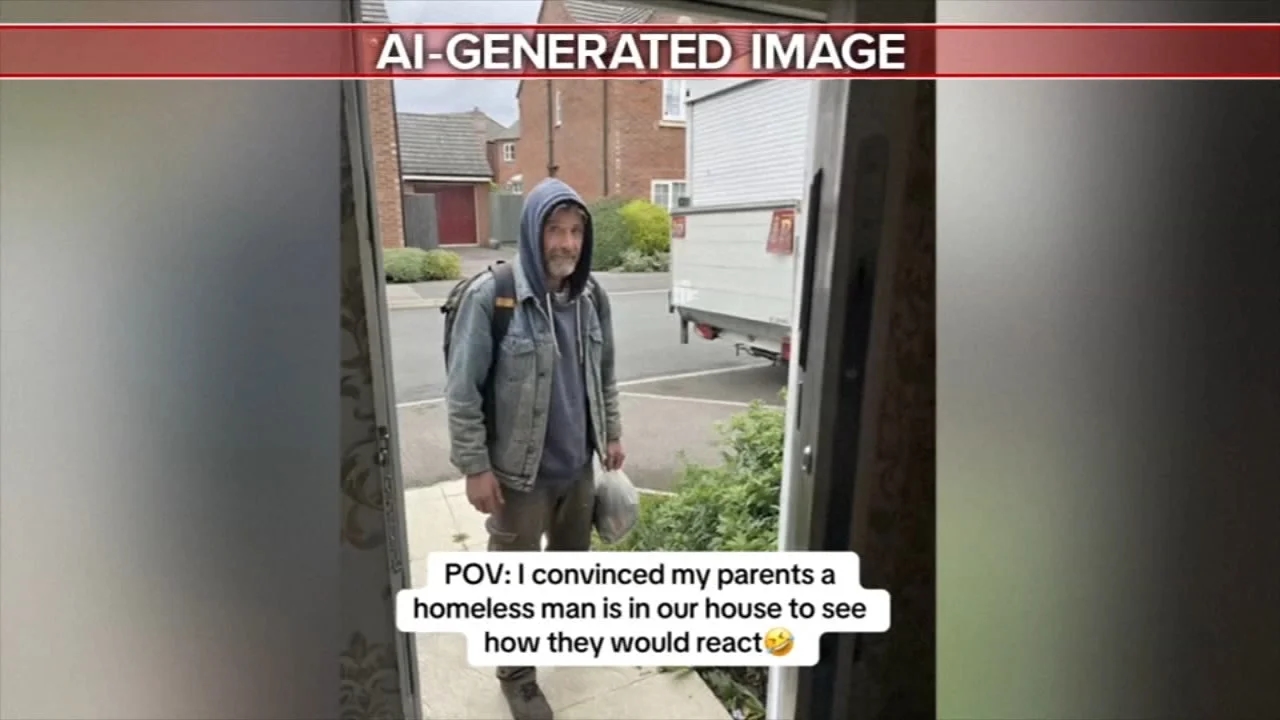


Viral trend draws police action and public outrage
A disturbing TikTok trend known as the “AI Homeless Man Prank” has triggered widespread outrage and police warnings in the United States and other countries, reigniting concerns about the ethical misuse of generative artificial intelligence.
The prank involves using AI image generators to create highly realistic photos of fake homeless people appearing to be inside homes or at doorsteps. These images are then shared with unsuspecting family members or friends, often causing panic and distress.
In one viral case, viewed more than two million times, a creator tricked his mother by sending images of a homeless man sleeping on her bed. The trend soon escalated, with two teenagers in Ohio charged for triggering false home intrusion alerts that led to unnecessary police responses.
Police warn of real-world consequences
Police departments in Michigan, New York and Wisconsin have issued public advisories, warning that such AI-driven pranks waste emergency resources and dehumanise vulnerable communities, particularly homeless individuals.
Authorities stressed that while the images are fake, the fear, confusion and misuse of public services are very real.
A wider problem beyond pranks
Experts say the trend reflects a deeper issue: the democratisation of powerful AI tools without moral guidance. Professors studying educational technology and innovation warn that many young users are trained to create and manipulate digital content, but not to consider its human impact.
This concern extends beyond prank culture. From deepfakes and cyberbullying to sextortion and fraud, juvenile cybercrime is rising, often driven by curiosity or entertainment rather than clear malicious intent.
From truth crisis to moral crisis
While digital literacy programmes have helped young people identify misinformation, experts argue that the current challenge is no longer just about truth — it is about responsibility. Synthetic media can make false content appear credible, eroding trust and normalising harm.
Recent incidents involving AI-generated videos of public figures further underline how quickly such tools can be weaponised, even when initially used for demonstration or humour.
Call for moral education in the AI age
Academics and policymakers stress that regulation alone is insufficient. While laws can define what is illegal, they cannot teach why harm should be avoided.
Experts are calling for education systems to focus on moral responsibility, empathy and reflection — encouraging users to ask who is affected by their creations and what emotional or social damage may result.
As AI-generated content becomes more common, many believe that thinking about human consequences may be the most critical form of intelligence in the digital age.