







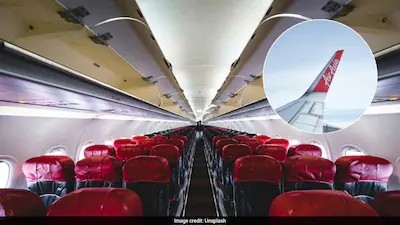


Kuala Lumpur: A recent AirAsia flight from Malaysia to China reportedly turned into an uncomfortable ordeal for passengers after a female traveller allegedly defecated in her seat despite being only a few steps away from the aircraft’s lavatory.
The incident reportedly occurred on August 18 on a flight that departed Malaysia at around 10.30 pm local time. Fellow passengers reportedly became aware of the situation after a strong and unusual odour began spreading through the aircraft cabin.
As the smell became increasingly difficult to tolerate, passengers alerted members of the cabin crew, who investigated the source of the odour. The incident subsequently caused considerable discomfort among travellers and became the subject of reports in international media.
According to reports by the New York Post and Asia One, the passenger was seated close to the aircraft’s lavatory. The circumstances surrounding why she allegedly chose to relieve herself at her seat rather than use the toilet have not been publicly established.
The episode has since attracted attention online, particularly because of the reported proximity of the passenger’s seat to the aircraft’s washroom.
Strong odour alerted passengers
The unusual incident reportedly came to light not because other passengers immediately witnessed what had happened, but because of the smell that began circulating through the cabin.
Passengers reportedly noticed an increasingly strong odour during the flight. As the smell became difficult to ignore, some travellers informed the cabin crew.
Air travel places passengers in a confined environment where unpleasant smells can quickly affect people seated nearby. Aircraft cabins also have tightly controlled ventilation systems, meaning that an unusual odour can become noticeable across a larger section of the cabin.
The reports suggest that the crew eventually investigated after receiving complaints from passengers.
The incident reportedly caused distress and discomfort among those travelling on the flight, turning what would ordinarily have been a routine international journey into an unusual and unpleasant experience.
Passenger was reportedly near the lavatory
One of the details that has attracted particular attention is the reported location of the passenger.
According to the reports, she was allegedly seated only a few steps away from the aircraft’s lavatory.
Airliners provide toilets specifically for passengers who need to use the facilities during a flight, particularly on international journeys that can last several hours.
The reported circumstances have therefore prompted questions about why the passenger did not use the lavatory.
However, the reasons behind the incident have not been established publicly. There is also no confirmed information about whether the passenger experienced a medical emergency, became unwell or faced another circumstance that may have influenced her actions.
It is important, therefore, not to speculate about her motives or condition beyond what has been reported.
Cabin crew alerted after complaints
Once passengers reported the unusual smell, the flight crew reportedly became involved.
Cabin crews are trained to respond to a range of unexpected situations during flights, from medical emergencies and passenger disturbances to problems involving aircraft facilities.
An incident involving bodily waste presents additional hygiene and cleaning concerns.
The crew would have had to manage the situation while continuing to maintain the safety and comfort of other passengers.
The reports available about the incident do not provide detailed information about the precise steps taken by the crew or whether the aircraft required any additional cleaning measures after landing.
AirAsia has also not been quoted in the reports provided with a detailed public account of the incident.
Why such incidents are difficult on aircraft
Unusual passenger incidents can be particularly disruptive during air travel because aircraft cabins offer limited space and passengers remain seated in close proximity to one another.
Unlike a train or bus, an aircraft cannot simply stop at the next station if a passenger becomes disruptive or if a significant hygiene issue develops.
Cabin crew must manage the situation while the aircraft continues towards its destination.
In addition, passengers may be unable to move freely between seats because of turbulence, safety instructions or other operational considerations.
A strong odour can also affect passengers who are not directly involved in the incident.
For travellers, such an experience can turn an otherwise ordinary flight into an unpleasant memory.
Passenger behaviour can affect an entire cabin
Air travel depends to a large extent on passengers following basic rules of hygiene and consideration for others.
Airline lavatories are designed to accommodate passengers’ needs during flights and are regularly serviced and cleaned.
When a passenger allegedly uses a seat or another inappropriate location instead, the consequences can extend beyond the individual.
Other passengers may experience discomfort, particularly if the incident creates a strong smell or requires crew members to intervene.
Such incidents can also increase the workload for cabin crew, who must deal with unexpected situations while continuing their regular safety and service responsibilities.
International flights require careful passenger management
Flights between Malaysia and China are part of a busy international travel network connecting major cities across Asia.
Passengers on such journeys can include families, tourists, business travellers and people travelling for work or education.
With flights carrying large numbers of people in a confined space, airlines have procedures for handling a wide range of situations.
Passenger conduct is an important part of ensuring that everyone can complete a journey safely and comfortably.
Airlines can also face challenges when passengers become unwell or behave unpredictably during flights.
In such cases, cabin crew members must assess the circumstances and determine the appropriate response without compromising aviation safety.
The incident draws attention online
The reported incident has attracted attention because of its unusual nature.
Stories involving unexpected behaviour on aircraft frequently generate strong reactions because passengers have little ability to escape an uncomfortable situation once a flight is airborne.
Social media and online news platforms can also cause such incidents to spread rapidly, particularly when travellers share their experiences.
However, individual accounts may not always provide a complete picture of what occurred.
In this case, the reports attributed the information to passengers and international media outlets, while details about the passenger’s identity, circumstances and any action taken after the flight remain limited.
Privacy and dignity remain important
Although the incident has become a subject of public discussion, the passenger’s identity has not been established in the reports provided.
There is also no confirmed information about her health or personal circumstances.
That makes it important to distinguish between the reported incident and speculation about why it occurred.
Unexpected bodily incidents can sometimes be connected to medical or personal circumstances that are not immediately apparent to other passengers.
While the unusual nature of the episode has attracted attention, responsible reporting should avoid identifying or humiliating the individual without a legitimate public-interest reason.
Airlines face many unusual in-flight situations
Airline crews around the world routinely deal with situations that passengers may never anticipate.
Medical emergencies, anxiety attacks, passenger disputes, unruly behaviour and problems involving aircraft facilities can all occur during flights.
The cabin crew’s primary responsibility in such circumstances is to maintain safety and manage the situation as effectively as possible.
An incident involving hygiene can be particularly challenging because of the close quarters inside an aircraft.
Cleaning and sanitation procedures are therefore an important part of airline operations, particularly when an aircraft is preparing for its next flight.
What happened after the flight remains unclear
The available reports do not provide comprehensive information about what happened to the passenger after the aircraft reached its destination.
It is also unclear whether any formal complaint was filed, whether the airline took disciplinary action or whether the passenger received any medical assistance.
Without an official statement providing those details, it would be inappropriate to assume what action was taken.
The incident is primarily being reported because of the unusual circumstances and the discomfort reportedly experienced by fellow travellers.
An unpleasant reminder of air travel etiquette
The reported AirAsia incident has once again highlighted how one passenger’s actions can affect an entire aircraft cabin.
The flight, which departed Malaysia at around 10.30 pm on August 18, reportedly became uncomfortable after passengers noticed a strong odour and alerted the crew.
The subsequent reports alleged that a female passenger had defecated in her seat despite reportedly being close to the aircraft’s lavatory.
While the incident is unusual, the circumstances surrounding it remain unclear. There is no publicly established explanation for why the passenger allegedly behaved in this manner, and details of any action taken by the airline have not been fully reported.
For passengers, the episode serves as a reminder that basic hygiene and consideration for fellow travellers are particularly important in the confined environment of an aircraft. At the same time, any unusual passenger incident should be approached with caution and sensitivity until all the facts are established.