









Westwego : Wilton Lemieux once believed strongly in the American Dream — the idea that hard work, sacrifice and determination could help a person build a secure future for their family. But after years of military service, personal loss and growing financial pressure, the 34-year-old Army veteran says that faith has faded.
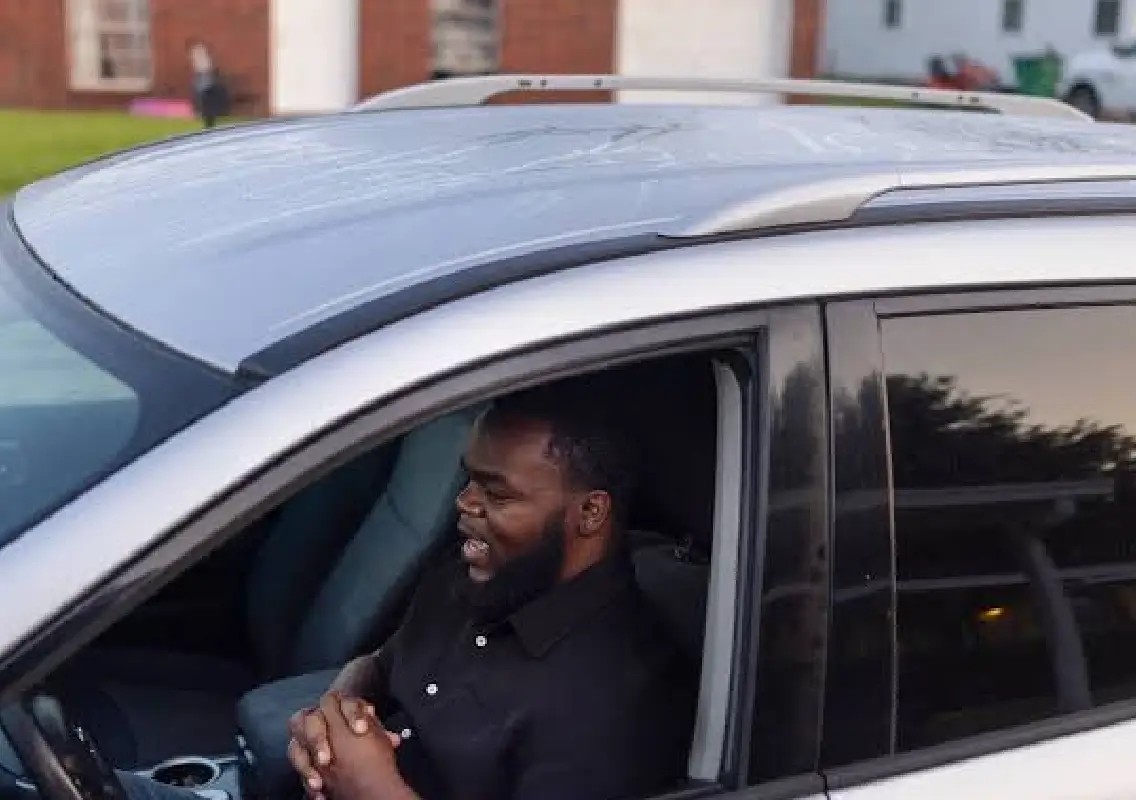
Instead, Lemieux began speaking about his frustrations from the front seat of an ageing Nissan Pathfinder and posting the videos on TikTok. What began as a personal outlet quickly developed into a large online following, with thousands of Americans responding to his concerns about the rising cost of living, work, family security and the future.
His story, reported by The Washington Post, reflects a wider sense of economic anxiety among people who feel that working hard is no longer enough to guarantee stability.
From military service to financial strain
Lemieux grew up in Westwego, Louisiana, in a family that had experienced the American Dream across generations. His grandparents had moved from poverty into the middle class, while his mother and stepfather worked for decades and eventually transformed an abandoned house into a family home.
For Lemieux, that example shaped his understanding of what determination could achieve.
He joined the US Army shortly after turning 17 and later deployed to Afghanistan, where he worked repairing bridges during Operation Enduring Freedom. Military service gave him a sense of purpose, but it also came with profound personal costs.
While he was deployed, his wife gave birth to their daughter Whitlynn. Four months later, he was informed that the baby had died in her sleep.
The loss deeply affected him. After returning home, Lemieux sought psychiatric treatment and was eventually diagnosed by the Department of Veterans Affairs with permanent disability related to post-traumatic stress disorder.
His marriage later ended, and his daughters remained with him after his former wife moved away. He eventually left the military and tried to rebuild his career, including considering teaching and enrolling in an online coding course for veterans.
But concentration problems made studying difficult, and he eventually abandoned the course.
A monthly disability payment no longer stretched far
Lemieux’s financial circumstances became increasingly difficult.
According to The Washington Post, he was receiving about $2,500 a month in disability payments. He carefully tracked his household expenses but found that the money was buying less and less.
Rent for his two-bedroom apartment, car expenses, insurance and phone costs consumed a significant part of the monthly income. Food prices added another burden.
A routine trip to the supermarket became a reminder of how quickly everyday expenses were rising. Lemieux began questioning whether the promise he had grown up believing in was still available to families like his.
His concerns were not limited to his own situation.
He watched his mother and stepfather, who had spent decades working, worry about retirement. He also saw neighbours struggling with mortgages, debt and the cost of basic necessities.
One neighbour, a school bus driver earning $22 an hour, was still considering a second job while carrying significant mortgage and credit-card debt.
For Lemieux, such experiences challenged the belief that hard work alone could provide security.
One angry video changed everything
His first major TikTok video was recorded in his car.
Lemieux questioned why, in his view, politicians and other powerful figures appeared disconnected from the financial struggles faced by ordinary Americans. He criticised the idea of the American Dream and described it as an illusion.
He expected criticism, particularly from former military colleagues.
Instead, the video received an extraordinary response.
The 36-second recording attracted about 2.8 million views and 25,000 comments, with the overwhelming majority of responses supporting his message. His follower count rose dramatically, reaching more than 30,000 within hours.
The response surprised Lemieux.
He had not initially set out to become an influencer. His intention was simply to express something he had been unable to stop thinking about.
But he soon realised that his frustrations were being shared by thousands of strangers.
‘I make more and I’m more broke’
Among those who connected with his videos was Shani Rasor, a 30-year-old woman in Michigan.
Rasor worked for a personal loan company and earned $50,000 a year. Yet she said she felt poorer than ever, sometimes sleeping on a couch so her young daughter could use the family’s only bed.
She responded to one of Lemieux’s videos by writing that she made more money than she ever had but was also more broke than she had ever been.
Her comment resonated with other viewers.
Thousands of comments on Lemieux’s account described similar experiences: people living from one pay cheque to another, older workers unable to retire, families struggling to afford food and workers who felt that years of effort had produced little improvement in their circumstances.
For some followers, his account became more than a collection of political or economic complaints. It became a place where people felt their frustrations were understood.
The danger of turning anger into a business
Lemieux also became aware of the complicated relationship between social media attention and personal conviction.
He had previously created another account that reposted news stories. Some of those videos became popular, and he made about $2,000 before the account was removed.
The experience taught him that viral content could bring money but could also encourage creators to produce whatever attracted the greatest number of views.
With his new account, @DadSacrificeCode, he initially chose not to monetise his videos. He wanted the account to reflect his genuine feelings rather than become another source of income.
Yet the possibility of making money remained difficult to ignore.
With his savings shrinking, Lemieux recognised that social media might offer an unusual opportunity. His account had already accumulated millions of views, and the platform’s rewards programme could potentially turn that attention into earnings.
At the same time, he worried about becoming dependent on the numbers.
A different message receives less attention
Eventually, Lemieux tried something different.
Instead of another angry denunciation, he created a more hopeful message about America. Using an AI-generated voice and music, he presented a vision of America as ordinary people supporting one another rather than simply a political or economic system.
The response was dramatically smaller.
One of his earlier videos had attracted millions of views, while the more positive video received only about 1,199 views. By then, his account had passed 50,000 followers.
The contrast appeared to reinforce one of his biggest concerns about social media: anger can attract attention more easily than optimism.
For Lemieux, however, the experiment also revealed something important. His criticism was not necessarily rooted in hatred of his country.
He was angry because he believed ordinary Americans were struggling to maintain the lives they had been promised were possible.
Protecting his daughters’ hopes
Behind the online debate remains a father concerned about his two daughters.
Lemieux wants them to dream. One hopes to become a doctor, while the other wants to become a veterinarian. Both are described as high-achieving students.
He worries, however, about the world they will inherit, particularly as technology and artificial intelligence reshape employment.
His own experiences have made him cautious about promising that determination alone will guarantee success. Yet he also does not want his frustrations to destroy his daughters’ ambitions.
That tension lies at the centre of his story.
He may have lost faith in the traditional version of the American Dream, but he has not given up on the idea of creating a better future for his children.
A personal story reflecting a wider anxiety
Lemieux’s growing online audience suggests that his concerns extend beyond one veteran or one family.
Rising household expenses, debt, stagnant financial security and uncertainty about future employment have become powerful themes in public conversations across the United States.
His experience also raises questions about how social media has changed the way economic frustration is expressed. A person who once might have discussed financial worries privately with family or neighbours can now speak directly to millions.
In Lemieux’s case, the audience came unexpectedly.
He began by questioning the American Dream. In the process, he discovered thousands of people who felt that they had been working towards the same promise but were struggling to see its rewards.
His journey remains unfinished. He still worries about money, his daughters’ future and whether social media can become something sustainable without changing the message he wants to deliver.
For now, the Army veteran’s story offers a striking portrait of a changing American reality: a man who once believed that sacrifice and perseverance were enough is now questioning that promise — while thousands of others tell him they are asking the same questions.