







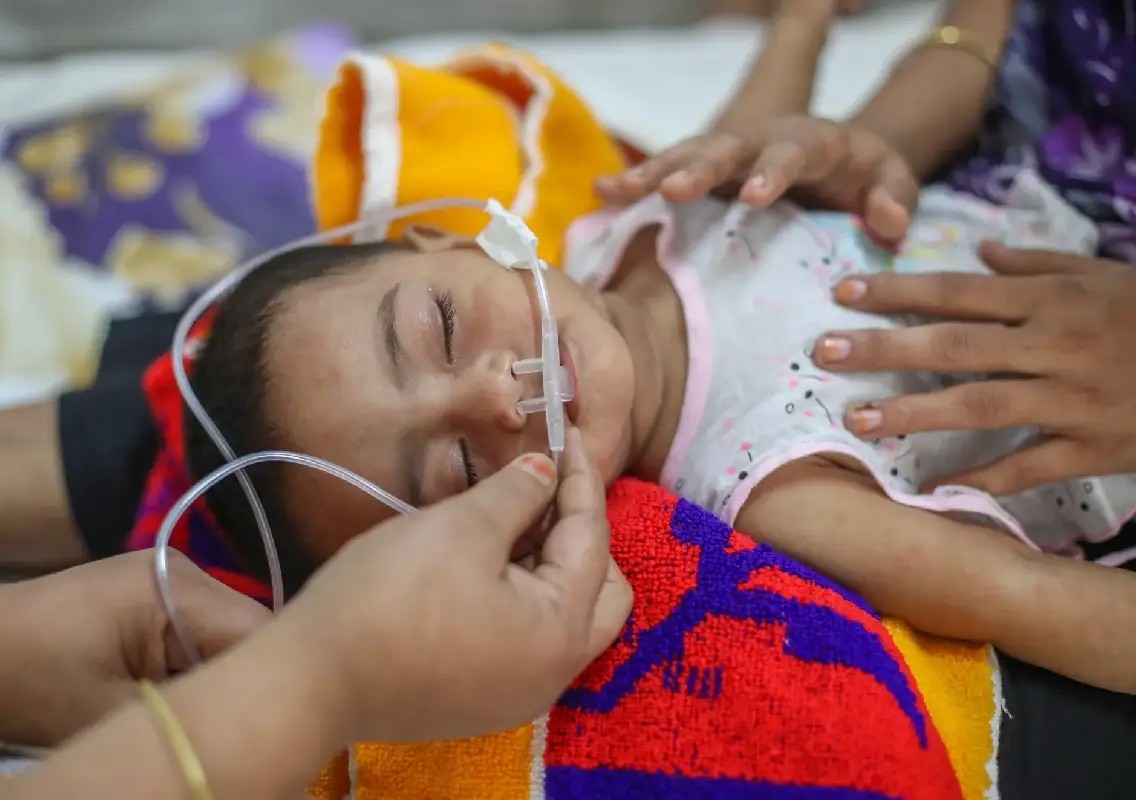


Bangladesh is facing its deadliest measles outbreak in decades, with more than 500 children losing their lives as hospitals struggle to manage the growing health crisis.
According to health department figures, at least 512 children have died since March 15, including 13 deaths reported in the past 24 hours alone.
Hospitals overwhelmed by rising cases
Medical facilities in the capital Dhaka have reportedly been flooded with critically ill children, forcing hospitals to create special measles wards despite shortages of intensive care beds.
Doctors said many children reached hospitals with severe respiratory distress and infections affecting the eyes, throat and lungs.
Measles is a highly contagious viral disease that spreads through coughs and sneezes and can become life-threatening, especially among unvaccinated or malnourished children.
Vaccination drive reaches millions
Bangladesh has launched a large-scale immunisation campaign to control the outbreak.
According to UNICEF, nearly 18 million children have already been vaccinated as part of the emergency drive.
However, health officials warned that it could take months before the full effects of the vaccination campaign become visible.
Most infections during the current outbreak have been reported among children aged between six months and five years.
Immunisation gaps blamed for outbreak
UNICEF stated that disruptions during and after the 2024 student-led protests in Bangladesh weakened vaccination coverage and left many children vulnerable to preventable diseases.
Health experts have also warned that falling immunisation rates could increase other public health risks, including antimicrobial resistance.
Although authorities recently claimed that the outbreak was beginning to come under control in some areas, health officials continue monitoring the situation closely.
The outbreak has once again highlighted the importance of timely childhood vaccination programmes and stronger healthcare systems.