







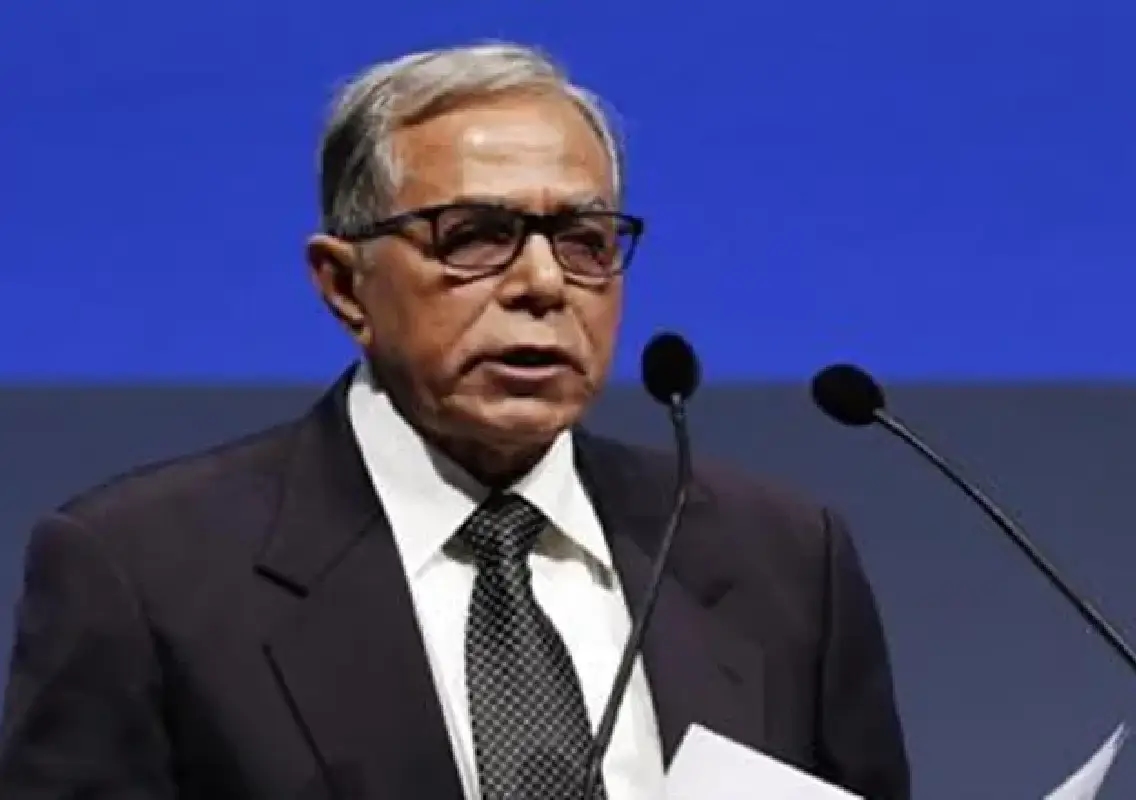


New Delhi, Aug 6 – Bangladesh President Mohammed Shahabuddin has announced that the current Parliament will be dissolved as soon as possible, in accordance with the Constitution. This significant declaration was made during his address to the nation from Bangabhaban, the official presidential residence, on Monday.
In a notable development, a meeting was held later that night at Bangabhaban. This meeting brought together the Chiefs of the three services, political leaders, civil society representatives, and leaders from the quota movement, including Army Chief General Waqar-uz-Zaman. The purpose of this high-profile gathering was to discuss the formation of an interim government to restore stability in the country, which has been experiencing severe unrest.
President Shahabuddin presided over the meeting where a condolence resolution was passed to honour those who lost their lives in recent protests. The meeting expressed deep sorrow for the deceased and sought divine forgiveness and peace for their souls.
A significant decision made at the meeting was the unanimous agreement to release Khaleda Zia, the Chairperson of the Bangladesh Nationalist Party (BNP). This move is expected to have considerable political ramifications. Additionally, the meeting decided to free all prisoners detained during the recent unrest, addressing one of the major demands from various protest groups.
Another important resolution from the meeting was a commitment to maintaining communal harmony. The attendees agreed that efforts should be made to prevent any deterioration in communal relations, which have been a concern amidst the ongoing political turmoil.
The meeting included key figures such as BNP’s Mirza Fakhrul Islam Alamgir and Mirza Abbas; Jatiya Party’s GM Quader, Mojibul Haque Chunnu, and Anisul Islam; Mahmudur Rahman Manna of Nagarik Oikya; Hefazat-e-Islam’s Mamunul Haque, Mufti Monir Kasemi, and Mahabubur Rahman; Jamaat-e-Islami’s Dr Shafiqur Rahman and Sheikh Md Masood; Shamim Haider of Zaker Party; Zonayed Saki of the Mass Solidarity Movement; Dhaka University teacher Asif Nazrul; and Arif Talukder, Omar Faruq, and Mobashwera Karim Mimi, coordinators of the Anti-Discrimination Student Movement.
General Waqar-uz-Zaman, who took over as the Bangladesh Army Chief less than two months ago, played a pivotal role in announcing the resignation of former Prime Minister Sheikh Hasina and outlining a plan to restore normalcy. The situation in Bangladesh has been marked by violent protests, and the interim government’s formation is seen as a critical step in stabilizing the nation of 170 million people.