







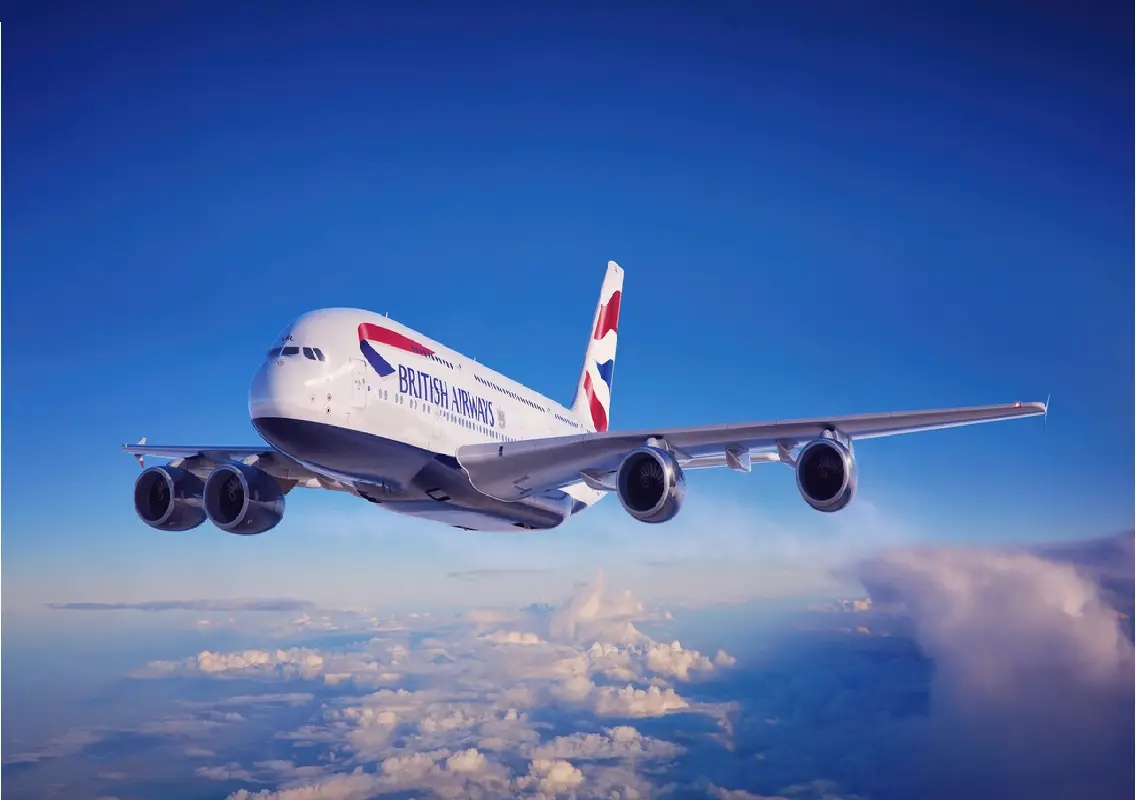


London: A British Airways flight from London Heathrow to Chicago O’Hare reportedly declared an emergency while flying over Ireland on Monday after making a sudden descent of around 28,000 feet, according to flight-tracking data cited by UK media.
British Airways Flight BA295, operated by a Boeing 777-200ER, was travelling from London to the United States when the aircraft reportedly transmitted the internationally recognised 7700 emergency transponder code.
The aircraft, registered as G-VIIA, had departed from Terminal 5 at London Heathrow at around 11.50 am local time. The scheduled flight to Chicago was expected to take approximately eight hours and 40 minutes.
Aircraft makes rapid descent over Ireland
According to flight-tracking data, BA295 had climbed to an altitude of approximately 37,000 feet during its journey before making a rapid descent to around 9,000 feet while flying over Ireland.
The reported change in altitude of roughly 28,000 feet occurred approximately an hour after the aircraft began its transatlantic journey.
The reason for the sudden descent and emergency declaration was not immediately known.
Flight-tracking information cited by UK media subsequently indicated that the aircraft appeared to turn back towards London Heathrow, suggesting that the scheduled journey to Chicago had been abandoned.
BA295 reportedly turns back to London
The apparent return towards Heathrow came after the aircraft had already crossed into Irish airspace.
A diversion back to the departure airport can allow airline crews to access maintenance facilities and other operational support if an aircraft experiences a problem during an international flight. However, the precise circumstances surrounding BA295’s reported turnback were not immediately available.
British Airways had not immediately provided details about the reported incident or confirmed the reason for the diversion.
There was also no immediate information about whether the issue involved the aircraft, a passenger or crew member, weather conditions or another operational matter.
What does the 7700 emergency code mean?
The 7700 transponder code is an internationally recognised signal used by aircraft crews to alert air traffic controllers that the aircraft is experiencing a general emergency.
When pilots select 7700 on an aircraft’s transponder, the emergency code becomes visible to air traffic controllers on their radar systems. This allows controllers to identify the aircraft and provide priority handling or other assistance as required.
Importantly, 7700 does not indicate the specific nature of an emergency.
The code can be used in a range of circumstances, including a technical problem, medical emergency, severe weather situation or another issue that requires immediate attention from air traffic control.
Controllers would normally communicate with the aircraft crew to establish the nature of the problem and determine what assistance is required.
Investigation expected to establish cause
The reported incident involving BA295 was still developing, and the reason for the aircraft’s sudden descent remained unclear based on the information available.
Flight-tracking data can show an aircraft’s position, altitude, speed and transponder information, but it does not by itself establish why a crew decided to descend or declare an emergency.
Further details from British Airways, air traffic authorities or other aviation officials would be required to establish the circumstances surrounding the incident.
The Boeing 777-200ER is a long-haul aircraft widely used for international routes. BA295 is a scheduled British Airways service connecting London Heathrow with Chicago O’Hare, one of the airline’s transatlantic routes.
The reported emergency and apparent diversion occurred roughly an hour into Monday’s flight, with the aircraft initially climbing to its planned cruising altitude before the substantial descent over Ireland.