







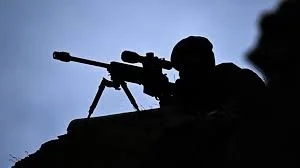


A British journalist has alleged that while travelling through conflict zones over the past two decades, he was offered the opportunity to shoot civilians, describing the act not as “dark tourism” but as “murder”. The claim has resurfaced global debate on so-called “sniper tourism” or “human safaris”, where outsiders are alleged to have targeted civilians for sport in active war zones.
Andrew Drury, a Surrey-based journalist and documentary-maker, told British media that he spent years travelling through regions such as Somalia, Afghanistan, Chechnya and Iraq. While reporting from the frontline in Kirkuk, Iraq, he claims he was directly offered the chance to fire a sniper rifle at civilians.
“I wouldn’t even look into the scope,” Drury said, adding that the proposal was not framed as combat but as participation in violence for its own sake. He rejected any attempt to describe such acts as adventure or curiosity-driven travel, stating bluntly: “It’s not dark tourism. It’s murder.”
Blurred lines between travel and conflict
Drury also spoke of witnessing foreign nationals joining Kurdish Peshmerga forces during the fight against the Islamic State, raising complex questions about where tourism, volunteering and combat intersect. He said his own safety was repeatedly threatened, claiming he had been shot at and warned that he had a “price tag” on his head during his travels.
While Drury’s claims remain personal testimony, they have gained renewed attention alongside a separate investigation underway in Italy.
Italian probe into Sarajevo ‘sniper tourism’
Italian prosecutors in Milan are investigating allegations that wealthy Westerners paid to shoot civilians during the siege of Sarajevo in the 1990s. The inquiry follows a complaint by journalist Ezio Gavazzeni, who alleges that foreign nationals, including Italians, were taken by Bosnian Serb militias to positions overlooking Sarajevo and allowed to fire on civilians.
According to Italian media reports, alleged fees varied depending on who was targeted, with some trips costing tens of thousands of pounds. Prosecutors are examining whether those involved could face charges of voluntary murder, though no formal charges have yet been filed.
A dark chapter of the Bosnian war
The allegations relate to the siege of Sarajevo, which lasted from 1992 to 1996 during the Bosnian war. More than 11,000 people were killed in the city, including over 1,600 children, as civilians were routinely targeted along what became known as “Sniper Alley”.
Historians and journalists have urged caution, noting the difficulty of verifying events from more than three decades ago. Italian authorities have confirmed that the investigation remains at a preliminary stage.