









A recent midair incident has drawn attention — not for chaos, but for composure.
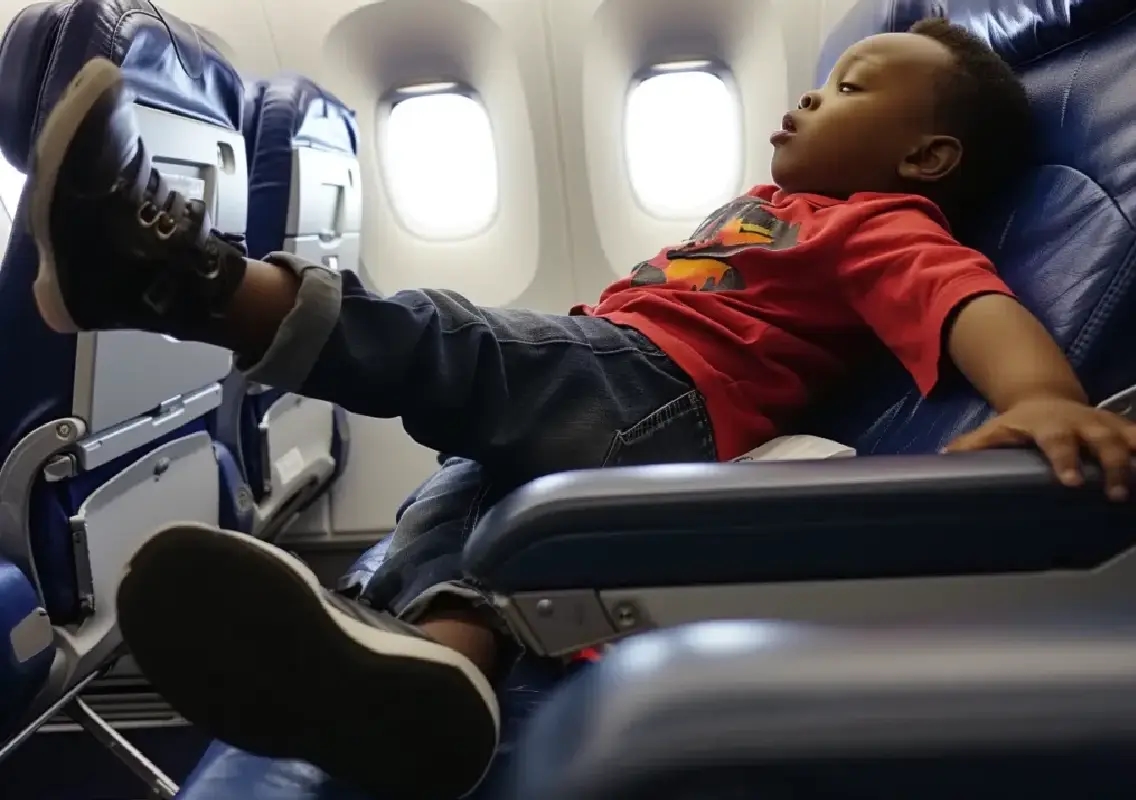
During a business class flight from London to Istanbul, 48-year-old Courtney Seard found herself repeatedly jolted by a young boy kicking her seat from behind. While his parents remained focused on their phones, the disturbance continued.
Rather than call a flight attendant or react angrily, Seard chose a direct approach.
A firm but respectful conversation
Seard, who works as a peak performance coach specialising in communication and conflict resolution, says she waited a couple of minutes to see if the parents would intervene. When they did not, she turned around and addressed the boy’s father — not the child.
“I don’t believe in addressing the child. I find that passive aggressive and rude,” she explained.
Her message was calm but unequivocal: the child would need to stop kicking or switch seats. She says she framed it as a clear boundary rather than a complaint.
Instead of confrontation, the father reportedly responded with immediate action. He apologised and switched seats with his son. The disruption ended without raised voices or crew involvement.
Why calm clarity works
Conflicts on flights often escalate quickly. Constrained spaces, travel fatigue and public scrutiny can amplify minor irritations into viral moments.
Communication experts note that early, direct engagement can prevent tensions from spiralling. By addressing the issue promptly and respectfully, Seard avoided public embarrassment for the family and discomfort for herself.
Her takeaway is simple: difficult conversations do not have to be dramatic. When handled with composure and clarity, they can resolve everyday conflicts swiftly — even at 30,000 feet.