







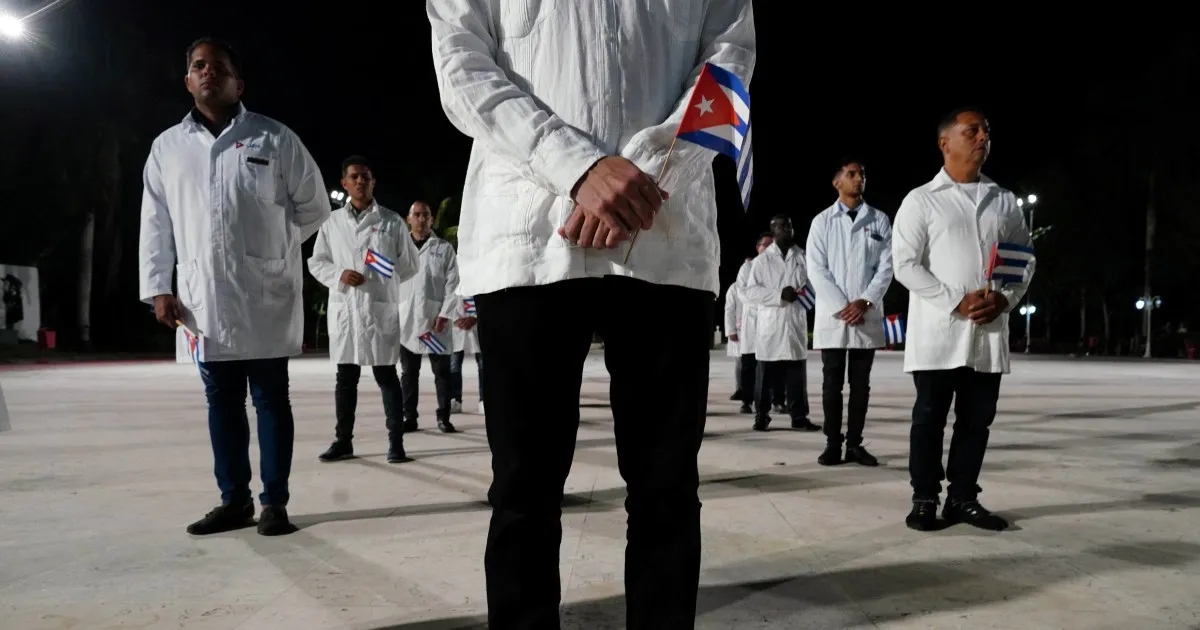


Caribbean leaders are pushing back strongly against the United States’ warning to revoke visas for those collaborating with Cuba’s medical teams. The US alleges these missions involve “forced labour” and bolster Cuba’s regime, though no solid proof has been offered. Cuban doctors and healthcare workers form the backbone of medical services across the Caribbean, especially in nations facing healthcare shortages.
Barbados Prime Minister Mia Mottley blasted the US stance, calling it “unjust and baseless”, crediting Cuban doctors for saving lives during the pandemic. Trinidad and Tobago’s Keith Rowley echoed her, warning that US interference in local healthcare is unacceptable. Leaders from Saint Vincent, Jamaica, the Bahamas, and Guyana also stood firm, stating they’d rather lose US visas than risk public health.
The US move, initiated under Trump and expanded during Biden’s term, targets not just Cuban officials but any foreign governments engaging Cuban medical staff. Despite bipartisan support in the US for these sanctions, Caribbean countries argue that Cuban missions are lifelines, particularly in underserved and rural regions.
Cuba sends over 24,000 doctors globally, with key deployments in Venezuela, South Africa, and during emergencies like Italy’s COVID-19 crisis. For Caribbean nations, losing Cuban healthcare workers would cripple their systems, as replacing them locally is slow and costly.
As diplomatic tensions rise, Caribbean leaders remain united in defending Cuban aid, prioritizing public welfare over foreign political pressure.
Anguilla’s Economic Transformation: From Caribbean Island to AI Powerhouse
Bengaluru’s Ananya Prasad Makes History with Solo Atlantic Row
#CubanDoctors #CaribbeanHealthcare #USVisaThreat #MedicalDiplomacy