







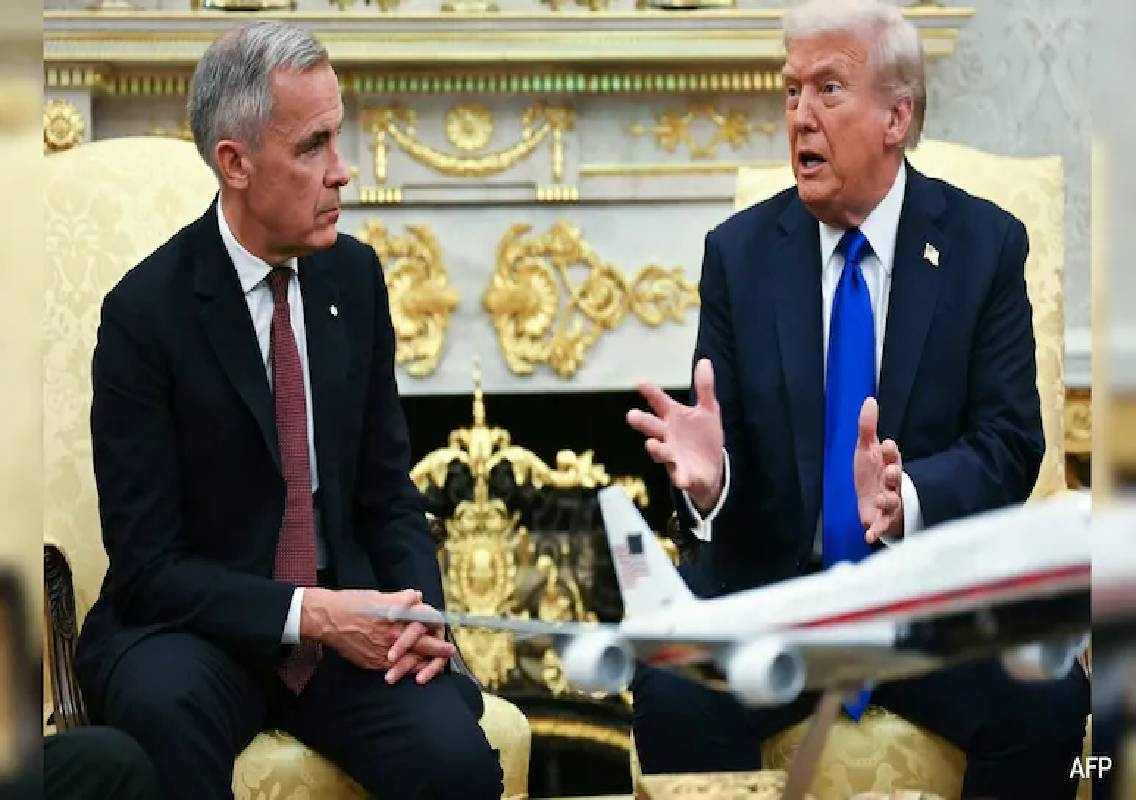


Ottawa: Canadian Prime Minister Mark Carney has said his government will not respond prematurely to US President Donald Trump’s threat of imposing a 50 per cent tariff on Canadian imports, stressing that Ottawa will wait for concrete action before deciding its next steps.
Speaking after Trump’s latest warning, Carney said Canada would continue to defend its national interests while avoiding speculation over measures that have not yet been implemented. His remarks come amid escalating trade tensions between the two neighbouring countries.
Carney urges calm amid tariff threat
Responding to questions about Trump’s proposal, Carney said Canada had no intention of reacting before the United States formally announced any new trade measures.
“We don’t need to respond in advance,” Carney said, indicating that the Canadian government would assess the situation only after the details of any tariff decision become clear.
He added that Ottawa remained focused on protecting Canadian workers, businesses and the country’s broader economic interests.
Trump’s latest tariff warning
President Donald Trump recently threatened to impose a 50 per cent tariff on certain Canadian imports, adding to a series of protectionist trade measures announced by his administration in recent months.
The US President has argued that higher tariffs are necessary to protect American industries, reduce trade imbalances and encourage domestic manufacturing.
However, the White House has not yet issued a formal order implementing the proposed 50 per cent tariff on Canadian goods.
Canada monitoring developments
Carney said Canadian officials are closely monitoring developments in Washington and remain in regular contact with US counterparts.
He emphasised that Canada values its long-standing economic partnership with the United States and hopes bilateral trade issues can be resolved through dialogue rather than escalating tariffs.
Canada is one of the United States’ largest trading partners, with billions of dollars in goods and services crossing the border each year.
Trade relationship remains crucial
The US and Canada share one of the world’s largest bilateral trading relationships, covering sectors such as automotive manufacturing, energy, agriculture, technology and critical minerals.
Any significant increase in tariffs could disrupt supply chains, increase costs for businesses and consumers, and affect industries on both sides of the border.
Trade experts have warned that prolonged tariff disputes between the two countries could have wider implications for North American economic growth.
Focus on negotiations
Carney reiterated that Canada’s priority remains constructive engagement with the United States.
He said the government would continue to work through established diplomatic and trade channels while preparing appropriate responses should new tariffs eventually be imposed.
For now, Ottawa is choosing to avoid escalating rhetoric and is waiting for official confirmation of any US trade action before announcing countermeasures.
Uncertainty continues
Trump’s tariff threat is the latest development in his administration’s broader effort to reshape US trade policy through higher import duties and stronger protection for domestic industries.
While businesses in both countries are watching developments closely, the immediate impact remains uncertain until the United States formally announces whether the proposed 50 per cent tariff will take effect.