







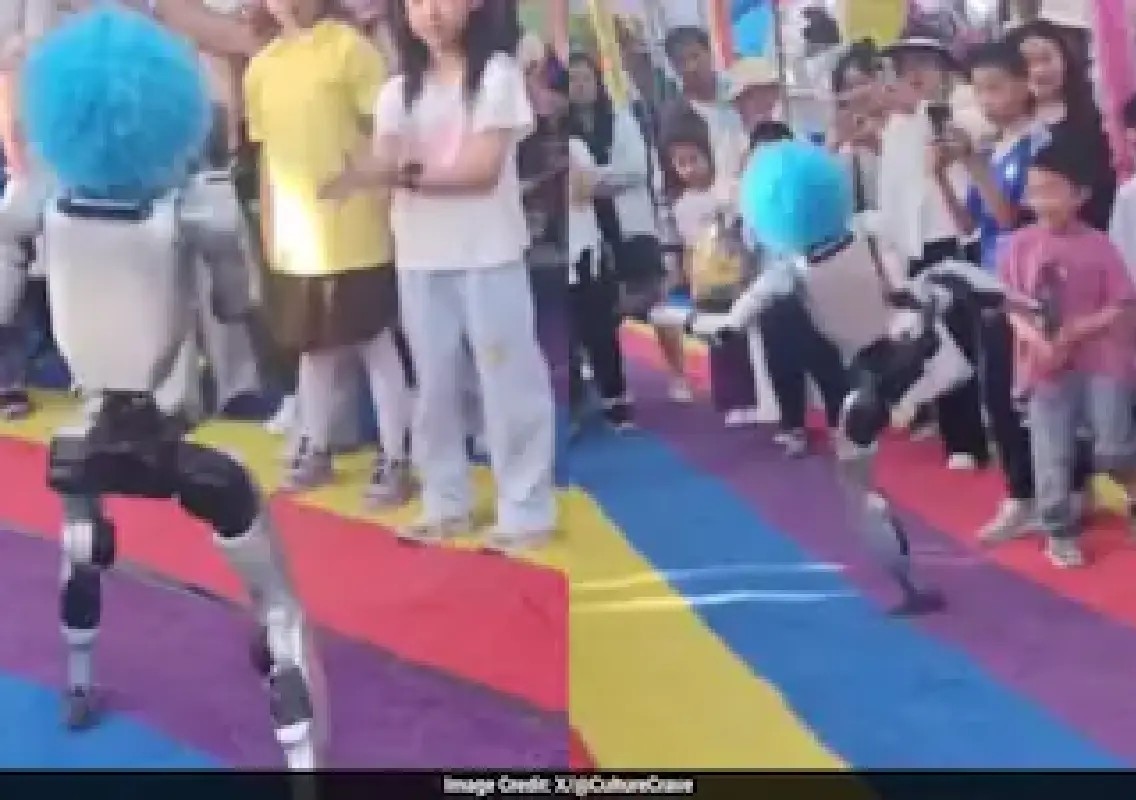


A humanoid robot performing at a tourist attraction in China’s Xinjiang region accidentally kicked a young boy during a public demonstration, with the incident quickly going viral on social media.
The robot, identified as a Unitree G1 humanoid robot, was reportedly wearing a blue clown wig and entertaining visitors when it unexpectedly delivered a roundhouse kick that struck the child in the stomach.
Viral video sparks safety concerns
Footage circulating online shows the robot executing the kick while the child stood nearby. The boy fell to the ground in apparent pain as onlookers reacted in shock.
According to reports from Chinese media, the child did not suffer serious injuries. However, the boy’s mother reportedly criticised staff at the venue for their delayed response following the incident.
The video has triggered widespread debate online about the safety of humanoid robots operating in public spaces.
Questions raised over accountability
The incident prompted discussions about who should be held responsible when autonomous robots cause harm.
Some social media users questioned whether accountability should lie with manufacturers, operators or venue management, while others argued that stricter safety measures are needed whenever robots interact with crowds.
A few commenters downplayed the incident, suggesting the child had moved too close to the demonstration area, while others expressed concern about the unpredictable behaviour of advanced robots.
Similar incident reported earlier
The latest episode follows another robot malfunction reported last month during a school sports event in Xinjiang.
During that event, a humanoid robot reportedly lost balance, fell to the ground and began making erratic kicking movements, causing performers nearby to move away for safety.
As China continues investing heavily in robotics and automation to address labour shortages and an ageing population, incidents such as these are drawing attention to the challenges of safely deploying humanoid robots in public environments.
Experts say continued testing, improved safety protocols and clearer accountability frameworks will be essential as robots become increasingly integrated into everyday life