







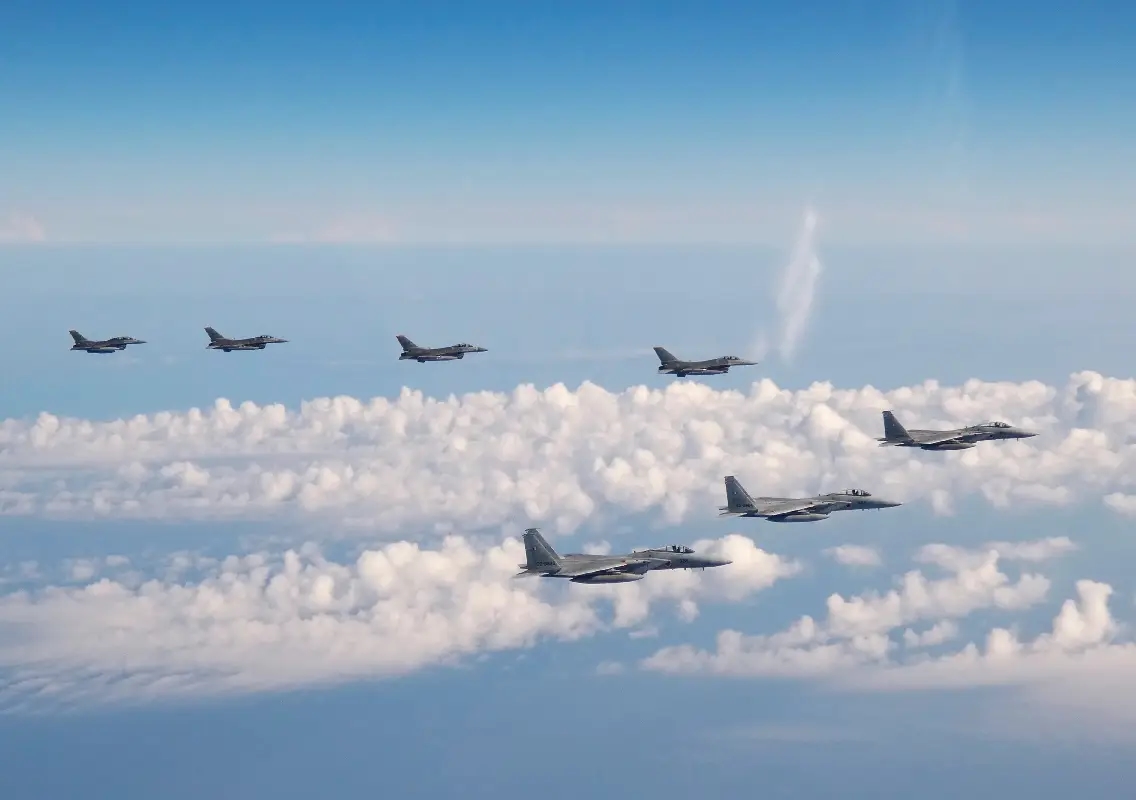


Tensions between China and Japan have escalated sharply after Tokyo accused Chinese fighter jets of locking fire-control radar on Japanese military aircraft over international waters near Okinawa. Japan’s defence ministry revealed on Sunday that the incidents involved Chinese J-15 jets operating from the aircraft carrier Liaoning, accompanied by three missile destroyers.
Japan calls actions ‘dangerous’ and files strong protest
Defence minister Shinjiro Koizumi said the radar locks occurred twice on Saturday — once for around three minutes and later for nearly 30 minutes — targeting Japanese F-15s monitoring the Chinese carrier group. He described the illumination as “dangerous and extremely regrettable”, adding that Japan had lodged a formal protest and demanded steps to prevent recurrence.
Fire-control radar locks are considered highly hostile acts because they signal that a missile attack may follow, forcing aircraft to take evasive action. Japanese officials told domestic media that China’s radar illumination exceeded what is normally required for safe operations.
A ministry official told Kyodo News, “China’s intentions are unclear, but if it is merely to locate aircraft, there is no need to do it intermittently.”
No injuries or damage were reported.
China rejects allegations, accuses Japan of provocation
Beijing swiftly countered with its own narrative, dismissing Tokyo’s claims as “false accusations.” China’s foreign ministry said it lodged counter-protests in both Tokyo and Beijing, accusing Japanese aircraft of interfering with Chinese training exercises.
Senior Colonel Wang Xuemeng, spokesperson for the Chinese Navy, defended the drills near Miyako Island, saying the flights had been pre-announced and that Japanese jets engaged in “harassment.”
“We solemnly ask the Japanese side to stop smearing China and restrain its frontline actions,” Wang said.
Strategic backdrop: Taiwan tensions and regional security concerns
The radar incident comes amid deteriorating China–Japan relations following comments by Japanese prime minister Sanae Takaichi, who warned that a military attack on Taiwan could trigger a “survival-threatening situation” for Japan. Beijing accused her of interfering in its internal affairs.
Analysts say the Okinawa episode highlights increasing military frictions as both nations expand surveillance and preparedness activities in the Western Pacific, particularly around waters close to Taiwan and Japan’s southwestern islands.