







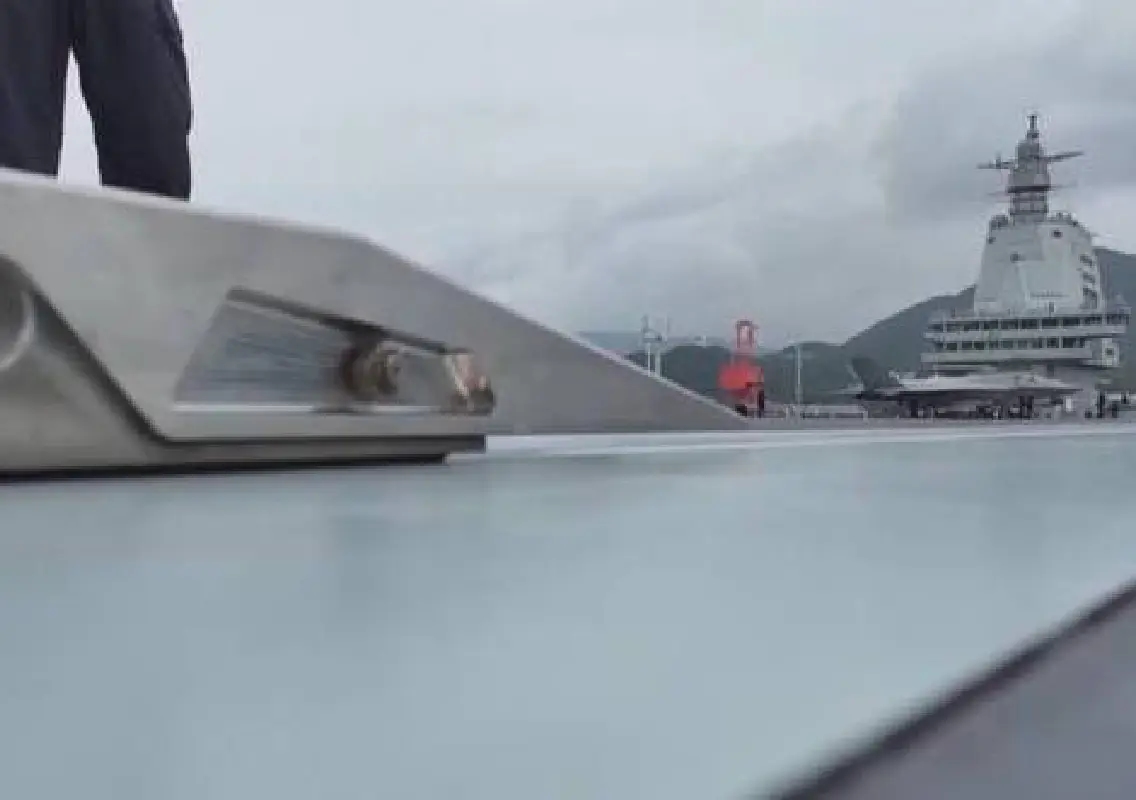


China’s newest aircraft carrier, Chinese aircraft carrier Fujian, has demonstrated its advanced electromagnetic catapult system, marking a significant technological shift from traditional steam-based launch mechanisms.
In a video aired by China Central Television (CCTV), one of the carrier’s electromagnetic catapults was shown achieving high-speed acceleration followed by near-instant deceleration on a relatively short track. Reports indicate the system can handle a 30-tonne fighter jet travelling at approximately 170 mph and bring it to a halt within 0.2 seconds during testing of the arresting mechanism.
Shift from steam to electromagnetic
Unlike conventional steam catapults used on older carriers, electromagnetic systems offer smoother acceleration, reduced mechanical stress and greater efficiency. According to crew member Bao Yu, the system enables aircraft to reach take-off speed over shorter distances and supports a wider range of carrier-based aircraft under varied operational conditions.
Chinese military analyst Song Zhongping described the adoption of electromagnetic catapults as a “technological leap” that enhances combat capability and sortie efficiency.
Enhanced operational capability
The Fujian officially entered service on November 5 and has since conducted maritime training missions alongside other warships. According to reports in Global Times, aircraft including the J-35 stealth fighter, J-15T heavy fighter, J-15DT electronic warfare aircraft and KJ-600 early warning aircraft have completed multiple take-off and landing exercises, effectively testing the carrier’s launch and recovery systems.
Electromagnetic launch systems are considered a key advancement in modern naval aviation, offering faster turnaround times and improved operational flexibility.
The development positions China among the few nations deploying electromagnetic aircraft launch systems, reflecting its broader efforts to modernise naval capabilities.