







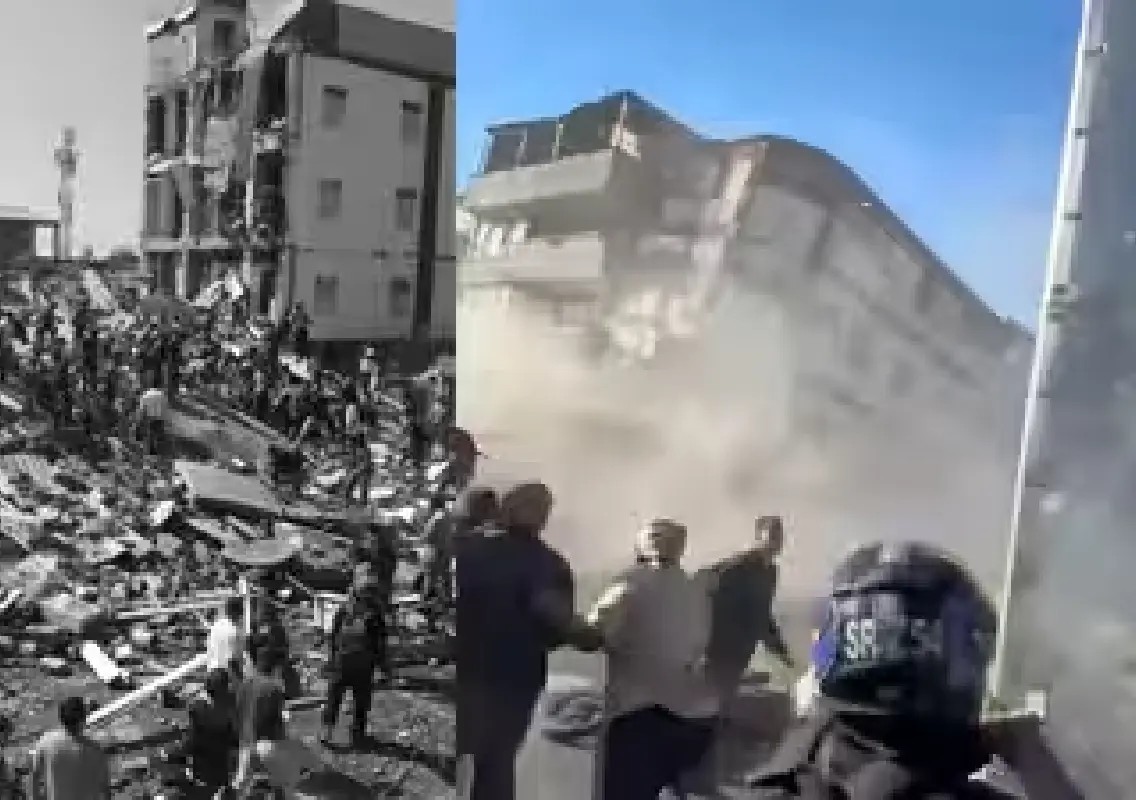


Pereira: Colombia is facing a major humanitarian emergency after a powerful 7.4-magnitude earthquake struck the western part of the country on Monday, killing at least 111 people and injuring hundreds. The quake, described as the strongest to hit Colombia this century, caused widespread destruction across several cities.
Buildings collapse as rescue teams race against time
The earthquake brought down buildings and damaged hospitals and other infrastructure in cities including Cali, Quibdó, Pereira, Armenia and Manizales. Rescue workers continued searching through rubble for people trapped beneath collapsed structures.
In Cali alone, authorities reported 35 deaths and around 700 injuries. Emergency teams also rescued survivors from the debris, including a baby, as desperate families waited for news of loved ones.
The earthquake struck at a depth of about 107 kilometres. Despite the relatively deep focus, its inland location and the region’s complex geology contributed to the severity of the destruction.
State of emergency declared
Colombian President Abelardo De La Espriella declared a national state of emergency and ordered security forces to assist rescue and relief operations. Authorities have also been assessing damaged airports and other critical infrastructure.
Several aftershocks were recorded following the main earthquake, adding to concerns among residents already shaken by the destruction. More tremors are expected as emergency operations continue.
Officials are assessing the full scale of the disaster, while hospitals struggle to treat the large number of injured people.
For communities across western Colombia, the immediate priority remains finding survivors, providing medical assistance and supporting families who have lost homes and loved ones.
The disaster has once again highlighted the vulnerability of communities in Colombia, a country located within the seismically active Pacific Ring of Fire.