







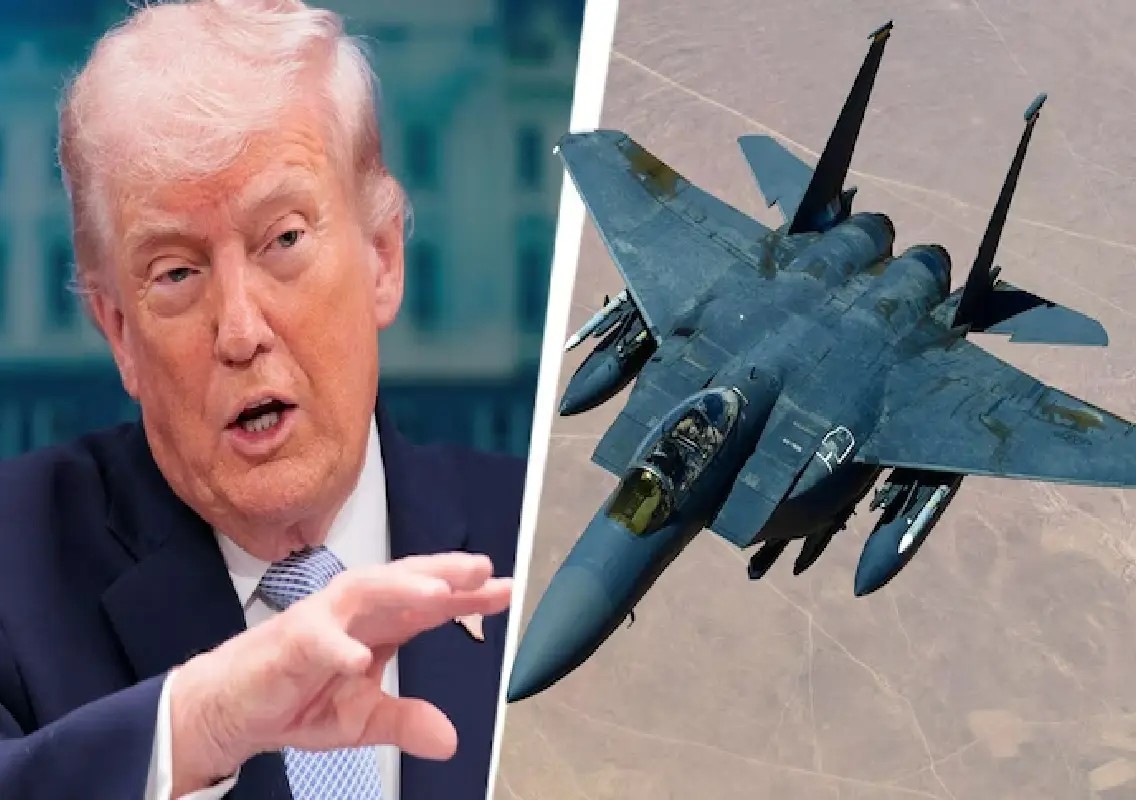


Washington: At least 42 United States military aircraft, including fighter jets, helicopters and drones, were reportedly lost or damaged during Operation Epic Fury launched against Iran on February 28, according to a report prepared by the Congressional Research Service (CRS).
The report stated that the figures may still be revised as the assessment remains subject to classification concerns, ongoing military activity and attribution-related factors. The findings have renewed discussion over the scale, operational impact and financial cost of the military campaign.
The Congressional Research Service, which provides policy and legal analysis to the US Congress and committees, compiled the figures using statements from the Department of Defense, US Central Command and publicly available reports.
Fighter jets and drones among reported losses
According to the report, the list of aircraft reportedly lost or heavily damaged includes several categories of military assets.
The reported figures include four F-15E Strike Eagle fighter aircraft, one F-35A Lightning II fighter aircraft and one A-10 Thunderbolt II aircraft. The list also includes seven KC-135 Stratotanker aerial refuelling aircraft, one E-3 Sentry airborne warning aircraft and two MC-130J Commando II special operations aircraft.
In addition, one HH-60W Jolly Green II helicopter, 24 MQ-9 Reaper drones and one MQ-4C Triton drone were listed among the affected assets.
The CRS report noted that the numbers cover aircraft categorised as lost, damaged or destroyed and may not represent a final accounting.
Pentagon cost estimate rises to USD 29 billion
The developments have also drawn attention to the financial implications of the operation.
During a hearing before a House Appropriations subcommittee on May 12, Acting Pentagon Comptroller Jules W. Hurst III stated that the estimated cost of military operations involving Iran had risen to approximately USD 29 billion.
According to his testimony, a substantial part of the increase was linked to updated assessments involving repair and replacement expenses for military equipment.
Questions emerge over complete accounting
The report also highlighted that the Pentagon had not yet released a comprehensive official assessment of all combat-related losses linked to the operation. As a result, some figures in the Congressional review were assembled using available reports and official statements rather than a complete military inventory assessment.
Analysts noted that the evolving nature of military operations can complicate efforts to establish definitive figures, particularly where damage assessments and operational classifications continue to change.
The reported losses have added to discussions regarding operational costs, military readiness and the broader consequences of sustained regional conflict.