







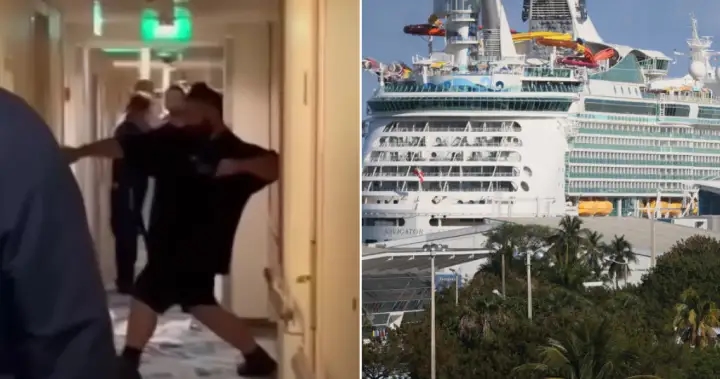


What began as a family weekend holiday on a Royal Caribbean cruise turned into a tragedy within hours, after a California father died following what his fiancée alleges was extreme negligence by ship staff.
The lawsuit, filed in federal court in Miami, claims that 35-year-old Michael Virgil was served at least 33 alcoholic drinks in just a few hours, despite displaying clear signs of intoxication. His fiancée, Connie Aguilar, alleges that Royal Caribbean staff not only failed to stop serving him alcohol but later restrained him with such force that their actions contributed directly to his death.
Royal Caribbean, headquartered in Miami, said it was “saddened by the passing” of a guest, declining to comment further due to ongoing litigation.
Events leading to the fatal incident
Aguilar, Virgil and their young autistic son boarded the Navigator of the Seas on 13 December 2024 for a three-night cruise from Los Angeles to Ensenada. While waiting for their cabin to be prepared, the family stopped at a bar area. Aguilar left briefly to check on the cabin, leaving Virgil behind.
Internal ship records cited in the lawsuit show that in the following hours, staff served Virgil 33 alcoholic beverages, taking advantage of the vessel’s “deluxe beverage package,” which includes unlimited drinks.
As Virgil attempted to find his cabin later that evening, he reportedly became disoriented and agitated. The lawsuit states that ship security then tackled him, held him face-down, and restrained him while multiple crew members applied their full body weight on his back for approximately three minutes. He was also pepper-sprayed and, at the captain’s request, injected with haloperidol, an antipsychotic medication, before being taken to the ship’s medical bay.
Virgil was pronounced dead at 8.32 pm.
Medical examiner rules death a homicide
The Los Angeles County Medical Examiner ruled the death a homicide, citing a combination of mechanical asphyxia, obesity, alcohol intoxication and an enlarged heart. Investigators reviewed footage showing Virgil shouting and acting aggressively before the confrontation; however, the report determined that the force used by security staff “directly contributed” to the conditions that caused his death.
Notably, although haloperidol and etomidate were reportedly administered, these substances were not detected in his system during toxicology tests.
The FBI is investigating the incident but has not filed criminal charges.
For context on cruise ship operations:
Claims against Royal Caribbean
Aguilar’s lawsuit accuses the company of several critical failures:
- Overserving alcohol despite obvious signs of impairment
- Failing to supervise a visibly intoxicated passenger
- Using excessive and dangerous force during restraint
- Inadequate training of security and medical personnel
- Designing ships to maximise alcohol sales, with bars placed “in every nook and cranny”
The suit argues that Royal Caribbean’s business model encourages high-volume alcohol consumption while lacking sufficient safety protocols to protect passengers placed at risk by staff decisions.
Broader concerns about cruise industry practices
The case has renewed scrutiny of how large cruise operators manage alcohol service and onboard emergencies. Unlimited-drink packages, marketed as value-added features, have been criticised by safety advocates who argue they may encourage binge drinking.
Although cruise lines typically train staff to recognise signs of intoxication, Aguilar’s lawsuit alleges that such training was either inadequate or ignored. The legal proceedings may raise wider questions about the responsibilities cruise operators bear when their own commercial offerings — such as unlimited alcohol — create foreseeable risks.
A grieving family seeks accountability
Aguilar maintains that her fiancé’s death was preventable. She is seeking compensatory and punitive damages, alleging that Royal Caribbean’s actions deprived her and her son of a loving partner and father.
The outcome of the lawsuit may influence future regulations around alcohol service and safety standards at sea, particularly as cruise travel continues to grow in popularity.