







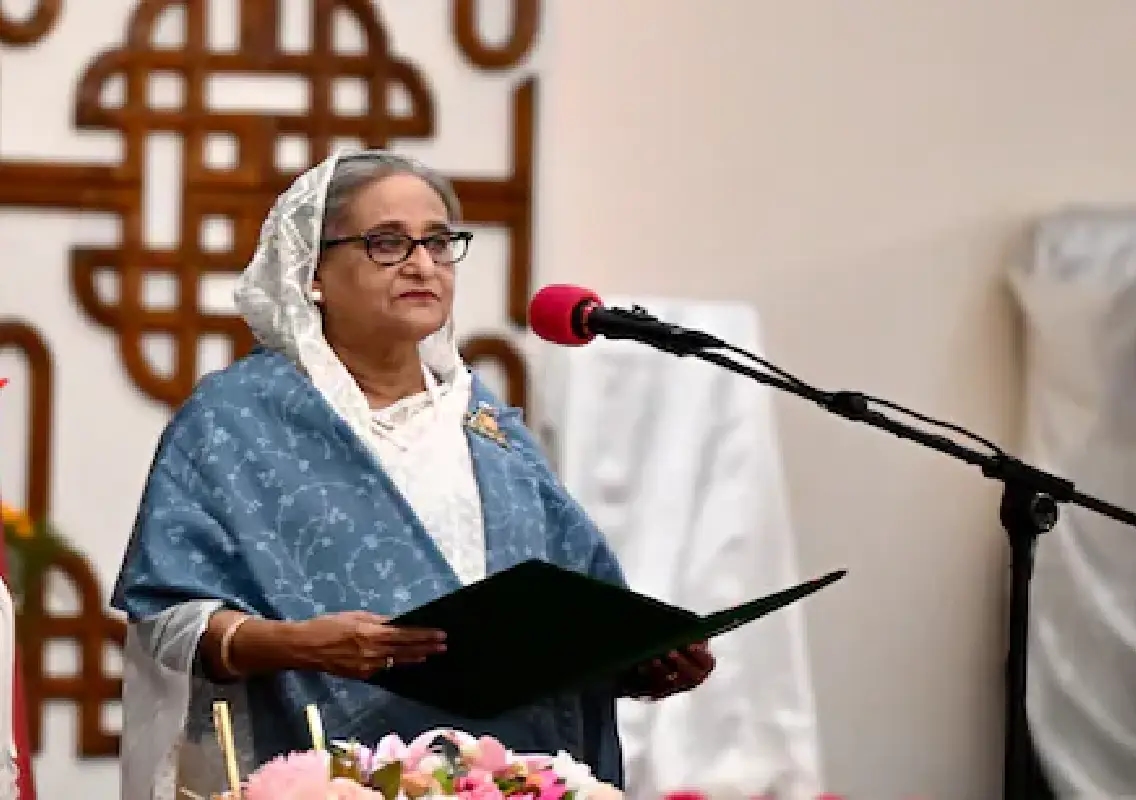


Emotions ran high across Bangladesh on Monday as a special court in the capital sentenced deposed Prime Minister Sheikh Hasina and her former Home Minister Asaduzzaman Khan to death for crimes against humanity linked to the violent crackdown during the July Uprising of 2024, which left more than 1,400 people dead. The landmark verdict, delivered in their absence, has reopened wounds for grieving families while igniting a heated national debate over justice, extradition and political accountability.
Families break down as verdict is delivered
The sentencing triggered an immediate outpouring of grief and anger from families of those killed during the uprising. Shahina Begum, whose 20-year-old son Sajjat Hosen Sojal was shot and burned inside the Ashulia police station on 5 August 2024, collapsed in tears upon hearing the court’s decision.
“I cannot be calm until she is brought back and hanged in this country,” Begum said, speaking from her home in Gaibandha. “My son screamed for help. No one saved him. I will not rest until those who burned him can never harm another mother’s child again.”
Prosecutors allege six student protesters were killed in Ashulia that day—five shot and burned, and one allegedly burned alive—under orders issued by Hasina in an attempt to suppress the uprising that eventually drove her out of office.
Trial held in absentia after Hasina fled to India
The trial was conducted in absentia as Hasina and Asaduzzaman Khan fled to India immediately after resigning in August 2024. The International Crimes Tribunal (ICT) found them guilty of ordering mass violence and directing security forces to fire on student demonstrators demanding reforms to the controversial quota system for government jobs.
Former police chief Chowdhury Abdullah al-Mamun, who turned state witness, received a five-year sentence—an outcome that some families consider too lenient.
“Abdullah al-Mamun became a killer of our children,” said Sanjida Khan Dipti, mother of a 10th-grade student shot dead in Dhaka. “Justice will be served the day this verdict is executed. Even 1,400 death sentences would be insufficient.”
Calls grow for India to extradite Hasina
Across Dhaka University and other campuses, student groups staged marches to demand Hasina’s immediate extradition from India. Many fear political uncertainty could allow her to evade justice.
“We will remain on the streets until she is brought back and executed,” said Ar Rafi, a second-year student.
In Rangpur, the family of Abu Sayeed, the first protester killed in the July Uprising, expressed satisfaction with the verdict. “She must be brought back without delay,” said his father, Mokbul Hossain, as the family distributed sweets after the sentencing.
Symbolic protests and political reactions
At Dhaka’s Shahbagh intersection, the group Maulik Bangla staged a symbolic enactment of Hasina’s execution, declaring it a message against future dictatorships. Political parties—including the Bangladesh Nationalist Party (BNP) and Jamaat-e-Islami—also welcomed the ruling.
“This judgement proves that no matter how powerful a fascist becomes, they will one day stand in the dock,” said BNP leader Salahuddin Ahmed.
Rights groups raise due process concerns
While the verdict has been broadly welcomed in Bangladesh, international organisations have voiced reservations. The United Nations human rights office expressed concern about the fairness of a trial held in absentia, reiterating its opposition to capital punishment.
Amnesty International warned that such trials risk undermining justice: “The victims deserve far better. The death penalty compounds human rights violations and has no place in any justice process.”
A nation divided between relief and uncertainty
Despite concerns, many families see the verdict as long-awaited recognition of the horrors they endured. Survivors like Atikul Gazi, a 21-year-old TikToker who lost his left arm after being shot at point-blank range, believe the ruling sends a powerful message.
“This verdict says justice is inevitable,” he said.
However, the central question remains unresolved: Will India extradite Sheikh Hasina and Asaduzzaman Khan? As Bangladesh grapples with the aftermath of one of the darkest chapters in its recent history, the pursuit of justice is far from over