







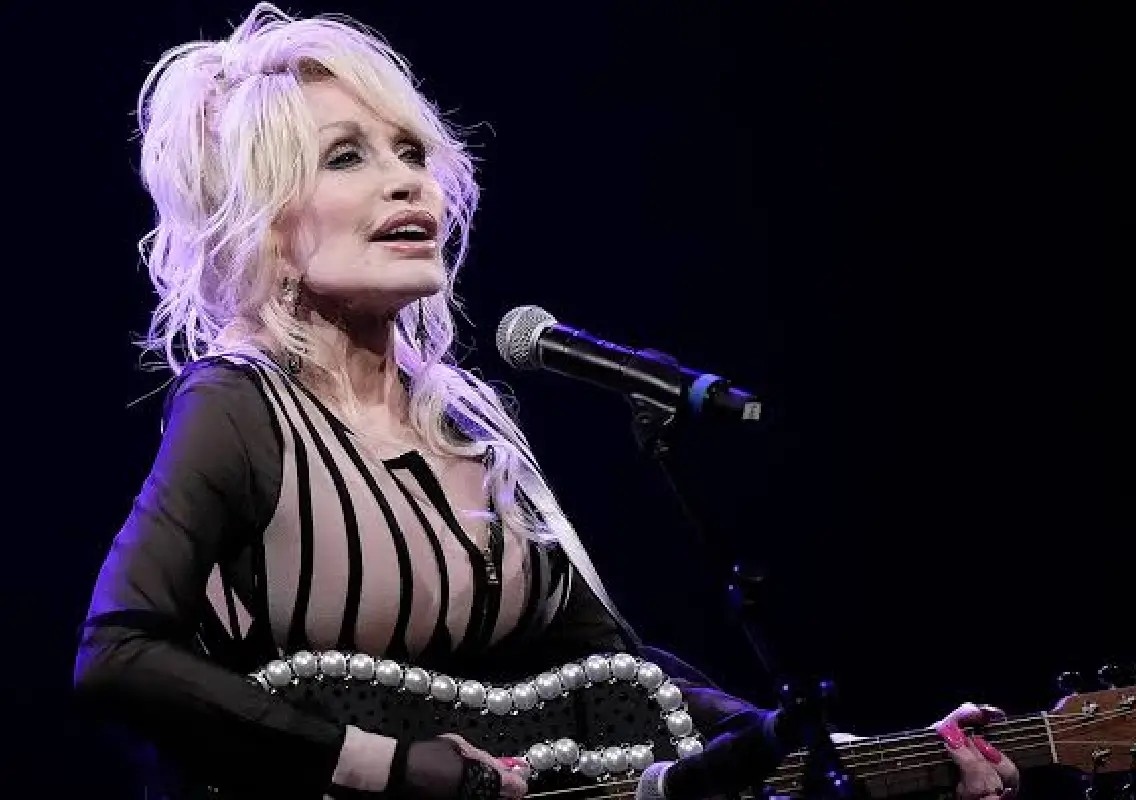


Nashville: Dolly Parton, the legendary country music singer, songwriter, actress, businesswoman and philanthropist whose remarkable career spanned more than six decades, has died at the age of 80 after a brief battle with cancer.
Parton died in Nashville after being treated at the Vanderbilt-Ingram Cancer Center. Her publicist Marcel Pariseau said in a statement on Tuesday that the singer died surrounded by loved ones after “bravely facing a brief battle with cancer”.
Her death marks the end of an extraordinary life that took her from a modest childhood in the Tennessee mountains to the highest levels of international fame. Through her distinctive voice, emotionally powerful songwriting, sparkling stage costumes and unmistakable personality, Parton became one of the most recognisable figures in popular music.
She was far more than a country music star. Over the decades, Parton built a reputation as an accomplished businesswoman, actress, author and philanthropist, while maintaining a connection with audiences across generations.
Her songs, including “Jolene”, “Coat of Many Colors” and “I Will Always Love You”, became enduring classics. According to the Associated Press report, her music has generated more than 100 million worldwide sales and over 1 billion online streams.
From a poor Tennessee childhood to global stardom
Parton’s remarkable story began in the mountains of Tennessee, where she was born into a large family.
She was one of 12 children raised by parents who had very limited financial means. Parton often spoke openly and affectionately about her upbringing and described her family as extremely poor.
Despite the hardships, music was an important part of her childhood.
Her first musical performances were in church, where she began developing the vocal skills and confidence that would later become central to her career.
Her family’s circumstances also shaped her understanding of the importance of education and opportunity.
Her father left school early to work on the farm and struggled with reading. That experience remained with Parton throughout her life and eventually inspired one of her most significant philanthropic projects.
A songwriter behind some of music’s biggest classics
Parton established herself not simply as a performer but as one of the most prolific songwriters in country music.
She wrote hundreds of songs during her career, many of which became classics in their own right.
“Jolene” became one of her most recognisable recordings, telling the story of a woman pleading with another woman not to take away the man she loves.
“Coat of Many Colors” drew heavily on her childhood and transformed memories of poverty into a deeply personal story about family, dignity and love.
“I Will Always Love You” became one of her most famous compositions. Although Parton originally recorded the song herself, it achieved an enormous new audience when Whitney Houston performed it for the soundtrack of The Bodyguard.
The song’s success demonstrated Parton’s extraordinary ability to write material that could cross musical boundaries and connect with audiences far beyond country music.
Her distinctive image became part of her appeal
Parton’s musical talent was matched by a carefully developed public persona.
Her large blonde wigs, sparkling costumes, dramatic make-up and glamorous appearance became instantly recognisable.
Rather than allowing her appearance to overshadow her work, Parton frequently used humour and self-deprecation to control the narrative around her image.
Her quick wit and willingness to laugh at herself became an important part of her public personality.
She also maintained a warm, accessible relationship with fans despite becoming one of the biggest stars in the world.
That combination of glamour, humour and humility helped her appeal to audiences who might otherwise have had little connection with country music.
A career that crossed generations
Parton’s influence extended well beyond traditional country music.
Her songs were recorded by artists across different genres, while her collaborations introduced her music to new audiences.
She also became a successful actress, appearing in films and television productions and earning recognition for performances that demonstrated her talents beyond music.
Her work in entertainment helped establish her as a cultural figure rather than simply a recording artist.
For generations of listeners, Parton’s music became part of the soundtrack of family life.
Her songs addressed love, heartbreak, poverty, ambition, family and resilience in a direct and accessible manner.
That emotional honesty helped explain why her music continued to attract listeners long after many of the songs were first released.
A successful businesswoman
Parton’s achievements were not confined to entertainment.
She became a highly successful businesswoman, developing commercial projects that expanded her influence beyond music.
Among the most prominent was Dollywood, a theme park in the Smoky Mountains near her birthplace in Tennessee.
The park became both a major tourist attraction and an important part of the regional economy.
Its connection to Parton’s personal story was also significant. The project allowed her to build something close to the area where she had grown up while creating employment and attracting visitors to the region.
Her business career demonstrated another side of her personality: the ability to turn her creative identity into long-term enterprises.
Imagination Library became a lasting legacy
One of Parton’s most important contributions came through philanthropy.
She established the Imagination Library, a programme that provides free books to children.
The initiative was inspired by her father, who had struggled with literacy after leaving school at a young age to work.
Parton wanted children to have access to books and opportunities that had been difficult for her own family.
What began as an initiative in Tennessee eventually grew into a much broader literacy programme.
The project became one of the clearest examples of how Parton used her fame and resources to address an issue rooted in her own childhood.
Her philanthropy helped reinforce an aspect of her public image that was distinct from her glamorous entertainment career: a commitment to children, education and communities.
Her generosity became part of her legacy
Parton’s philanthropic work expanded into several areas over the years.
She supported education, literacy, disaster relief and other community initiatives.
Her response to crises often attracted considerable public attention, but she generally presented her charitable efforts in practical rather than grandiose terms.
Her contribution to literacy remained especially closely associated with her personal history.
The contrast between Parton’s early life and her later achievements made her story particularly powerful.
She came from a family with limited resources but used the opportunities she received to build a career that eventually allowed her to create opportunities for others.
A rare celebrity with broad appeal
Parton’s appeal was unusual in modern popular culture.
She was loved by country music fans but also reached audiences who did not traditionally listen to country music.
Her films, television appearances, books, business ventures and charitable activities expanded her audience further.
She also became a figure whose appeal crossed political and cultural divisions.
Parton’s public persona was generally associated with kindness, humour and generosity rather than controversy.
That helped her remain a beloved figure even as the entertainment industry underwent enormous changes.
From vinyl records and radio to streaming platforms and social media, Parton’s music continued to find new audiences.
Her voice remained instantly recognisable
Parton’s singing style was one of the defining elements of her career.
Her high, distinctive voice and expressive vibrato allowed her to communicate vulnerability and strength within the same performance.
She was also an accomplished musician who played instruments including the banjo, guitar and dulcimer.
Her long fingernails, which became part of her signature appearance, did not prevent her from performing on stringed instruments.
Instead, they became another example of how Parton incorporated her individuality into her artistry.
Her performances combined technical ability with theatrical presentation and storytelling.
A life shaped by family and faith
Parton’s childhood in a large Tennessee family remained central to the way she understood herself.
Family relationships and memories repeatedly appeared in her songwriting.
Her early experiences in church also influenced her musical development.
Elements of gospel music could be heard throughout her career, particularly in her vocal arrangements and themes of faith, hope and perseverance.
These influences helped shape a musical identity that was deeply rooted in the traditions of the American South while still accessible to international audiences.
The end of an extraordinary career
Parton’s death at 80 brings to a close one of the most remarkable careers in American entertainment.
She achieved success as a singer, songwriter, actress, entrepreneur and philanthropist while maintaining a distinctive identity that remained recognisable throughout decades of cultural change.
Her songs became standards.
Her businesses became major institutions.
Her philanthropic projects gave books and educational opportunities to children.
And her personality made her one of the most warmly regarded celebrities of her generation.
The circumstances of her death — following a brief battle with cancer and surrounded by loved ones — bring a deeply personal end to a public life that touched millions.
Dolly Parton’s legacy will live on
For many artists, a successful career is measured through record sales, awards or chart positions. Parton’s legacy is considerably broader.
She wrote songs that became part of global popular culture, built businesses that continue to serve communities and created a literacy programme rooted in a personal family experience.
Her journey from a poor childhood in Tennessee to worldwide fame was itself a story of determination and talent.
But perhaps the most enduring part of her legacy is the way she continued to use her success to help others.
Through songs such as “Jolene”, “Coat of Many Colors” and “I Will Always Love You”, Parton gave voice to universal emotions. Through Imagination Library, she helped give children something she believed could change their lives: access to books.
Her death leaves an enormous gap in country music and popular culture. Yet the songs she created, the artists she influenced and the millions of children reached through her charitable work ensure that Dolly Parton’s extraordinary story will continue to be told for generations.