







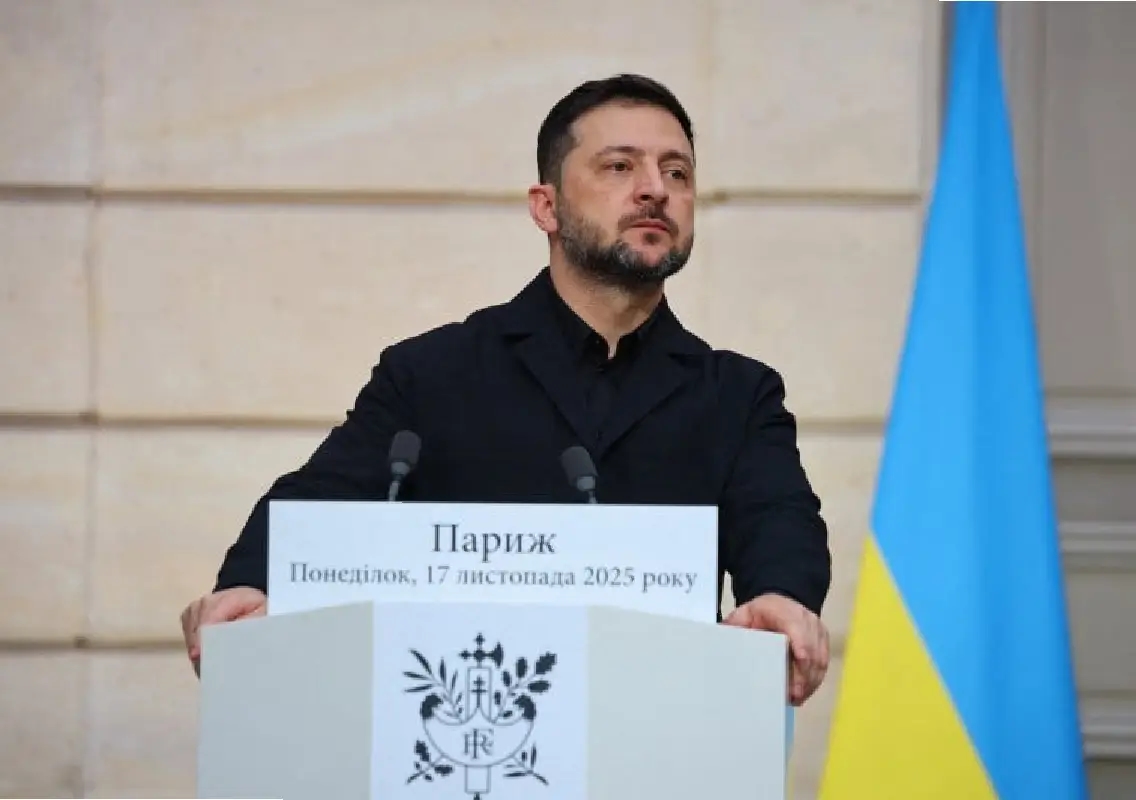


Ukraine’s President Volodymyr Zelenskyy has received a draft of a far-reaching peace proposal prepared by the United States in coordination with Russia, according to Ukrainian officials and Western diplomatic sources. The 28-point framework, formally delivered to Kyiv this week, reportedly includes requirements for Ukraine to cede additional eastern territory and accept strict limitations on the size and capability of its armed forces.
Zelenskyy’s office has confirmed the plan’s arrival but has neither endorsed nor rejected it. Instead, it said Ukraine remains prepared to work “constructively, honestly and promptly” with Washington and European partners to determine whether the framework can lead to what it calls a “just peace.” The President is expected to speak directly with US President Donald Trump in the coming days, a conversation seen as crucial given Ukraine’s heavy dependence on American military and financial support.
European leaders express deep reservations
European leaders have responded cautiously, signalling unease that the draft proposal appears to demand substantial Ukrainian concessions without evidence of parallel commitments from Moscow.
French officials reiterated that “peace cannot be a capitulation,” a sentiment echoed across several EU capitals. EU foreign policy chief Kaja Kallas noted that Brussels has not yet been presented with signs that Russia is offering anything comparable in return—an imbalance that has fuelled concerns within Europe about Washington’s new approach.
Ukraine faces mounting battlefield pressure
The peace proposal comes at a moment of heightened vulnerability for Kyiv. On the battlefield, Ukrainian forces are under increasing strain as Russian troops continue their advance toward Pokrovsk, which could become Russia’s first major territorial gain in nearly two years if captured.
Simultaneously, Russia has stepped up airstrikes on critical Ukrainian infrastructure, causing widespread power cuts and deadly attacks as winter nears. The intensifying military pressure has amplified fears that Kyiv may be negotiating from a weakened position.
Political turbulence adds to Zelenskyy’s challenges
Domestically, Zelenskyy is dealing with heightened political instability following a corruption scandal that forced parliament to dismiss two cabinet ministers. Opposition groups have since increased demands for broader changes within the government, compounding the President’s challenges as he navigates both war and diplomacy.
In a sign of Washington’s urgency, a high-level US Army delegation led by Secretary Daniel Driscoll arrived in Kyiv earlier than planned. US officials say Driscoll may engage directly with Russian counterparts as part of the renewed American diplomatic push.
During the meeting, Zelenskyy assured Driscoll that Ukraine would engage with the Trump administration to review the proposal, though senior Ukrainian officials continue to insist that the Ukrainian public remains firmly opposed to surrendering territory.
Washington urges “realistic ideas” for peace
US Secretary of State Marco Rubio has publicly stated that any lasting peace will require “serious and realistic ideas,” including difficult compromises from all parties. Washington’s position appears to reflect a broader shift toward securing an expedited diplomatic settlement, though the details and implications of the 28-point plan remain undisclosed.
Conclusion
As Kyiv prepares to negotiate with Washington, European partners watch warily, and Russia maintains its military pressure, Ukraine faces a complex and delicate diplomatic moment. The coming discussions between Zelenskyy and Trump are expected to shape not only the trajectory of the plan but potentially the next phase of the nearly four-year-old conflict.