







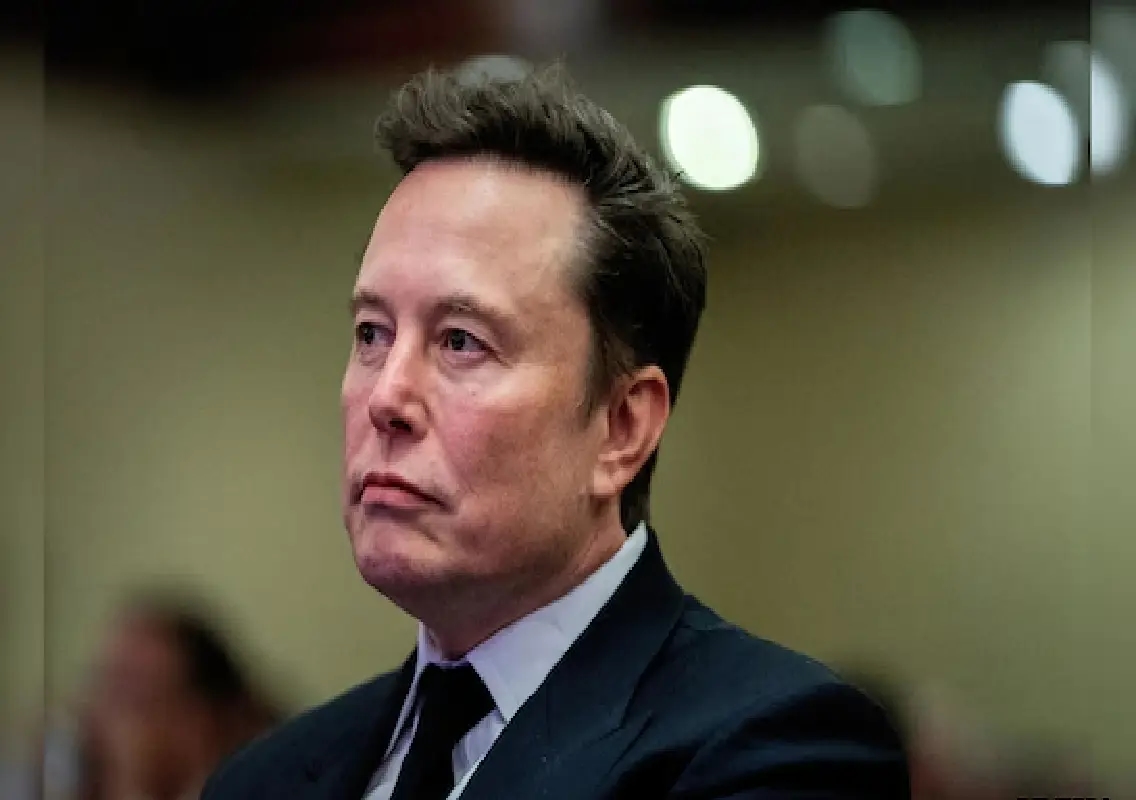


Tech billionaire Elon Musk has shared a succinct yet thought-provoking perspective on the future of artificial intelligence (AI), suggesting that leadership in the field will be divided across different global arenas.
In a post on X on March 19, Musk stated that Google would lead the AI race in the West, China would dominate on Earth, and SpaceX would take the lead in space-based AI systems.
A three-way vision of AI dominance
Musk’s statement divides the future of AI leadership into three distinct domains — Western markets, terrestrial dominance led by China, and space-based technologies.
While he did not elaborate further, the comment has been widely interpreted as a strategic outlook on how geopolitical and technological forces could shape the AI landscape in the coming decades.
The post quickly gained traction, sparking discussions among industry experts, analysts, and social media users.
Google’s position in the West
Musk’s reference to Google highlights the company’s growing influence in AI development. Over the past few years, Google has made significant investments in large language models, machine learning infrastructure, and cloud-based AI tools.
The company is widely seen as a key competitor in the global AI race, alongside organisations such as OpenAI and Microsoft.
Its advancements in search, data processing, and AI integration across products position it strongly in Western markets.
China’s expanding AI ecosystem
Musk’s assertion that China will dominate “on Earth” reflects the country’s rapid progress in AI development, supported by strong government backing and a vast data ecosystem.
China has been aggressively investing in AI research, smart infrastructure, and automation technologies, aiming to become a global leader in the sector.
Analysts note that China’s scale, combined with state support, gives it a unique advantage in deploying AI across industries and public systems.
SpaceX and the future of space-based AI
By highlighting SpaceX as the leader in space, Musk pointed to the growing importance of AI in extraterrestrial operations.
SpaceX already plays a major role in satellite networks and space transportation. AI is expected to be central to future missions, including autonomous spacecraft, satellite management, and deep-space exploration.
Experts believe that space-based AI could transform communication systems, navigation, and scientific research beyond Earth.
Mixed reactions online
Musk’s statement triggered a wave of reactions online, with users offering varied perspectives on his predictions.
Some agreed with his assessment, particularly regarding China’s growing influence in AI. Others questioned whether the future of AI leadership can be divided so clearly across regions and sectors.
A few users speculated that emerging startups or breakthroughs in technologies such as quantum computing could disrupt the current trajectory and reshape the competitive landscape.
Broader implications for AI competition
The remarks reflect the increasingly global and competitive nature of AI development, where companies and countries are racing to establish leadership across multiple domains.
Experts emphasise that the future of AI is likely to be shaped by a combination of innovation, regulation, infrastructure, and international collaboration.
Conclusion
Elon Musk’s brief yet impactful statement has reignited discussions on the future of artificial intelligence and its global leadership. While his predictions outline a divided landscape, the rapidly evolving nature of technology means the race remains open and highly dynamic.
As advancements continue, the balance of power in AI may shift, influenced by both established players and emerging innovators.’