







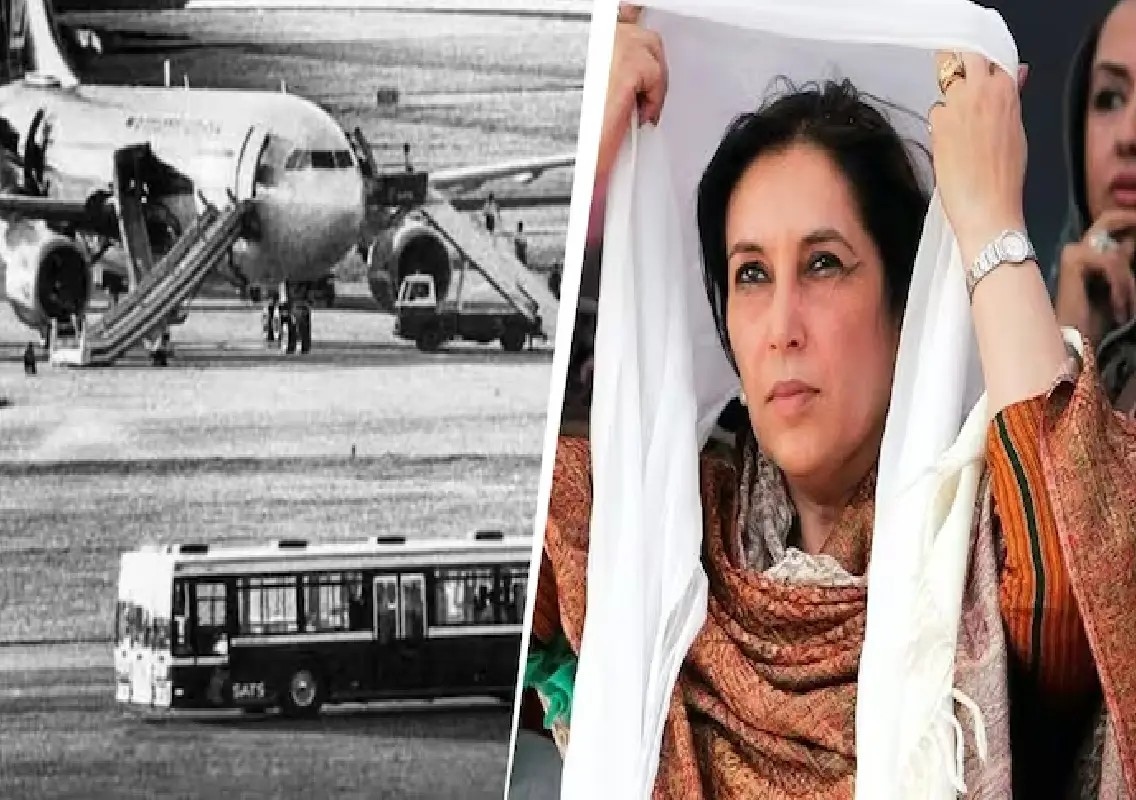


Singapore: Former Singapore diplomat Bilahari Kausikan has recalled his experience during the 1991 hijacking of Singapore Airlines Flight SQ117 to explain his criticism of Pakistan’s political leadership, saying the incident shaped his view that the country’s longstanding challenges stem largely from internal governance rather than geography.
Speaking at an international conference, Kausikan responded to a Pakistani journalist’s suggestion that Pakistan’s difficulties were largely the result of its location between India and Afghanistan. Rejecting that argument, the former ambassador said Pakistan’s political instability and governance issues were primarily self-inflicted.
“You cannot blame location on everything. That’s an excuse. Pakistan has been mismanaged terribly since the beginning. Its politicians are a waste of time, all of them, regardless of parties, and the military is a big part of the problem,” Kausikan said.
He cited his personal experience during the 1991 Singapore Airlines hijacking as an example of what he described as systemic issues within Pakistan’s political culture.
Former envoy recounts hijacking negotiations
Kausikan recalled that on March 26, 1991, Singapore Airlines Flight SQ117, travelling from Kuala Lumpur to Singapore, was hijacked shortly after take-off by four armed Pakistani hijackers.
The aircraft, carrying 114 passengers and 11 crew members, was forced to land at Singapore Changi Airport, where the passengers and crew were held hostage.
According to Kausikan, who was then serving in Singapore’s foreign service, he was part of the team tasked with negotiating with the hijackers.
He said the hijackers allowed authorities to park the aircraft in an area designated for handling hijack situations, enabling security agencies to assess the situation more effectively.
During negotiations, the hijackers repeatedly expressed a desire to speak with former Pakistan Prime Minister Benazir Bhutto, who was then serving as the Leader of the Opposition after losing power. Nawaz Sharif was Pakistan’s Prime Minister at the time.
Several reports from that period suggested the hijackers were demanding the release of individuals imprisoned in Pakistan, although Kausikan said their precise objectives were never fully established.
Attempt to contact Benazir Bhutto
Kausikan said he was assigned the responsibility of trying to establish contact with Benazir Bhutto.
With assistance from Pakistan’s then High Commissioner to Singapore, he managed to obtain the telephone number of Bhutto’s residence in Sindh.
He recalled that the call was placed around 3 a.m.
According to Kausikan, language barriers initially complicated communication because few people at the residence spoke English.
After eventually reaching an English-speaking individual, he explained that the hijackers had indicated they might surrender if they were allowed to speak with Bhutto. Otherwise, they had threatened to begin killing passengers.
Kausikan said he repeated the situation several times before receiving a brief response.
According to his account, the person replied: “Madam is sleeping, cannot be disturbed,” before ending the call.
The former diplomat cited the exchange while explaining why he viewed Pakistan’s political system as deeply feudal and ineffective.
Singapore commandos stormed aircraft
Following unsuccessful negotiations, Singapore authorities decided to launch a rescue operation.
Under the cover of darkness, Singapore’s special forces stormed the aircraft by blasting open its doors and deploying stun grenades.
All four hijackers were killed during the operation, while every passenger and crew member was rescued safely.
Kausikan noted that because the hijackers died during the operation, their full intentions were never conclusively established.
The rescue operation has since been regarded as one of Singapore’s most successful counter-terrorism missions.
Remarks spark discussion
Using the incident to support his broader criticism, Kausikan argued that Pakistan’s internal governance problems cannot be attributed solely to its geographical location.
He also described Pakistan’s social structure as highly feudal, claiming that entrenched political and institutional practices have contributed to many of the country’s long-standing challenges.
His remarks have drawn attention because they were made in response to a broader discussion on South Asian geopolitics and governance.
The comments reflect Kausikan’s personal assessment based on his diplomatic experience and the events surrounding the 1991 hijacking. While the historical facts relating to the hijacking are well documented, his observations about Pakistan’s political system represent his own views expressed during the conference.