




Paris: More than 1,200 people were arrested across France after demonstrations over the cost of living and deteriorating conditions in secondary schools descended into violence, with buildings set ablaze, shops looted and clashes reported in several cities.
An estimated 550,000 people took to the streets on Saturday, according to figures cited in reports, as student protesters were joined by trade union members and other groups. French authorities described the unrest as an escalation in violence, with Prime Minister Sébastien Lecornu saying 150 police officers had been injured.
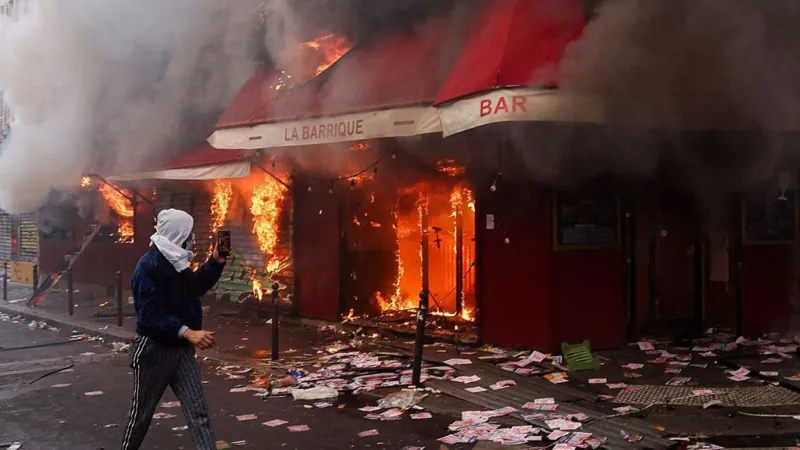
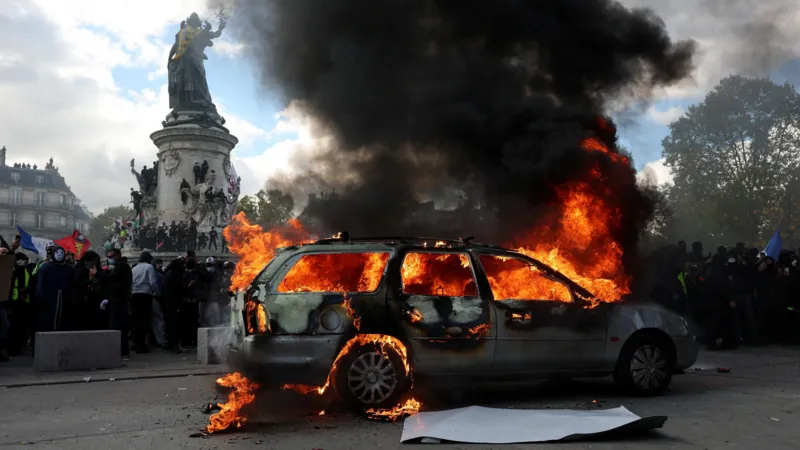
In Paris, the main demonstration appeared largely peaceful during the afternoon before some groups began setting fires, torching vehicles and vandalising businesses. Riot police used tear gas and water cannon to disperse crowds, while officers were also seen charging at demonstrators and striking several people with batons.
The unrest spread beyond the capital, with fires damaging prominent buildings in Lyon and Limoges. Shops were looted in several cities, while authorities reported damage to public buildings and businesses in multiple regions.
The demonstrations come amid mounting public frustration over the cost of living, staffing shortages and deteriorating facilities in France’s secondary schools. They have also intensified political tensions as the country approaches a period of uncertainty ahead of next year’s presidential election.
Paris sees clashes, arson and looting
The French capital witnessed some of the most serious confrontations as Saturday’s demonstrations continued into the evening.
Although the main march was largely peaceful during the afternoon, smaller groups later set fires in streets and torched vehicles, including near Place de la République, one of Paris’s prominent public squares.
Businesses were also targeted. Clothes and food shops were raided, at least one restaurant was gutted by fire, and fighting broke out among some groups, according to reports from the scene.
Riot police attempted to control the crowds using tear gas and water cannon. Officers were also seen advancing on demonstrators and using batons during confrontations in central Paris.
Earlier, some young people participating in the march told the media people they considered themselves pacifists and wanted to bring about change.
“We’re just trying to make things change, but nothing is moving,” they said, expressing frustration over the issues that had brought protesters onto the streets.
The contrast between peaceful demonstrations and subsequent violence highlighted the different groups involved in the protests. While many participants were demonstrating over public services and living costs, authorities reported targeted acts of violence by masked and hooded individuals in several locations.
Fires damage prominent buildings in Lyon and Limoges
The unrest caused damage to public buildings in several French cities, including Lyon and Limoges.
In Lyon, the city’s tourist office was set on fire. Mayor Grégory Doucet described the incident as a tragedy, saying the building was an iconic and historically significant part of the city.
“It breaks our hearts because it’s a very iconic, well-known historic building,” Doucet told BFMTV.
Local police said hostile individuals prevented firefighters from safely tackling the blaze, complicating efforts to control the fire.
In Limoges, a large fire at the town hall caused part of the roof to collapse, according to the local prefecture. Fire crews worked to contain the blaze as authorities assessed the damage to the building.
Other cities also reported vandalism and damage to public infrastructure. The affected locations included Grenoble, Avignon, Pau, Montpellier and Valence.
The incidents prompted renewed concerns over the protection of public buildings and the safety of emergency personnel responding to fires and other incidents during demonstrations.
Shops targeted as unrest spreads across France
Looting and vandalism were reported in multiple cities as the demonstrations intensified.
In Paris, clothing and food retailers were among the businesses targeted. In Lille, an Apple store was broken into and emptied, according to reports.
The Interior Ministry said Saturday’s protests involved targeted acts of violence by hooded individuals in areas including Paris, Marseille, Rennes, Toulouse and Angers.
Footage authenticated by BBC Verify showed a tourist train in Grenoble being driven by masked men along a narrow street in the city centre towards at least three riot police officers.
The damage and looting extended the impact of the protests beyond clashes between demonstrators and police. Businesses, public buildings and historic sites were also affected.
The authorities have condemned the violence, while political leaders have warned that those responsible for arson, looting and attacks on public infrastructure could face prosecution.
Explosive incident injures young man in Saint-Étienne
A separate incident in Saint-Étienne highlighted the dangers posed by explosive devices during the unrest.
Mayor Régis Juanico said on social media that a young man had suffered a severe hand injury after a small explosive detonated.
“He had his hand blown off,” Juanico said, describing the incident as a tragedy that should never have happened.
The circumstances surrounding the explosion were not fully established in the reported information.
The incident added to concerns about the risks faced by demonstrators, bystanders, police and emergency workers as confrontations escalated.
Student protests began over school conditions
The demonstrations were initially driven by dissatisfaction among students over conditions in France’s secondary schools, known as lycées, which are attended by pupils generally aged between 15 and 18.
Hundreds of thousands of students had taken part in protests in recent weeks, raising concerns about staff shortages and deteriorating school facilities.
Trade union members and other protest groups subsequently joined the demonstrations, broadening the movement beyond education-related grievances.
Among the groups participating were members of the gilets jaunes, or yellow vest, movement. The movement became prominent in 2018 through protests against rising living costs and fuel-related tax measures, developing into one of France’s longest-running protest movements.
The latest demonstrations have therefore brought together people with different grievances, including concerns about public services, household expenses and government policy.
Government offers additional teachers amid unrest
The French government has made some concessions in response to concerns over school conditions.
Education Minister Édouard Geffray promised 3,000 additional supply teachers during a television interview on October 8.
The commitment was intended to address concerns about staffing shortages in schools. However, protests continued and intensified despite the announcement.
The government’s response now faces the challenge of addressing the issues that prompted the demonstrations while restoring order and preventing further damage.
Lecornu said police had faced violence of extreme intensity and accused some groups of using the demonstrations as a warm-up for next year’s presidential election.
“No-one will impose their political agenda through violence,” the prime minister said.
He also criticised comments made by left-wing leader Jean-Luc Mélenchon, describing them as dangerous and cynical.
Macron and political leaders condemn violence
President Emmanuel Macron condemned attacks on public buildings and businesses, warning that those responsible would face legal consequences.
“Those who have broken, attacked the prefectures as well as businesses, looted even our town halls, will be prosecuted and punished,” Macron said.
Mélenchon, leader of the hard-left La France Insoumise party, participated in demonstrations and later accused police officers of unleashing violence against protesters. He also condemned looting and arson.
The differing responses reflect a wider political dispute over the handling of the demonstrations, the conduct of police and the grievances motivating protesters.
Marine Le Pen, leader of the National Rally, said legitimate demands had been held hostage by the far left and accused Mélenchon of fuelling the violence.
Lecornu, meanwhile, maintained that violence would not be allowed to determine the country’s political agenda.
France faces uncertainty ahead of presidential election
The unrest comes as France approaches a significant political transition. Macron is due to leave office next year, and the presidential election is expected to be held in April.
Polling cited in reports suggests the election could become a contest involving Le Pen and Mélenchon, although the eventual candidates and outcome remain uncertain.
The political backdrop has added another dimension to the demonstrations, with leaders accusing their opponents of exploiting public anger or contributing to the escalation.
The protests also reflect broader questions about the government’s ability to respond to concerns over living costs and public services while maintaining public order.
For the government, the immediate priority is to prevent further violence and establish accountability for attacks on people and property. For protesters, the central grievances include school staffing, facilities and the cost of living.
What happens next?
The arrest of more than 1,200 people and reports of 150 injured police officers underline the scale of Saturday’s unrest. Fires in Lyon and Limoges, looting in several cities and damage to public buildings have also raised questions about how the demonstrations will develop.
The government’s promise of additional supply teachers addresses one of the demands linked to the school protests, but the continuation of demonstrations suggests that wider dissatisfaction remains.
Authorities have pledged to prosecute those responsible for violence and property damage. Further developments will depend on the progress of investigations, the government’s response to public grievances and whether future demonstrations remain peaceful.
The events have exposed the challenge facing France as it attempts to balance the right to protest with public safety. While peaceful demonstrators have called for changes to education and living-cost policies, the violence has shifted attention towards policing, damaged infrastructure and accountability for those involved.