







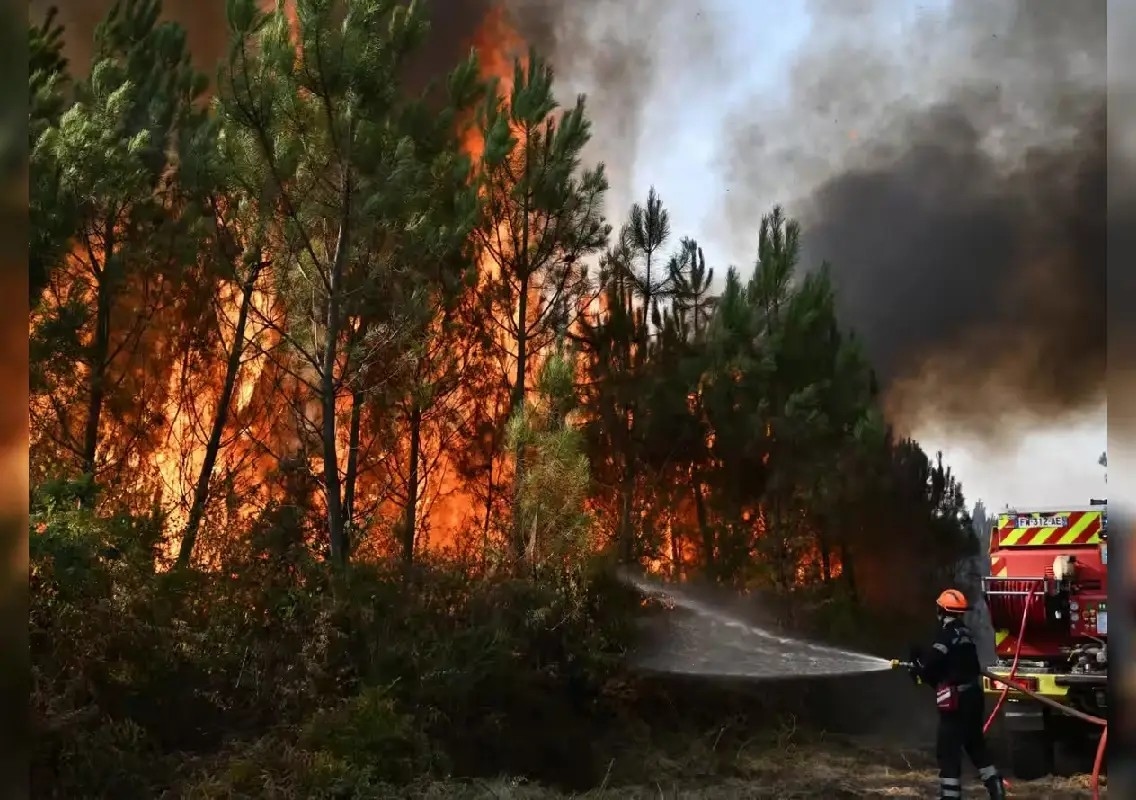


Paris: France has witnessed its first recorded wildfire-generated “fire cloud“, a rare weather phenomenon that forms when intense heat from large forest fires creates towering clouds capable of generating strong winds, lightning and unpredictable fire behaviour. The event has sparked discussions among scientists about whether countries such as India could face similar risks as climate change intensifies extreme weather.
The phenomenon, known as a pyrocumulus or, in more severe cases, a pyrocumulonimbus cloud, develops when the heat from a wildfire causes hot air, smoke and moisture to rise rapidly into the atmosphere.
Fire clouds can intensify wildfires
According to experts, fire clouds are more than a visual spectacle. They can create their own weather systems, producing strong winds that spread flames, lightning that ignites new fires and, in rare cases, even fire-induced thunderstorms.
The recent event in southwest France highlights how increasingly intense heatwaves and prolonged dry conditions are making wildfires more severe across parts of Europe.
Scientists say such fire clouds are typically associated with massive wildfires in countries such as Australia, Canada and the United States, where extreme fire conditions have become more frequent.
Should India be concerned?
Experts believe India currently faces a relatively lower risk of large fire clouds because most forest fires are smaller and are brought under control before reaching the intensity required to generate such weather systems.
However, climate scientists warn that rising temperatures, prolonged dry spells and changing rainfall patterns could increase the frequency and intensity of forest fires in vulnerable regions such as Uttarakhand, Himachal Pradesh, Jammu and Kashmir, Odisha and parts of the Western Ghats.
While India has not recorded a confirmed pyrocumulonimbus event, experts stress the importance of strengthening forest fire monitoring, early warning systems and climate resilience measures to minimise future risks.
The France incident serves as a reminder that extreme weather events are becoming increasingly interconnected with climate change, underscoring the need for greater preparedness and sustainable forest management worldwide.