









Washington : The Gates Foundation has highlighted the potential of artificial intelligence to improve lives across health, education and agriculture while praising the United Arab Emirates’ efforts to use advanced technology to address practical challenges.
Mark Suzman, chief executive of the Gates Foundation, said the UAE’s ambitions in artificial intelligence and its focus on agricultural innovation offered an example of how technology could be directed towards social and developmental needs. His comments came as the foundation released a new report examining how artificial intelligence can be made more accessible and beneficial to people around the world.
Foundation announces $1 billion AI investment
The Gates Foundation has announced plans to spend at least $1 billion over the next two years to expand access to artificial intelligence and the opportunities, knowledge and solutions associated with the technology.
The initiative comes at a time when AI is developing rapidly but access to its benefits remains uneven. The foundation has warned that without targeted investment, artificial intelligence could potentially widen existing inequalities instead of reducing them.
The concerns are particularly relevant for lower-income countries, where access to technology, digital infrastructure and specialised expertise can remain limited.
The foundation’s latest report argues that AI should be developed and deployed in ways that allow doctors, farmers, teachers, developers and other professionals to determine which technologies are most useful for their communities.
UAE partnership focuses on agriculture
Suzman pointed to a partnership between the UAE and the Gates Foundation announced during the COP28 climate conference in 2023.
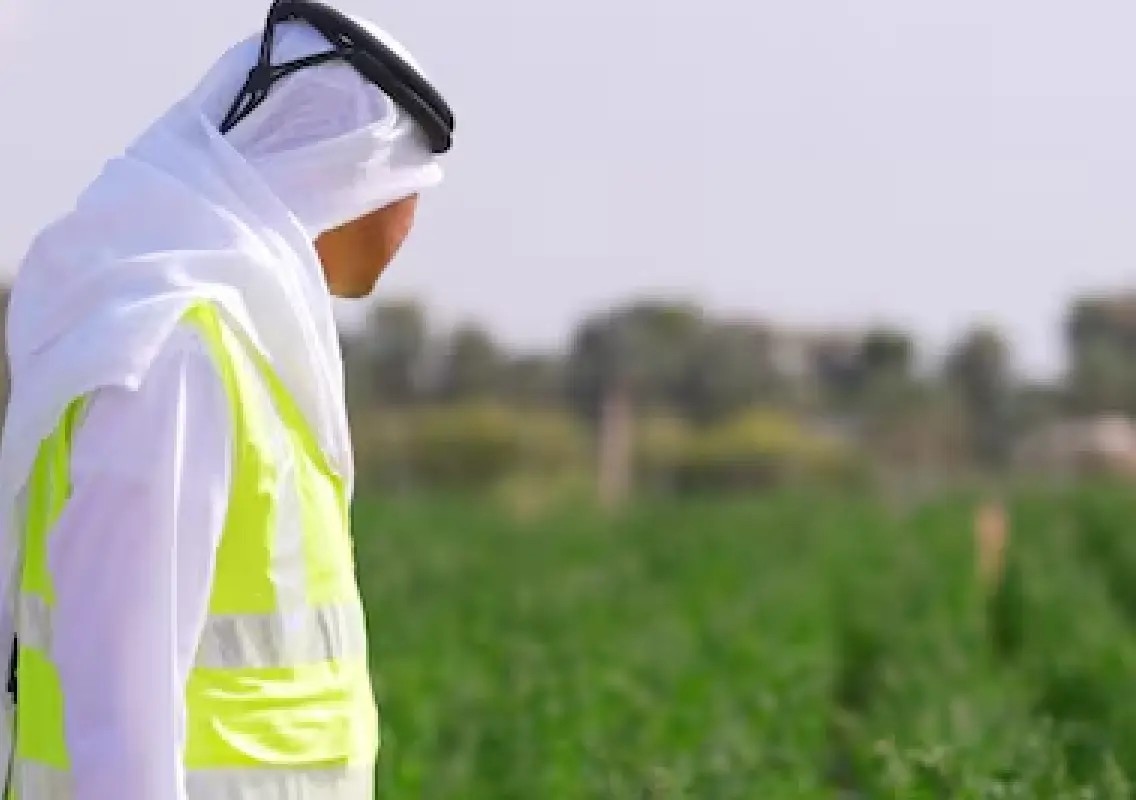
Under the Aim for Scale initiative, both the UAE and the Gates Foundation committed $100 million each towards agricultural innovation and efforts aimed at reducing hunger.
The partnership reflects growing interest in applying technology and scientific innovation to agricultural challenges, particularly those affecting food production and vulnerable communities.
Suzman also highlighted work being carried out by the Mohamed bin Zayed University of Artificial Intelligence, including research into the potential use of AI for disease prevention and improved weather forecasting.
According to the Gates Foundation chief executive, such projects demonstrate the importance of not merely developing advanced technology but also considering how it can be implemented to benefit society.
Language remains a major AI challenge
One of the central issues identified by the foundation is the unequal performance of AI systems across languages.
Although multilingual AI models have developed significantly in recent years, research cited in the report indicates that many systems continue to perform better in English than in several lower-resource languages.
The report points to languages including Amharic, Arabic and Yoruba, where AI models have shown weaker performance on questions involving science and technology.
This creates a particular concern for developing countries and regions with large populations speaking languages that have historically received less attention in AI development.
Arabic, for example, is spoken by hundreds of millions of people globally, but it was not among the main linguistic priorities during the early development of large language models.
The UAE has itself sought to address this gap. In 2025, the government-backed Technology Innovation Institute introduced Falcon Arabic, an AI model designed specifically to improve Arabic-language capabilities.
AI must work for local communities
The Gates Foundation’s report argues that AI should be capable of understanding not only major languages but also the dialects, accents and everyday expressions used by communities.
This is particularly important in areas such as healthcare. Africa, for instance, is home to more than 2,000 languages. AI systems intended to support healthcare or other public services will need to understand how people actually communicate if they are to become genuinely useful.
Suzman said partnerships between philanthropic organisations and major technology companies could help build the language resources required to make AI more inclusive.
The foundation is working with technology companies, including Microsoft and Google, on efforts involving language data and resources. It hopes the new report will encourage more companies and governments to participate in similar efforts.
Access matters more than the technology debate
The debate surrounding artificial intelligence often focuses on whether open-source or closed AI models are preferable. However, Suzman argued that such discussions should not distract developing countries from the more immediate question of whether people can actually benefit from AI.
For communities with limited resources, issues such as affordability, infrastructure, safety and the usefulness of AI applications may be more important than the underlying model architecture.
The foundation therefore wants AI development to be judged by its outcomes, including whether people can access useful tools at affordable prices and whether those tools can be used safely and responsibly.
The report also stresses the importance of ensuring that AI can contribute meaningfully to education, healthcare and agricultural productivity.
Balancing opportunity with inequality
The rapid expansion of AI has generated both optimism and concern. While the technology could transform sectors ranging from medicine to farming, it could also contribute to labour disruption and place additional pressure on energy resources.
Bill Gates has previously expressed concerns about the potential consequences of poorly regulated AI. The foundation’s latest report similarly emphasises the need to ensure that technological progress does not leave vulnerable populations further behind.
For the Gates Foundation, the challenge is therefore not simply to accelerate AI adoption but to make sure its benefits reach people who have historically had limited access to advanced technology.
The UAE’s work in artificial intelligence and agricultural innovation has emerged as one example of how governments, research institutions and philanthropic organisations can collaborate around these goals.
The broader message from the foundation is that artificial intelligence should become a tool for reducing inequality rather than another source of technological division. Ensuring access to appropriate technology, language resources, infrastructure and knowledge will be central to determining whether AI fulfils that promise.