







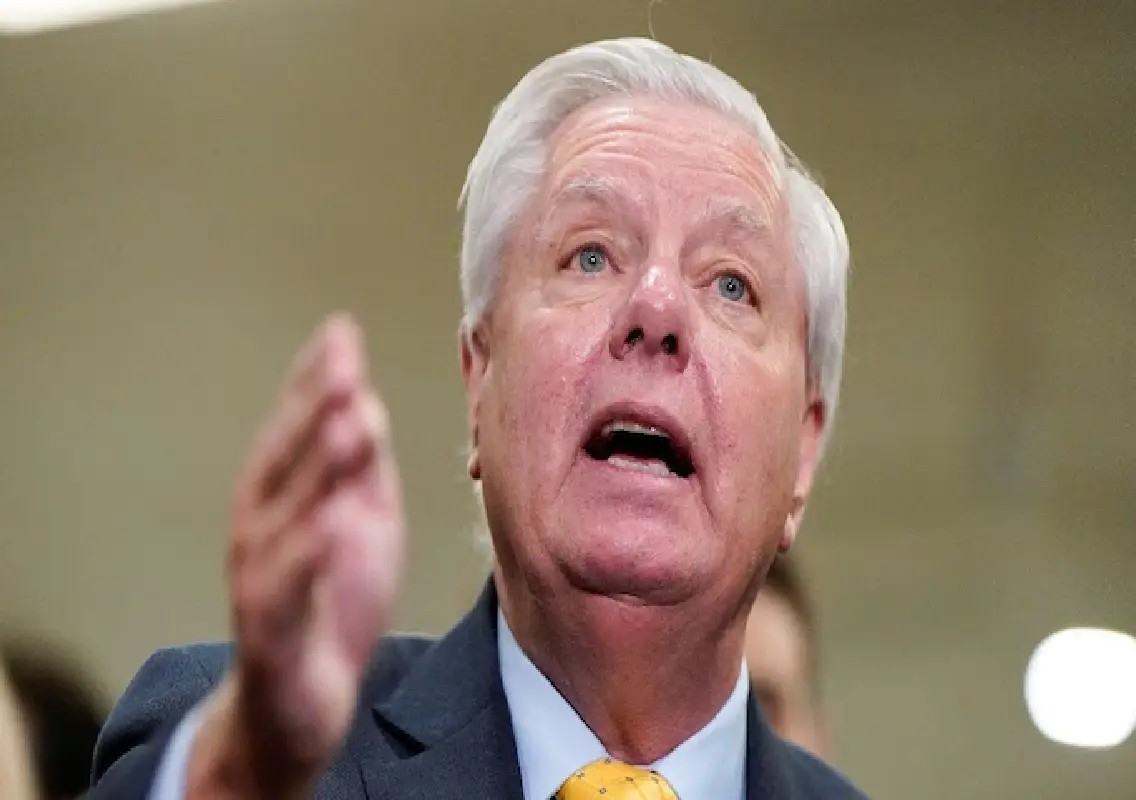


Washington: Republican Senator Lindsey Graham has said that if former US President Donald Trump succeeds in getting Saudi Arabia to formally recognise Israel under the Abraham Accords, it would amount to ending the Arab-Israeli conflict and justify renaming the Nobel Prize as the “Trump Prize”.
Speaking to Fox News, Graham described the potential expansion of the Abraham Accords as one of the most significant geopolitical developments in Middle Eastern history.
“If he can pull this off, if he can get Saudi Arabia — the centre of Islam for the entire world — to recognise the Jewish state of Israel, he would’ve ended the Arab-Israeli conflict that has been going on for thousands of years. They should change the Nobel Prize to the Trump Prize,” Graham said during the interview.
Graham praises Trump’s Middle East diplomacy
Graham further stated that if Trump manages to convince all Arab nations to join the Abraham Accords, it would become the “biggest change in modern history and ancient history of the Middle East.”
The Abraham Accords, brokered during Trump’s presidency in 2020, led to the normalisation of diplomatic relations between Israel and several Arab countries, including the United Arab Emirates, Bahrain, Morocco and Sudan.
Saudi Arabia has not formally joined the accords, though discussions regarding possible normalisation with Israel have continued intermittently amid regional tensions.
Graham also argued that once Iran is “put in a box”, peace between Saudi Arabia and Israel could become achievable.
The senator urged Arab allies to support Trump’s diplomatic initiatives and warned that rejecting such efforts would come “at your own peril.”
Pakistan rejects Abraham Accords proposal
The remarks came amid growing debate surrounding Pakistan’s stance on recognising Israel and joining the Abraham Accords.
Earlier this week, Pakistan rejected Trump’s reported call for several Muslim-majority countries, including Pakistan, to formally recognise Israel under the agreement framework.
Pakistan had reportedly been selected by Trump to help mediate discussions between Washington and Tehran. However, Pakistani Defence Minister Khawaja Asif publicly opposed Islamabad joining the accords.
Speaking to Samaa TV, Asif said Pakistan could not compromise on its “fundamental ideologies” despite maintaining relations with the United States.
“How will you sit down with those people whose words cannot be trusted even for a single day?” Asif reportedly said while explaining Pakistan’s position on Israel.
Pakistan has historically refused to recognise Israel since its creation in 1948 and has consistently linked any possible diplomatic recognition to the establishment of an independent Palestinian state.
Graham questions Pakistan’s role as mediator
Following Pakistan’s rejection of the Abraham Accords proposal, Graham questioned Islamabad’s credibility as a mediator in ongoing tensions involving the United States and Iran.
Writing on X, Graham stated that Pakistan’s long-standing opposition to Israel raised concerns regarding its neutrality.
“It has been apparent to me for quite a while that Pakistan as a mediator is more than problematic. Their animosity towards Israel is long-standing,” Graham wrote.
He also called on Pakistan to clearly clarify its position regarding Trump’s diplomatic push for expanding the Abraham Accords.
“In that regard, it is imperative that Pakistan give an answer now to President Trump’s call to join the Abraham Accords,” he added.
Iranian aircraft allegations add to tensions
The controversy intensified further after reports emerged alleging that Iranian military aircraft had used Pakistani air bases during recent regional tensions.
According to a report by CBS News, several Iranian aircraft reportedly landed at Nur Khan Airbase in Rawalpindi shortly after Trump announced a ceasefire involving Iran.
One of the aircraft was allegedly an Iranian Air Force RC-130 reconnaissance aircraft used for surveillance and intelligence operations.
The report suggested the aircraft may have been stationed in Pakistan temporarily to avoid potential US or Israeli strikes during the conflict.
Following the report, Graham called for “a complete reevaluation” of Pakistan’s role in mediation efforts involving Washington and Tehran.
However, Pakistan strongly denied the allegations, describing them as “misleading and sensationalised,” while reaffirming its commitment to supporting dialogue and de-escalation between the United States and Iran.
Abraham Accords remain key diplomatic issue
The latest developments have once again highlighted the strategic significance of the Abraham Accords in shaping Middle Eastern diplomacy and regional alliances.
Analysts believe any formal recognition of Israel by Saudi Arabia would represent a major geopolitical shift with far-reaching implications for the region.
At the same time, disagreements over the accords continue to expose divisions within the Muslim world regarding relations with Israel and the future direction of Middle Eastern diplomacy.