







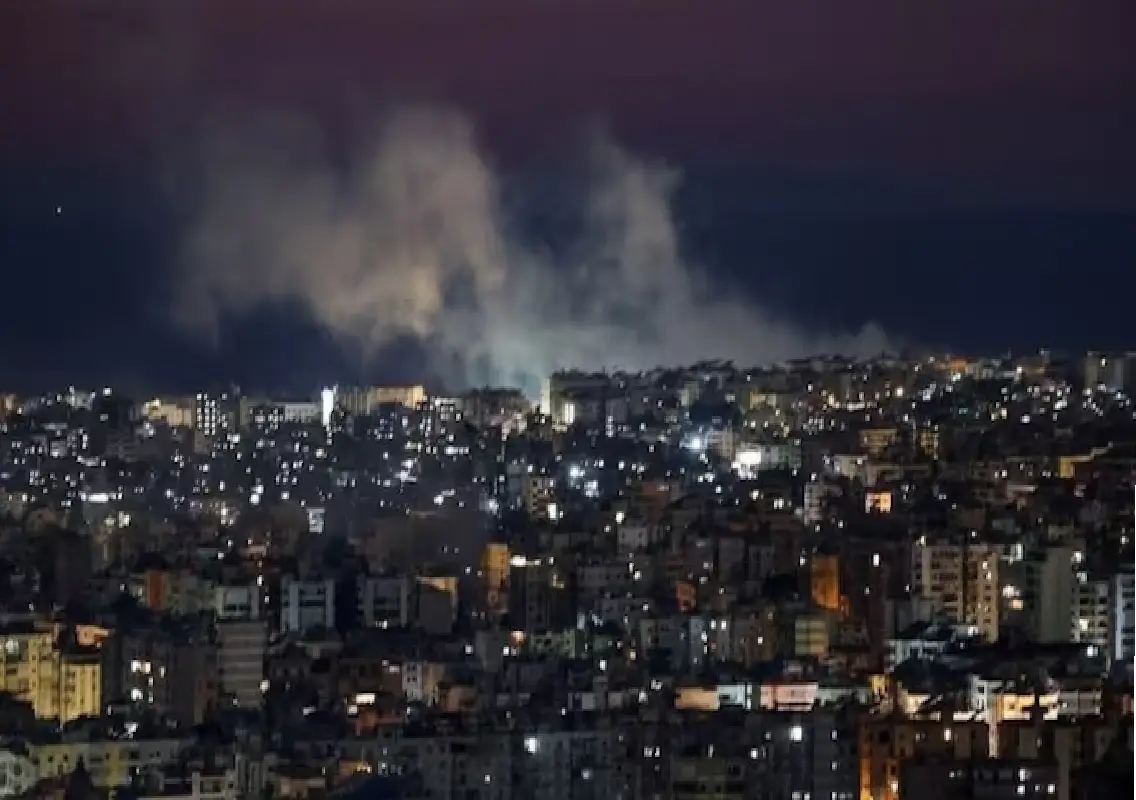


Persian Gulf: The administration of Donald Trump is facing growing dissatisfaction from several Gulf allies who say they were not given adequate warning before a wave of Iranian drone and missile attacks struck their territories following US-Israeli strikes on Iran.
Officials from two Gulf countries said their governments were disappointed with the way the United States handled the conflict, particularly the initial attack on Iran launched on February 28. According to the officials, Gulf states were not informed in advance about the joint operation involving the US and Israel and had warned Washington that the escalation could lead to serious regional consequences.
The officials, speaking on condition of anonymity because they were discussing sensitive diplomatic matters, said their countries were left scrambling to respond when Iran retaliated with a large-scale barrage of missiles and drones targeting locations across the Gulf region.
Concerns over limited US defence support
One Gulf official said frustration in the region stems partly from a perception that US military efforts have focused mainly on defending Israel and American troops rather than protecting allied countries in the Gulf.
The official added that their country’s supply of missile interceptors was being rapidly depleted as air defence systems attempted to counter the incoming threats. The repeated attacks have raised concerns among Gulf governments about the sustainability of their defensive capabilities if the conflict continues.
Governments of Bahrain, Kuwait, Oman, Qatar, Saudi Arabia and the United Arab Emirates did not respond to requests for comment regarding the criticism directed at Washington’s handling of the crisis.
However, a spokesperson for the White House, Anna Kelly, defended the US strategy, stating that Iran’s retaliatory missile attacks had significantly reduced due to a military operation aimed at weakening Iran’s ability to launch or produce such weapons.
She said the US administration remained in close contact with regional partners and argued that Iran’s attacks on neighbouring countries demonstrated why the operation had been necessary.
Criticism from regional figures
Public criticism has also come from influential figures in the region with close ties to Gulf governments.
Turki al‑Faisal, the former Saudi intelligence chief, suggested that Israeli Prime Minister Benjamin Netanyahu had pushed the United States into a conflict that many in the region view as unnecessary.
“This is Netanyahu’s war,” Turki al-Faisal said in an interview with CNN. “He somehow convinced the president to support his views.”
Such remarks highlight broader concerns among some Gulf policymakers who fear that escalating tensions between Iran, Israel and the United States could destabilise the entire Middle East.
Pentagon acknowledges challenges
Officials from the United States Department of Defense have acknowledged difficulties in countering the scale of Iranian drone attacks.
During closed-door briefings to US lawmakers, Defence Secretary Pete Hegseth and Chairman of the Joint Chiefs of Staff Dan Caine reportedly admitted that US forces may not be able to intercept many of the drones launched by Iran, particularly the Shahed-type unmanned aerial vehicles.
According to officials familiar with the discussions, the US lacks sufficient counter-drone capabilities across much of the Gulf region, particularly in areas outside traditional military bases in Iraq and Syria.
This limitation has raised concerns about the vulnerability of various installations, including ports, energy facilities and locations housing American troops.
Rising casualties and damage in the region
The Gulf region has become a major target for Iranian retaliation because of its proximity and the presence of key strategic assets.
Since the conflict began, Iran has reportedly launched at least 380 missiles and more than 1,480 drones targeting Gulf countries, according to an Associated Press tally based on official statements.
At least 13 people have been killed in these attacks, according to local authorities.
In one of the most serious incidents, six US soldiers were killed in Kuwait when an Iranian drone struck an operations centre located in a civilian port more than 10 miles from a major military base.
Reports indicated that the building housing the unit had minimal defensive protection, highlighting concerns about the vulnerability of certain facilities in the region.
Attacks on diplomatic facilities
Several diplomatic sites have also been affected by drone strikes.
An attack near the US embassy in Riyadh caused a limited fire at the compound, while another drone strike near the US consulate in Dubai sparked a small fire outside the facility.
Although the damage in these incidents was limited, the attacks have underscored the expanding reach of Iran’s drone campaign across the Gulf.
The US and its regional partners are now exploring additional measures to counter the threat, including seeking technical assistance from countries experienced in defending against similar drone systems.
Ukraine offers counter-drone expertise
In a notable development, Volodymyr Zelenskyy said Ukraine had been approached for help because of its experience in countering Iran’s Shahed drones during the war with Russia.
When asked about the possibility of Ukrainian assistance, Trump told Reuters that the United States would be willing to accept help from any country capable of providing effective support.
Experts say Ukraine’s battlefield experience in dealing with Iranian drones could offer valuable insights for Gulf countries facing similar threats.
Strategic concerns among Gulf nations
Analysts believe the current tensions are exposing strategic disagreements between the United States and its Gulf allies.
Bader Mousa Al‑Saif, a Kuwait-based analyst affiliated with Chatham House, said Washington appeared to have underestimated the level of exposure faced by Gulf countries during the conflict.
“I don’t think they saw that there would be as much exposure to the Gulf,” he said, adding that the absence of a comprehensive plan to protect the region reflected short-sightedness in US planning.
Some observers also note that Israel’s air defence systems have been far more successful in intercepting incoming missiles and drones compared to those used by several Gulf countries.
Uncertain future for the region
Former US ambassador to Saudi Arabia Michael Ratney said Gulf nations have mixed feelings about the conflict.
While many countries in the region would like to see Iran’s influence weakened, they are also worried about the economic and security consequences of a prolonged war.
According to Ratney, Gulf countries are particularly concerned about the potential damage to trade, energy infrastructure and regional stability if hostilities continue.
Conclusion
The growing frustration among Gulf allies highlights the complex geopolitical challenges surrounding the ongoing conflict involving Iran, Israel and the United States. As drone and missile attacks continue to affect countries across the Persian Gulf, regional governments are seeking stronger security assurances while also questioning the long-term strategy behind the war.
With tensions still high and no clear resolution in sight, the Gulf nations may find themselves bearing much of the immediate impact of the conflict’s next phase.