







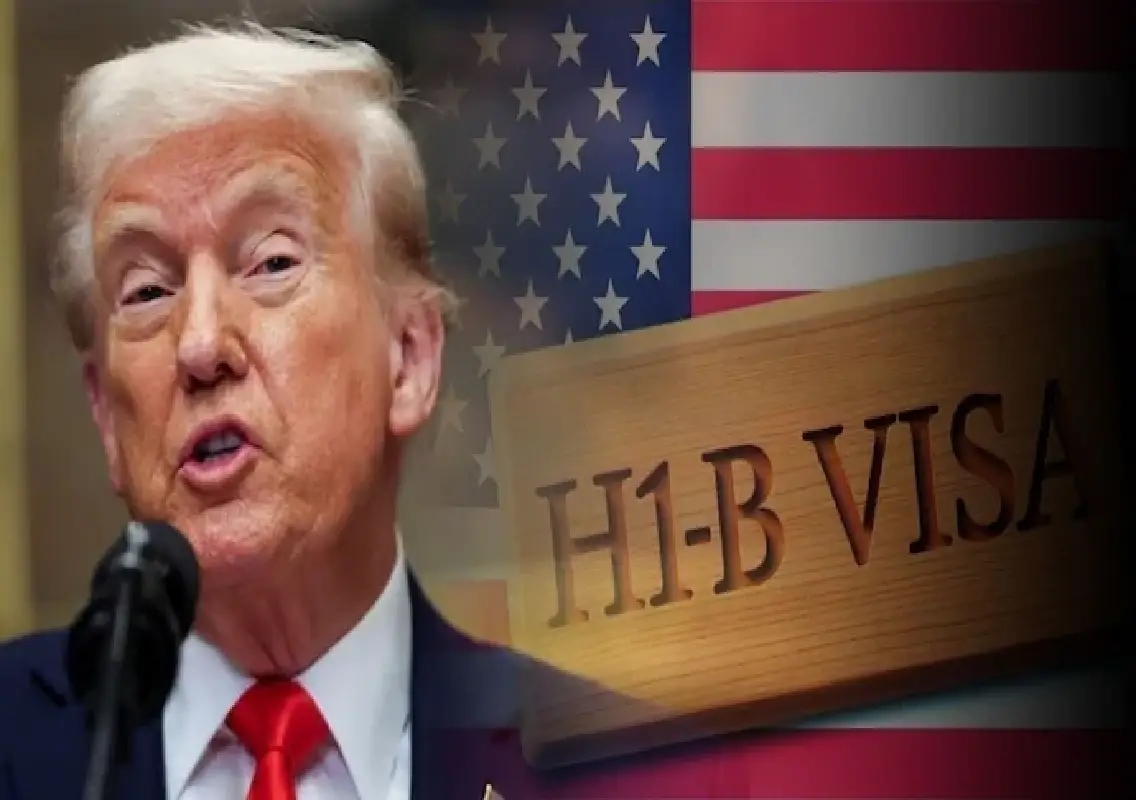


Washington : The H-1B visa programme has seen a significant shift in 2026, with selection rates for high-skilled foreign workers rising sharply after years of declining odds. In several cases, approval rates have reached as high as 75%, while overall selection rates have crossed 50%—a notable jump from the roughly 33% chances seen in previous years.
This turnaround has been largely attributed to immigration policy changes introduced under US President Donald Trump, which have reshaped the programme by reducing the number of applicants and prioritising higher-skilled, better-paid candidates.
Sharp drop in applications boosts success rates
According to reports, the most significant factor behind the improved selection rates is a dramatic decline in the number of applications. Estimates suggest that between 1.95 lakh and 2.35 lakh registrations were filed this year—down by as much as 43% compared to the previous year and the lowest since the online lottery system was introduced in 2020.
Just three years ago, registrations had crossed 7.5 lakh, making the odds far more competitive.
With only 85,000 visas available annually under the cap, the reduced applicant pool has naturally increased the probability of selection for those who applied.
$100,000 fee plays key role
A major policy change driving this shift is the imposition of a $100,000 fee on companies hiring new H-1B workers from outside the United States. This steep cost has discouraged many employers—particularly universities, hospitals, and smaller firms—from sponsoring international candidates.
As a result, several sectors that traditionally relied on the H-1B programme have scaled back participation, contributing to the overall drop in applications.
Immigration experts have described the fee as the “primary driver” behind the improved odds, as it effectively filters out a large portion of potential applicants.
Weighted lottery favours high-skilled workers
In addition to reducing the applicant pool, the US administration has introduced a new weighted lottery system. Unlike the earlier randomised process, the revised framework prioritises candidates based on wage levels and experience.
Under this system, higher-paid and more senior professionals are given multiple chances—up to four entries—thereby increasing their likelihood of selection.
This shift aligns with the administration’s objective of directing visas toward highly skilled and experienced workers rather than entry-level applicants.
Tech sector slowdown adds to decline
Another contributing factor is the slowdown in hiring within the technology sector, historically one of the largest users of H-1B visas. Many tech companies have reduced overseas recruitment following substantial investments in artificial intelligence and automation.
Firms are increasingly focusing on hiring experienced professionals for specialised roles, further limiting the number of applications submitted for entry-level positions.
Additionally, some employers have adopted a cautious “wait and watch” approach amid ongoing policy changes and legal uncertainties, opting to skip this year’s lottery altogether.
Legal challenges and future uncertainty
Despite the current surge in approval rates, the long-term outlook of the H-1B programme remains uncertain. Several lawsuits challenging the $100,000 fee are currently pending in US courts, including the Court of Appeals for the District of Columbia Circuit and other federal jurisdictions.
Even if the fee is overturned, proposed regulations aimed at raising minimum wage thresholds for H-1B workers could further reshape the programme by making it more expensive for employers.
Impact on foreign professionals
For foreign professionals—especially those already residing in the US—the current scenario offers improved chances of securing an H-1B visa. Since the additional fee applies primarily to new hires from abroad, candidates already in the country have gained a relative advantage.
However, the shift towards favouring higher-paid roles may limit opportunities for fresh graduates and entry-level applicants, particularly from countries like India, which has historically been a major contributor to the H-1B workforce.
Conclusion
The surge in H-1B visa selection rates in 2026 marks a significant departure from previous trends, driven by policy changes that have reduced competition and prioritised skilled talent. While the improved odds offer relief to many applicants, the evolving regulatory landscape and ongoing legal challenges mean that the future of the programme remains uncertain.
For now, the H-1B system appears more predictable and accessible—but only for a narrower pool of highly qualified candidates.