







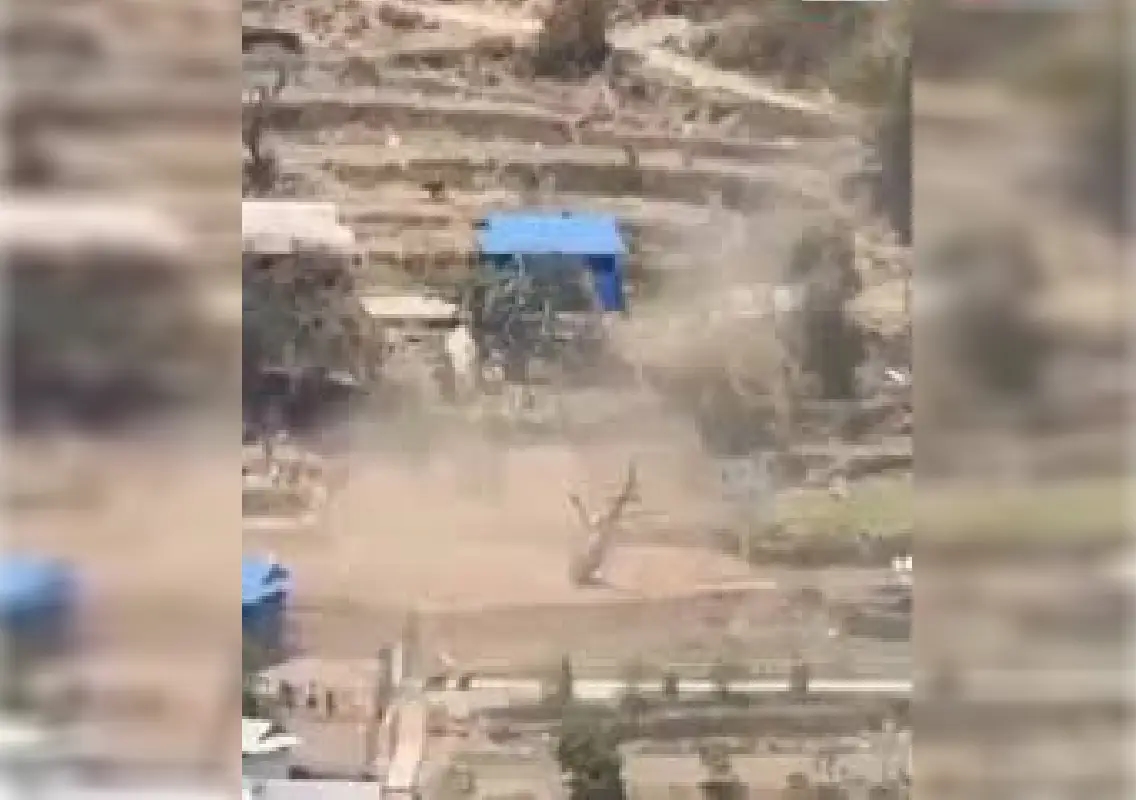


Nepal: A helicopter carrying family members travelling to attend a funeral crashed in eastern Nepal on Wednesday afternoon, raising concerns over aviation safety in the mountainous country. The aircraft, operated by Air Dynasty, went down during landing in the Balabesi area of Khartamcha in Khotang district.
According to preliminary reports, the helicopter with flight number 9N-AFQ had departed from Kathmandu at around 11.00 am. The aircraft reportedly crashed at approximately 11.51 am while attempting to land in the remote area.
Authorities confirmed that the passengers on board were travelling to attend a funeral when the incident occurred. Rescue teams and local authorities rushed to the crash site soon after the accident was reported.
Helicopter departed from Kathmandu
Officials said the Air Dynasty helicopter had taken off from Kathmandu earlier in the day and was heading towards Khotang district in eastern Nepal.
The flight was carrying family members who were travelling to attend funeral rites in the Khartamcha region. Such chartered helicopter services are commonly used in Nepal to access remote mountainous areas that are otherwise difficult to reach by road.
Initial information indicates that the helicopter encountered difficulties during its landing attempt in the Balabesi area of Khartamcha. The exact cause of the crash has not yet been confirmed.
Authorities said the aircraft went down just minutes before its scheduled landing, resulting in a serious aviation incident in the region.
Crash occurred during landing attempt
According to available reports, the helicopter crashed at around 11.51 am while approaching the landing area.
The Balabesi area in Khartamcha is located in a hilly region where landing conditions can sometimes be challenging due to terrain and weather conditions. Aviation experts often note that helicopter operations in Nepal require careful navigation because of the country’s mountainous geography.
Local residents reportedly alerted authorities immediately after witnessing or hearing the crash. Emergency responders and local officials began efforts to reach the site shortly afterwards.
Rescue operations were initiated to assess the situation and assist those involved in the crash.
Rescue teams rushed to the site
Following the crash, local authorities, security personnel and rescue teams were dispatched to the accident site.
Due to the remote terrain in Khotang district, reaching the location can sometimes be difficult. However, officials confirmed that rescue personnel were mobilised quickly to carry out search and rescue operations.
Authorities are working to gather detailed information regarding the number of passengers on board and the extent of damage caused by the crash.
Local officials have also begun coordinating with aviation authorities in Kathmandu to investigate the circumstances leading to the incident.
Aviation safety concerns in mountainous regions
Nepal’s aviation sector often faces unique operational challenges due to the country’s mountainous landscape and unpredictable weather conditions.
Helicopters and small aircraft frequently operate in remote areas where conventional transportation infrastructure is limited. While these services are essential for connectivity, the terrain can make take-offs and landings particularly demanding.
Over the years, aviation experts have repeatedly emphasised the importance of strict safety protocols, regular aircraft maintenance and advanced navigation support systems to reduce risks associated with flights in such environments.
Authorities typically conduct detailed investigations following aviation accidents to determine whether weather conditions, technical issues or human factors contributed to the incident.
Investigation likely to determine cause
Following the crash, aviation authorities in Nepal are expected to launch an official investigation to determine the cause of the accident.
Investigators will examine flight records, maintenance history and weather conditions at the time of the incident. They may also collect evidence from the crash site and interview witnesses and aviation personnel.
Such investigations are standard procedure in aviation incidents and help authorities identify factors that may have contributed to the accident.
The findings could lead to safety recommendations aimed at preventing similar incidents in the future.
Conclusion
The helicopter crash in Khotang district has drawn attention to the risks associated with aviation operations in Nepal’s challenging terrain. As rescue efforts continue and authorities gather more information, the focus will remain on determining the cause of the accident and ensuring the safety of passengers travelling to remote regions.
Further updates are expected as investigators and rescue teams continue their work at the crash site.