







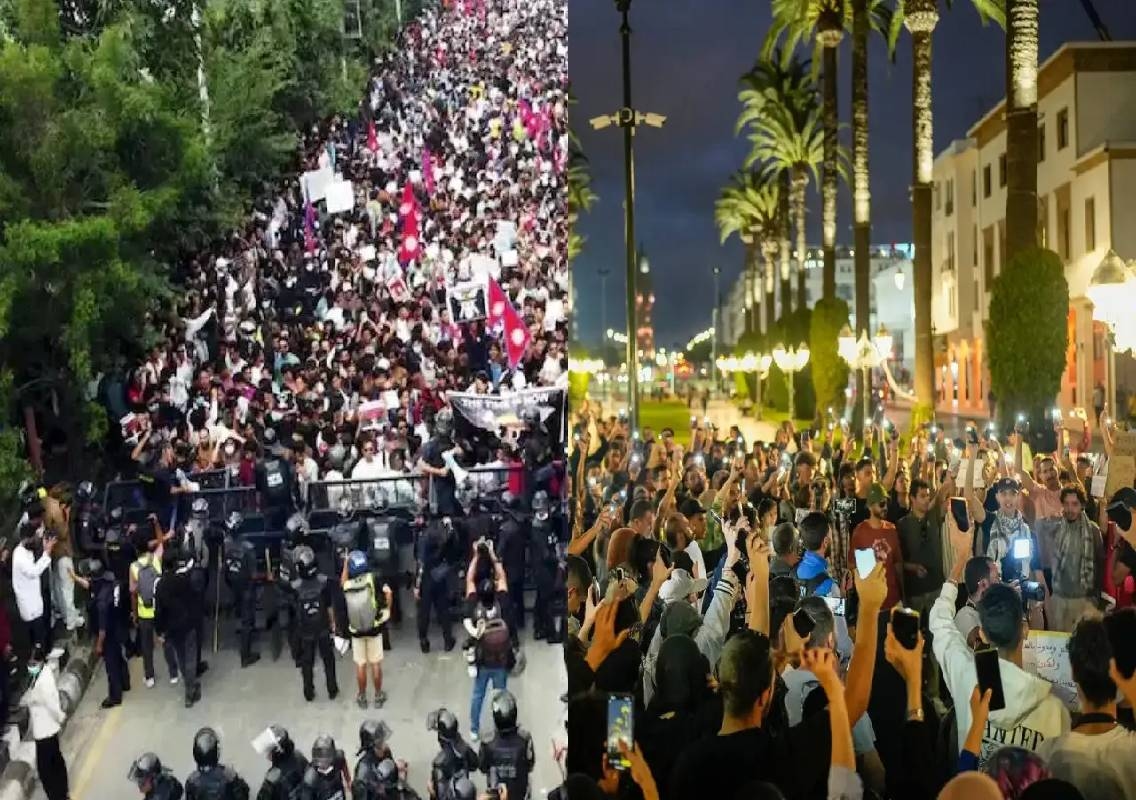


New Delhi: From demanding education reforms in India to challenging governments in Bangladesh, Kenya and Serbia, Generation Z has emerged as one of the most influential political forces of the decade. Armed with smartphones, social media platforms and decentralised organisation, young protesters are increasingly shaping public discourse and forcing governments to respond to their demands. Recent student-led demonstrations in India have once again highlighted how Gen Z is redefining civic participation and political activism.
Unlike traditional protest movements led by political parties or unions, many Gen Z campaigns have been organised through platforms such as Instagram, X and TikTok, allowing information to spread rapidly and enabling leaderless mobilisation across cities and even countries.
India’s student protests
India has witnessed one of its largest youth-led protest movements in recent years following allegations surrounding examination irregularities and demands for greater accountability.
Thousands of students gathered in Delhi and other cities, calling for reforms in the education system. The movement, driven largely by Gen Z, gained momentum through social media campaigns and digital mobilisation. The protests eventually resulted in significant political developments, including the resignation of Union Education Minister Dharmendra Pradhan after sustained public pressure.
Observers say the movement reflected broader frustrations over employment opportunities, examination transparency and governance rather than a single issue.
Bangladesh’s youth-led uprising
Bangladesh is often cited as one of the earliest examples of a successful Gen Z-led political movement in recent years.
Student-led demonstrations that began over quota reforms evolved into a nationwide movement demanding political accountability. The protests significantly altered Bangladesh’s political landscape and inspired similar youth-led campaigns across South Asia.
The movement demonstrated how digitally connected young people could sustain nationwide protests despite internet restrictions and security crackdowns.
Kenya’s anti-tax movement
In Kenya, young protesters united under the #RutoMustGo campaign to oppose proposed tax increases and rising living costs.
The movement was largely coordinated through social media and stood out for its decentralised, leaderless structure. Following weeks of demonstrations, President William Ruto declined to sign the controversial Finance Bill, marking a major victory for the protesters.
The protests also inspired similar youth-led digital activism across several African countries.
Common features of Gen Z movements
Despite taking place in different countries, many Gen Z protests share several defining characteristics.
Most movements rely heavily on social media for mobilisation, communication and fundraising. Protesters often reject traditional political hierarchies, preferring decentralised leadership that makes movements harder to suppress.
Issues driving these protests typically include unemployment, corruption, rising living costs, education reforms, climate concerns, democratic accountability and social justice. Young activists also frequently use humour, memes and short-form videos to amplify their message online.
Why Gen Z is different
Analysts believe Generation Z’s digital-first upbringing has fundamentally changed the way protests are organised.
Instead of depending on television or newspapers, young people consume information primarily through social media, enabling rapid coordination and wider participation. Online campaigns often translate into offline demonstrations within hours, giving governments less time to respond.
Researchers also note that Gen Z tends to focus less on traditional political identities and more on issue-based mobilisation, allowing broader coalitions to emerge around shared concerns.
A new era of civic activism
While not every Gen Z protest has achieved its objectives, many have succeeded in forcing governments to engage with public demands.
From policy reversals and ministerial resignations to wider discussions on governance and accountability, youth-led movements are increasingly influencing political decision-making around the world.
As digital platforms continue to evolve, experts believe Generation Z is likely to remain a defining force in shaping public policy and democratic participation over the coming years.
Conclusion
Gen Z protests are redefining activism by combining digital connectivity with grassroots participation. Whether demanding education reforms in India, political accountability in Bangladesh or economic justice in Kenya, young people are demonstrating that organised civic action can influence governments and reshape political conversations. Their growing role signals a broader transformation in how democratic participation is evolving in the digital age.