







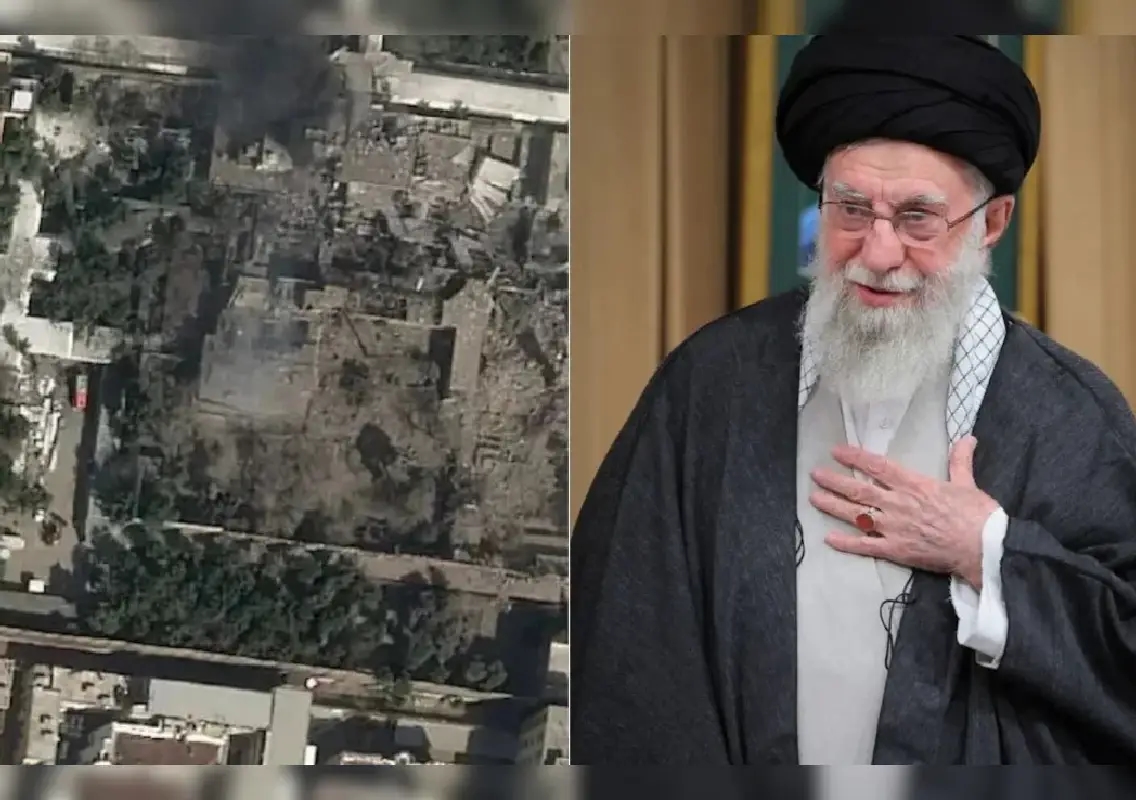


The reported killing of Iran’s Supreme Leader Ayatollah Ali Khamenei in a joint US-Israel air strike was not merely a sudden military operation but the result of a long-running intelligence campaign involving surveillance technology, cyber operations and data analysis, according to international reports.
The operation reportedly relied on years of intelligence gathering that helped security agencies monitor movements within Tehran and track the routines of senior Iranian officials.
Traffic cameras allegedly hacked for years
According to reports, intelligence agencies had access to several traffic cameras across Tehran, which were allegedly compromised over an extended period.
One camera angle reportedly proved especially valuable as it captured the area where bodyguards of senior Iranian officials, including Khamenei, regularly parked their vehicles.
This allowed analysts to observe patterns in the movement of security teams and understand daily routines within a highly secured compound.
Building a “pattern of life”
Intelligence officials reportedly combined camera surveillance with other sources of information to develop what analysts call a “pattern of life”.
Advanced algorithms analysed large volumes of data on personnel responsible for protecting senior Iranian leaders. These intelligence files reportedly included home addresses, commuting routes, work schedules and the officials they were assigned to protect.
The goal was to determine precisely when and where Khamenei was likely to be present.
Multiple intelligence agencies involved
The operation reportedly involved coordination between Israeli intelligence agencies and the US Central Intelligence Agency (CIA).
Israel’s signals intelligence unit, often referred to as Unit 8200, is believed to have contributed advanced surveillance capabilities, while other agencies reportedly gathered human intelligence and analysed large datasets.
Experts say such intelligence cooperation often combines signals intelligence, human sources and technological monitoring to create a detailed operational picture.
Communication networks disrupted
Reports also suggest that mobile phone towers near Tehran’s Pasteur Street area were interfered with during the operation, causing communication disruptions.
This reportedly prevented security teams from receiving warning calls during the strike.
Advanced targeting systems used
Military analysts say modern warfare increasingly relies on precision targeting technologies capable of striking extremely small targets from long distances.
Missile systems used in the strike were reportedly capable of hitting targets from more than 1,000 kilometres away, beyond the reach of many air defence systems.
Debate over targeted assassinations
The killing of a political leader during a military conflict has sparked intense international debate.
Some experts argue that targeted killings can weaken adversaries, while others warn that such tactics may increase instability and trigger further escalation in global conflicts.
Officials and analysts note that decisions to eliminate senior leaders are ultimately political choices, even when sophisticated intelligence and technology make such operations possible.