







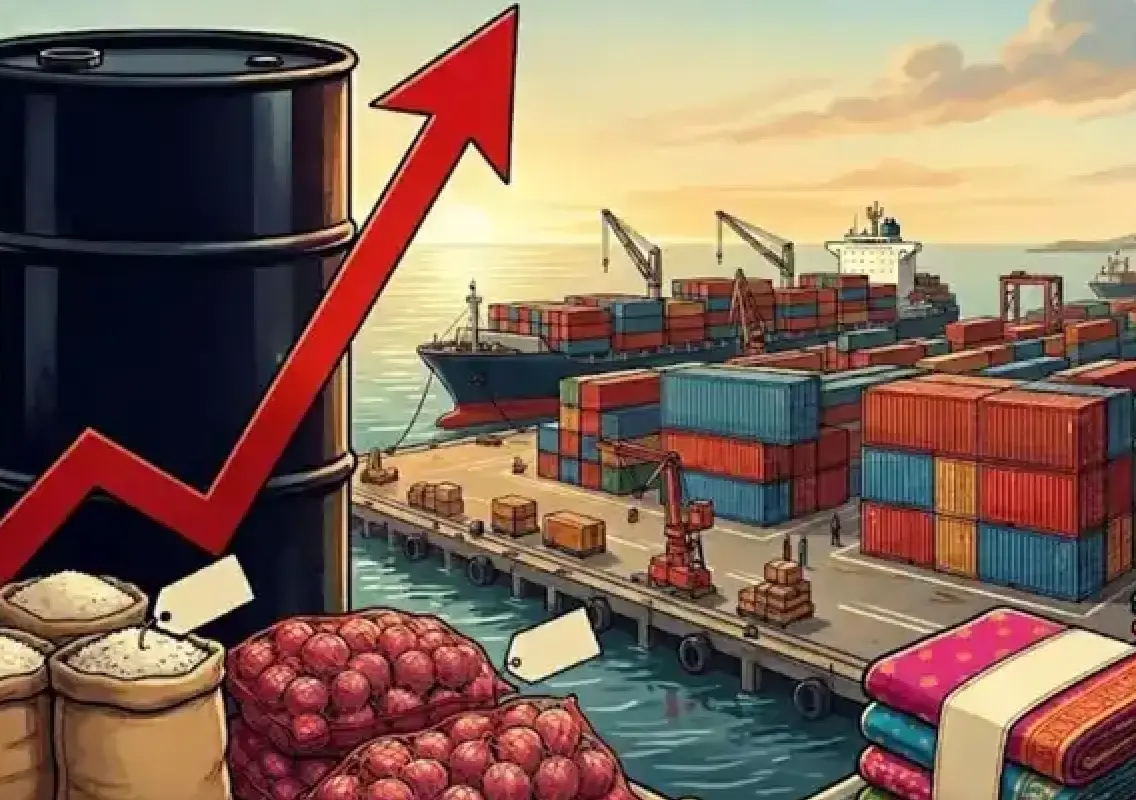


The escalating conflict between Israel and Iran has pushed West Asia back to the centre of global economic anxiety. While missiles and military strikes dominate headlines, the deeper impact may unfold in energy prices, shipping routes, inflation, and household budgets worldwide.
Oil: The first shockwave
Nearly one-fifth of the world’s oil trade passes through the Strait of Hormuz. Even without a full blockade, heightened risk raises insurance premiums, freight costs, and speculative trading activity. Markets price fear quickly. A sustained conflict could push crude prices higher, not necessarily due to immediate supply collapse, but because of risk premiums and stockpiling.
For oil-importing economies such as India, this acts as an inflationary tax. A $10–15 rise in crude can complicate fiscal planning, widen current account deficits, and weaken currencies.
Shipping and trade disruptions
Around 95% of India’s trade by volume moves by sea. If Gulf routes become unstable, exporters face higher freight charges, delivery delays, and rising insurance costs. For small and medium enterprises operating on tight margins, these disruptions can be severe.
The ripple effects extend globally. Energy costs influence transport, fertilisers, manufacturing, and food prices. Developing economies, already navigating slow growth and high debt, may feel the pressure most acutely.
Inflation and fragmentation
Energy shocks feed directly into inflation. Higher fuel prices increase logistics costs, which raise retail prices. Central banks may face difficult choices between controlling inflation and supporting growth.
There is also a broader structural risk. Repeated geopolitical shocks — from the pandemic to conflicts in Europe and the Red Sea — have made global trade increasingly fragile. The Iran–Israel confrontation risks accelerating economic fragmentation, as nations turn inward, subsidise domestic industries, and erect trade barriers.
The way forward
Diplomatic de-escalation remains the most effective economic policy in this context. For countries like India, diversification of energy sources, expansion of strategic reserves, and investment in resilient supply chains are essential.
The lesson is clear: geopolitics and economics are deeply intertwined. A conflict in West Asia does not stay regional — it travels through oil prices, shipping lanes, and supermarket bills across the world.