







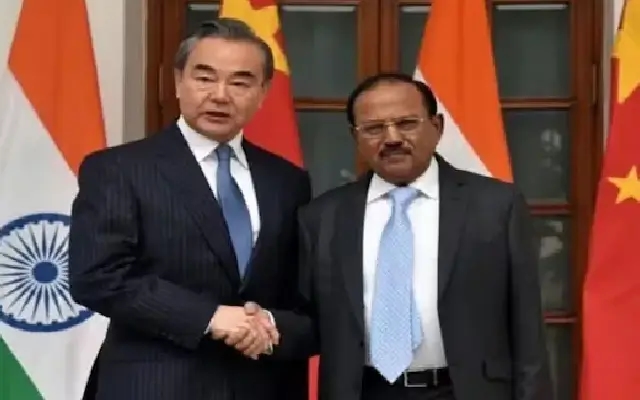


India and China have made a significant stride in normalizing their relations as Special Representatives (SRs), NSA Ajit Doval and Foreign Minister Wang Yi, held talks for the first time in five years in Beijing. The discussions resulted in a positive affirmation of the October 21 disengagement agreement, allowing for patrolling and grazing in the “relevant areas.” Both sides focused on ensuring peace on the ground to prevent border issues from hindering the “normal development” of bilateral ties.
China and India agreed on a “step-by-step” roadmap, starting with addressing simpler issues before tackling more contentious ones. Chinese Ambassador Xu Feihong highlighted the consensus reached, which included the resumption of the Kailash Mansarovar pilgrimage in Tibet, cross-border river cooperation, and trade at Nathu La Pass. China described the talks as “constructive” and a timely step toward implementing the consensus reached by PM Narendra Modi and President Xi Jinping in Kazan in October.
The Indian government welcomed the discussions, stating that Doval and Wang provided “positive directions” for cross-border cooperation, including the resumption of the Kailash Mansarovar Yatra and enhanced data sharing on trans-border rivers. Both leaders emphasized the importance of maintaining a “political perspective” and developing a mutually acceptable framework for boundary resolution.
The SR engagement, which had last taken place in December 2019, followed a positive shift in relations after the disengagement process at the remaining friction points, Depsang and Demchok, in eastern Ladakh. The talks aim to ensure peace, stability, and effective management of border activities, with a focus on fostering stronger India-China relations.
Read also