







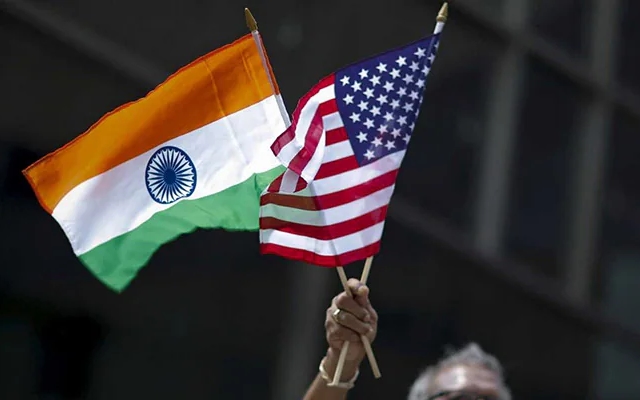


A senior US official remarked on Monday that significant strides have been made in the US-India bilateral relationship, likening progress to achieving “escape velocity,” a term borrowed from space exploration denoting the speed necessary for a body to break free from gravity’s pull.
Deputy Secretary of State Kurt Campbell made these comments during a discussion on sustainable US policy in the Indo-Pacific region at the Council on Foreign Relations, a prominent think tank. Campbell, who recently visited India alongside National Security Adviser Jake Sullivan, highlighted the visit as the first by senior US officials to New Delhi during Prime Minister Narendra Modi’s current term.
Campbell emphasized the importance of enhancing educational opportunities for Indian students in STEM fields at US universities, advocating for prioritizing them over Chinese students in high-technology sectors, which face trust issues.
“The United States and India have initiated efforts to enhance defense industrial cooperation, focusing on jet engines and armored vehicles,” Campbell stated, underscoring America’s sustained engagement in the Indo-Pacific region.
Reflecting on his extensive experience in India, Campbell expressed confidence in the relationship reaching a sustainable partnership phase. “After decades of work in India, I believe we’ve finally achieved escape velocity in our relationship,” he said, pointing to shared ambitions in Delhi and Washington to advance collaboration, including joint initiatives in the Indian Ocean.
Campbell, formerly a key figure in President Biden’s Indo-Pacific policy team, highlighted recent developments such as elevating the Quad alliance with India, Australia, and Japan, and the launch of the AUKUS partnership with Australia and the UK, aimed at strengthening multilateral ties to manage China’s rising influence.
Regarding specific projects, Campbell noted the joint production of GE’s F414 jet engine with HAL, announced during Prime Minister Modi’s visit last year, and ongoing discussions on co-producing Stryker armored vehicles to modernize India’s military capabilities.
The official also underscored the importance of people-to-people ties, particularly the increasing number of Indian students studying in US universities, which constitute the second-largest group of foreign students. Campbell urged for further expansion in this area to supplement declining numbers of Chinese students in American higher education institutions.
Campbell’s remarks underscored the strategic depth and growing momentum in US-India relations across economic, defense, and educational sectors, amidst broader regional dynamics in the Indo-Pacific.