







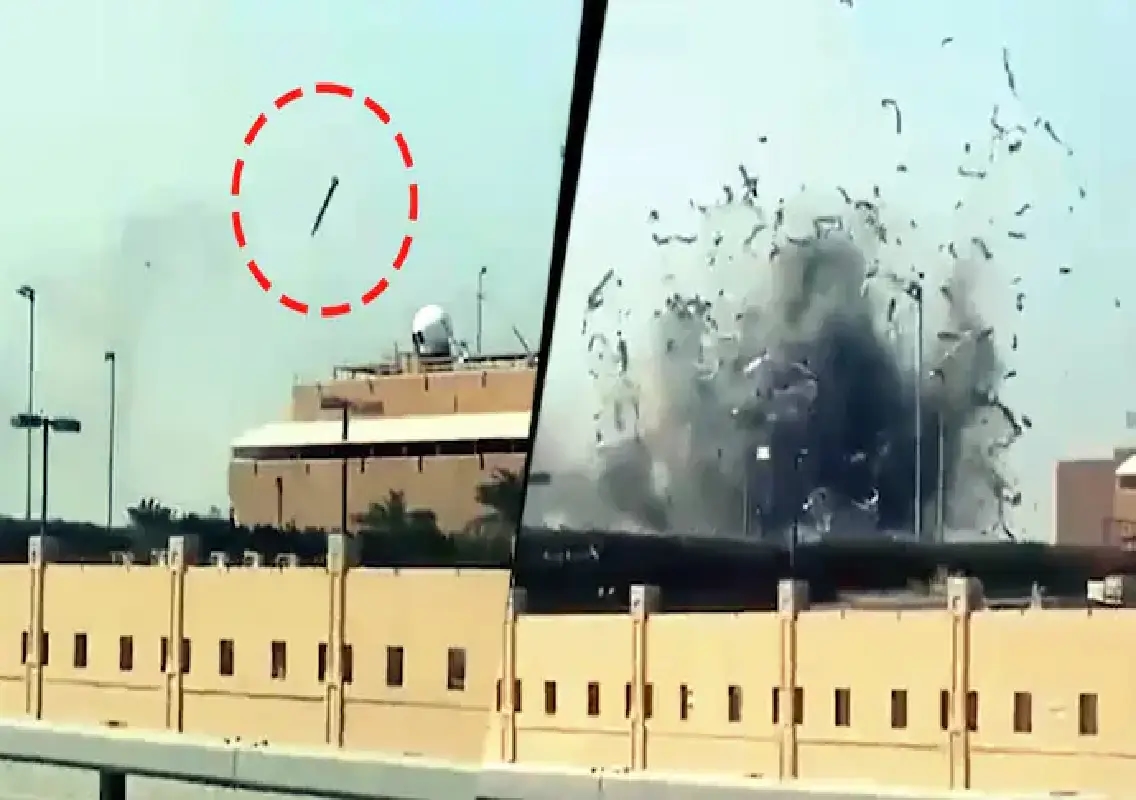


Manama: As sirens shattered the calm of a Saturday morning in Bahrain, thousands of residents — including a large Indian diaspora — were thrust into uncertainty after Iran targeted American military assets in the Gulf following coordinated US-Israeli strikes on Tehran.
Among those caught in the turmoil was Asif (name changed), an IT professional from Haryana who has been living in Bahrain for the past three years. In a video interaction, he described the tense hours after emergency alerts were issued across the country.
“At around 11.30 am, we received an alert from the ministry asking everyone to take shelter,” Asif said. Within minutes, he heard a loud explosion. “In 10–15 minutes, we heard a blast. That’s when panic set in.”
Evacuation amid explosions
According to Asif, the situation escalated quickly. “The lifts stopped. We were asked to evacuate the building immediately using the stairs. Then we heard more explosions,” he said.
Visuals shared by residents showed plumes of smoke rising into the sky, adding to fears that key installations had been targeted. Iran reportedly launched missile and drone strikes aimed at US military assets in Bahrain, including the headquarters of the United States Fifth Fleet, which is based near the capital, Manama.
Asif said he heard six or seven explosions in total. “Most were intercepted,” he added, referring to missile defence systems activated by US forces stationed in the kingdom.
Airspace shut, public life disrupted
The retaliatory strikes followed major military operations carried out by the United States and Israel against Iran earlier in the day, including reported attacks on sites in Tehran linked to the Iranian leadership and military infrastructure.
In response, Iran expanded its counter-offensive to American bases across Gulf countries. Bahrain, which hosts key US naval facilities, was among those placed on high alert.
As the security situation deteriorated, Bahrain temporarily shut its airspace, mirroring similar measures taken by other Middle Eastern nations. Taxi services were suspended in phases, and several shops closed early, despite the holy month of Ramzan usually being marked by vibrant evening activity.
“Usually, the evenings during Ramadan are lively. But today, many shops closed early,” Asif said. Outside, anxious residents gathered on streets and in open spaces, uncertain about the next steps.
Rush to airport, uncertainty for Indians
Thousands of expatriates reportedly headed towards the airport hoping to secure outbound flights. However, with the airspace closed and commercial flights suspended, many were left stranded.
“There are no flights available back to India. In the longer run, I do plan to return to India,” Asif said.
Bahrain is home to around 3,50,000 Indian nationals, making them the largest expatriate community in the country. The sudden escalation has raised concerns about their safety and the availability of clear evacuation protocols.
Asif appealed to the Indian government for assistance. “I request the government to evacuate us as most of the Indian diaspora are not aware of where the shelters are,” he said.
Diplomatic and security concerns
The strikes on Bahrain came as part of a broader regional escalation involving Iran, the United States and Israel. US President Donald Trump has warned Iran to abandon its nuclear ambitions, while Israeli Prime Minister Benjamin Netanyahu has described the operations as necessary to eliminate what he called an existential threat.
Tehran, for its part, has condemned the US-Israeli strikes as aggression and vowed to defend its sovereignty.
As tensions remain high and missile alerts continue across parts of the Gulf, expatriate communities — particularly the large Indian workforce — are closely monitoring developments. With airspace closures and sporadic disruptions ongoing, uncertainty persists over how long the crisis will last and whether evacuation efforts may be initiated.
For now, residents like Asif remain indoors, relying on official alerts and hoping for swift de-escalation.