







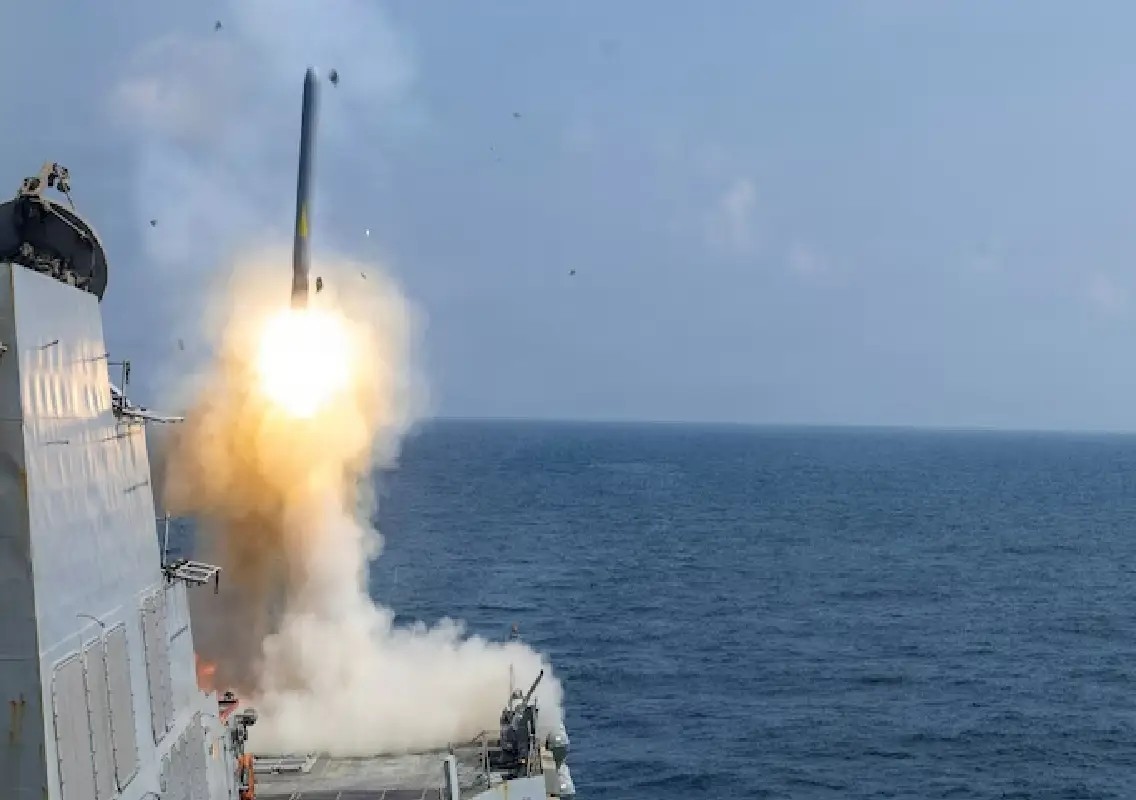


Tehran: Iran has claimed that it used a newly developed air defence system to shoot down a United States MQ-9 Reaper drone near the Strait of Hormuz earlier this week, in a move analysts say demonstrates Tehran’s continued ability to challenge American and Israeli military operations despite sustained attacks on its defence infrastructure.
According to Iran’s state-linked Fars News Agency, the drone was intercepted near Qeshm Island using a domestically developed system called Arash-e Kamangir.
Iranian authorities described the incident as the first combat deployment of the new air defence platform. However, the claim has not yet been independently verified by international agencies or Western governments.
The reported interception comes amid heightened regional tensions and renewed military exchanges involving Iran and the United States.
Tensions rise despite fragile ceasefire
Reports suggest that US forces recently carried out strikes on an Iranian military installation near Bandar Abbas.
Following the strikes, Iran’s Islamic Revolutionary Guard Corps (IRGC) claimed responsibility for targeting what it described as an “American airbase” in retaliation.
The latest developments have further intensified concerns regarding military escalation in the Gulf region, particularly around the strategically critical Strait of Hormuz, one of the world’s most important oil shipping routes.
Security analysts noted that incidents involving drones and missile systems in the region have become increasingly frequent amid ongoing tensions between Tehran, Washington and Israel.
Iran reveals details of Arash-e Kamangir system
Iranian media described Arash-e Kamangir as a stealth-detection air defence system capable of intercepting hostile reconnaissance drones operating near Iranian airspace and maritime borders.
Officials quoted by Fars News Agency stated that the operation demonstrated the “hidden capabilities” of the new system and served as a “clear and decisive message” from Iran.
The name Arash-e Kamangir translates to “Arash the Archer,” a legendary figure from Persian mythology associated with defending Iran against foreign threats.
According to Iranian folklore, Arash established the border between Iran and Central Asia by launching a mythical arrow at the cost of his own life.
Iranian authorities often use historical and cultural symbolism when naming military hardware and defence systems.
Experts cautious over verification
While analysts cautioned that Iran’s claims remain difficult to independently confirm, several defence experts stated that the broader concept behind the reported system appears plausible.
Experts observed that Iran has increasingly focused on developing low-cost, mobile and domestically produced air defence systems capable of targeting drones and aircraft without depending heavily on large radar installations.
According to analysts, such systems are designed to reduce vulnerability to enemy air strikes, particularly after repeated attacks reportedly degraded parts of Iran’s conventional radar-guided air defence network.
Security expert Mark Hilborne from King’s College London reportedly noted that although little independently verified information exists about the system, the reported interception aligns with Iran’s broader military strategy.
Analysts said Iran has demonstrated increasing self-sufficiency in missile and drone technologies while attempting to alter the economics of modern warfare through cheaper but effective defensive systems.
Mobile systems harder to neutralise
Security experts believe the Arash-e Kamangir system may be linked to Iran’s growing inventory of mobile short-range or loitering surface-to-air missile systems.
Unlike traditional radar-guided air defence batteries, these platforms are believed to rely less on fixed infrastructure, making them harder to detect and destroy.
Analysts said some such systems are designed to remain airborne or hidden until enemy drones or aircraft enter range, increasing their effectiveness against slow-moving surveillance platforms such as the MQ-9 Reaper.
The MQ-9 Reaper is among the US military’s primary reconnaissance and strike drones and is estimated to cost approximately 30 million US dollars per unit.
Experts stated that while Iran’s newer systems may not be capable of stopping a large-scale air campaign, they can still create operational challenges for technologically advanced militaries.
Regional military balance remains tense
Analysts believe the latest reported interception signals that Iran continues to retain limited but persistent defensive capabilities despite repeated strikes targeting its military infrastructure.
Experts suggested that even a modest air defence threat could force the United States and Israel to rely more heavily on expensive long-range precision weapons instead of drones during future operations.
The incident is also likely to intensify geopolitical tensions in the Gulf region at a time when global concerns over maritime security, oil supply routes and regional stability remain high.
Military observers noted that developments involving drones, missile systems and naval operations in the Strait of Hormuz are being closely monitored by governments worldwide due to the region’s strategic importance.