







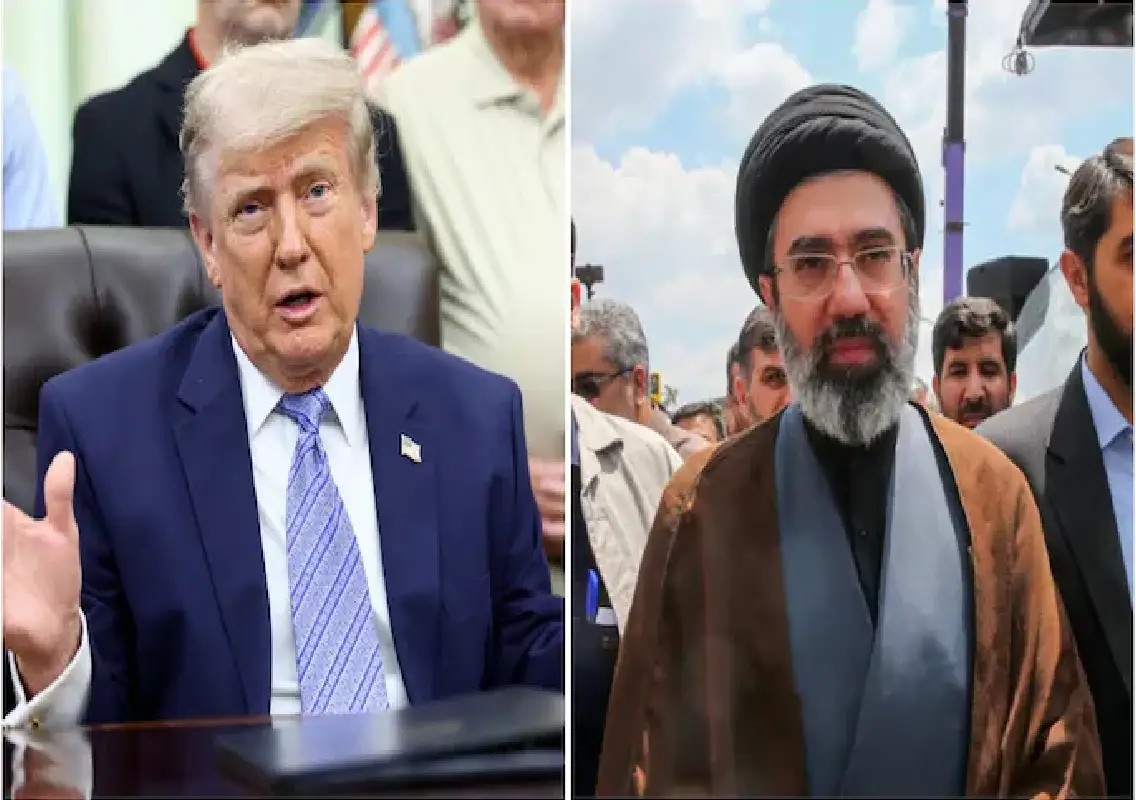


Tehran: Iranian media outlets affiliated with the country’s military establishment have rejected key claims made by US President Donald Trump regarding a possible agreement between Washington and Tehran, describing his remarks as “a mix of truth and lies” that do not accurately reflect the draft proposal currently under consideration.
The response came shortly after Trump announced that Iran was expected to reopen the strategically important Strait of Hormuz without imposing fees or restrictions, portraying the development as a major diplomatic breakthrough.
Iranian media challenges Trump’s account
According to reports published by Fars News Agency, officials in Tehran have disputed several aspects of Trump’s statements and accused the US President of attempting to project what they described as a “fabricated victory”.
Citing informed sources, the agency reported that a draft agreement based on a “commitment for commitment” framework is currently in the final stages of review within Iran. However, officials stressed that no final approval has yet been granted.
The report suggested that negotiations remain ongoing and that several critical issues are still under discussion.
Strait of Hormuz remains key issue
Trump had claimed that restrictions affecting maritime traffic through the Strait of Hormuz were effectively ending and that vessels delayed by naval tensions would soon be able to resume normal operations.
The Strait of Hormuz is one of the world’s most important shipping routes, carrying nearly 20 per cent of global oil exports and serving as a crucial link between Gulf producers and international markets.
In his statement, Trump asserted that Iran would remove any remaining naval obstacles and that ships affected by the situation could begin returning to normal routes.
However, Iranian media strongly contested claims that Tehran had agreed to reopen the waterway without conditions or charges.
Tehran outlines its own conditions
According to Iranian sources quoted by Fars News Agency, any reopening of the Strait would occur under arrangements determined by Tehran.
These measures could include monitoring of vessels, inspections, maritime services and security-related procedures.
The report stated that no provision exists in the current draft agreement requiring Iran to allow unrestricted passage without oversight or operational conditions.
Iranian officials also indicated that reopening the Strait would only occur after any blockade measures are formally lifted and after Tehran’s conditions are implemented.
Nuclear claims also rejected
Iranian media also challenged Trump’s assertions regarding the country’s nuclear programme.
Reports quoted informed sources as denying claims that Iran had agreed to dismantle, destroy or surrender nuclear materials as part of the proposed understanding.
According to the report, no such provision exists in the memorandum currently under discussion.
Officials reportedly described suggestions of dismantling nuclear assets as baseless and inconsistent with the terms being reviewed by Iranian authorities.
Frozen assets central to negotiations
The reports indicated that one of Tehran’s primary demands involves the immediate release of approximately USD 12 billion in frozen Iranian assets.
According to the sources, Iranian negotiators consider the release of these funds a prerequisite for advancing discussions to subsequent phases.
The report stated that Tehran would not proceed with further negotiations on sanctions relief or nuclear-related matters until the issue of frozen assets is resolved.
Lebanon ceasefire also under discussion
Another significant element reportedly being discussed is a comprehensive ceasefire arrangement in Lebanon that aligns with the position of Hezbollah.
Iranian officials reportedly view developments in Lebanon as closely connected to broader regional negotiations involving the United States and its allies.
The report suggested that progress on this issue could influence the pace and direction of future talks.
Uncertainty remains over final agreement
While both sides have acknowledged ongoing discussions, substantial differences remain regarding the content and interpretation of any potential agreement.
Iranian officials reiterated that any final arrangement would be based on the country’s strategic red lines and what they described as a continuing lack of trust towards the United States.
As negotiations continue, conflicting public statements from Washington and Tehran underscore the challenges that remain before any formal agreement can be finalised.