







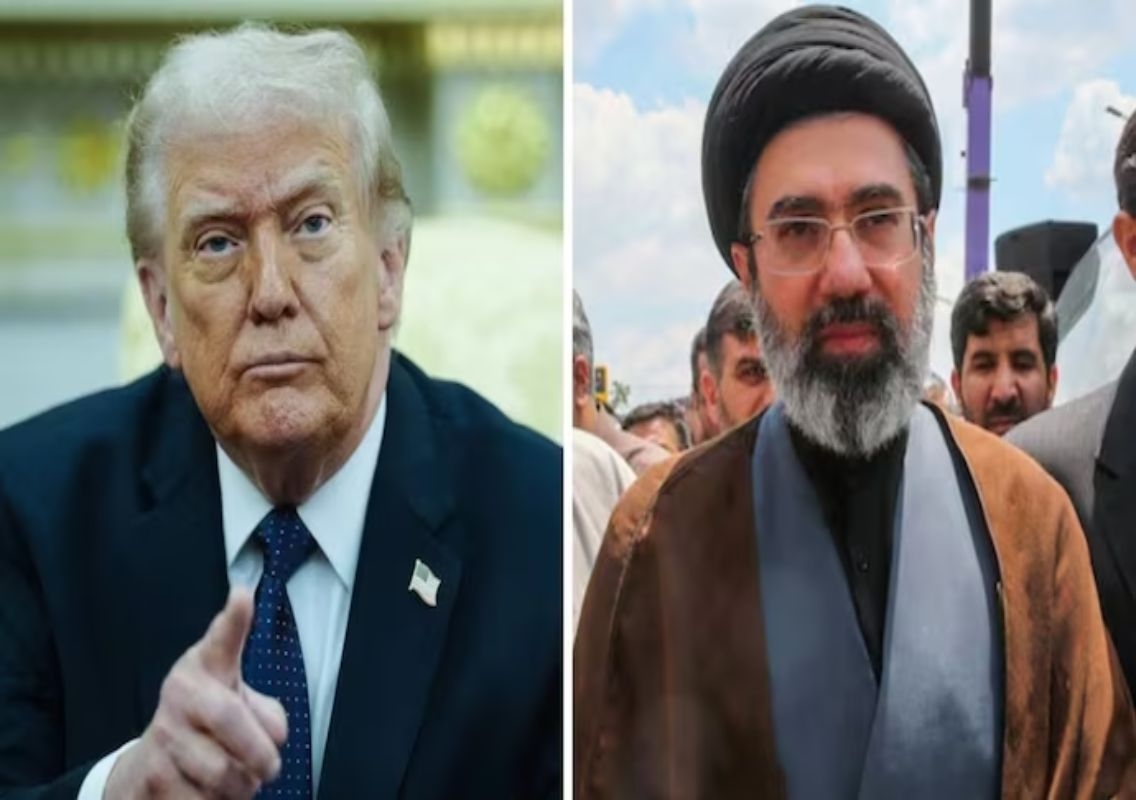


Tehran: Iran could deliberately prolong its conflict with the United States until US President Donald Trump leaves office, a senior adviser to the commander-in-chief of Iran’s Islamic Revolutionary Guard Corps (IRGC) has said, signalling that Tehran may be preparing for a prolonged war of attrition rather than seeking a quick end to the confrontation.
Mohammad Reza Naqdi, a senior IRGC adviser, made the remarks in an interview with PBS NewsHour on Tuesday. He said prolonging the conflict could help Iran impose a cost on its adversary, gain further battlefield experience and establish a deterrent against future attacks.
The comments are among the clearest indications yet from a senior Iranian military figure that Tehran is considering a strategy extending well beyond the immediate phase of the conflict.
Iran says prolonged war could create deterrence
Naqdi said one possible strategy would be to continue the war until the next US presidential term, with the objective of creating what Iran sees as a credible deterrent.
According to his remarks, Tehran wants any country considering a future attack on Iran to understand that military action would come with a significant cost.
The IRGC adviser said Iran had learned from the conflict and believed it had gained a better understanding of US military capabilities.
He also claimed that Iran currently believes it is winning the war, although he acknowledged that Tehran has not yet achieved its final objective.
The comments should, however, be understood as the position expressed by one senior Iranian military adviser rather than confirmation of an officially announced timetable for the war. There is no indication in the report that Iran has formally committed to continuing the conflict until the end of Trump’s presidency.
Why Trump’s presidency has become part of Iran’s calculation
Naqdi’s remarks explicitly link the possible duration of the conflict to Trump’s time in office.
The strategy, as he described it, is not simply about military operations. It is also about changing the calculations of future US administrations and demonstrating that attacking Iran would carry long-term consequences.
The reference to Trump’s departure is therefore significant. Rather than viewing the war only through the lens of battlefield objectives, the Iranian position outlined by Naqdi suggests that Tehran could also be thinking about the political calendar in Washington.
A prolonged conflict could potentially test the political, economic and military endurance of both sides.
For Washington, a drawn-out confrontation could increase the costs of maintaining military operations and managing the wider regional consequences. For Tehran, however, sustaining a long war would also carry enormous risks, particularly because prolonged conflict can place pressure on a country’s economy, infrastructure and military resources.
IRGC adviser claims Iran is producing more missiles
Naqdi also made claims about Iran’s missile production capacity.
He said Iran was producing more missiles each day than it was launching. According to him, Iranian missile production could continue from multiple locations, allowing Tehran to maintain its ability to launch attacks even if the conflict continued for years.
Such claims are difficult to independently verify from the information available in the report.
The statement nevertheless illustrates the message Tehran is seeking to send: that Iran believes it has the ability to sustain military pressure despite the length of the conflict.
Iran’s missile programme has long been a central component of its military strategy. Its ability to maintain production and deployment is therefore an important factor in assessing whether Tehran can sustain a prolonged confrontation.
Naqdi issues broader warning to the US
The IRGC adviser went further when discussing what could happen if Iran exhausted its missile stockpile.
He said that Iran could become even more dangerous to the United States if it reached a point where it had no missiles left.
When asked to explain how that could happen, Naqdi referred to American economic interests around the world, saying they could be targeted. He did not identify specific targets or explain how Iran would carry out such attacks.
The comments amount to a broad warning that Tehran’s response would not necessarily remain limited to conventional missile attacks.
They also highlight the wider risks associated with a prolonged US-Iran confrontation. American economic interests extend across numerous countries and sectors, meaning that any expansion of the conflict could have consequences beyond the immediate battlefield.
A war of attrition carries risks for both sides
A prolonged war would represent a major shift from a short, intense confrontation to an extended contest of endurance.
In such a scenario, military strength would be only one part of the equation. The ability to replenish weapons, maintain infrastructure, sustain economic activity and preserve domestic political support would become increasingly important.
Iran’s strategy, as outlined by Naqdi, appears to place considerable emphasis on attrition. The idea is that continued resistance could increase the costs for the US and discourage future military action.
But attrition also carries costs for the country pursuing it. A conflict lasting years could put additional pressure on Iran’s economy and civilian population while increasing the possibility of further damage to infrastructure.
The United States would also face its own challenges if military operations continued for an extended period, particularly in relation to the financial and strategic costs of maintaining a sustained presence in the region.
What the statement means for the conflict
The remarks are important because they indicate that at least some senior figures within Iran’s military establishment are thinking beyond an immediate ceasefire.
Rather than presenting the conflict as something that must necessarily end quickly, Naqdi described prolongation as a potential strategic tool. His comments suggest that Tehran could regard the length of the war itself as a means of imposing costs and building deterrence.
At the same time, the comments do not establish that a war will actually continue until Trump leaves office. Military conflicts are shaped by negotiations, battlefield developments, economic pressures and political decisions on both sides.
The statement is therefore best viewed as an indication of one strategic option being discussed by a senior Iranian military figure, rather than a prediction of the conflict’s eventual duration.
Conclusion
Iran may be prepared for a long confrontation with the United States, according to senior IRGC adviser Mohammad Reza Naqdi, who said Tehran could prolong the conflict until Donald Trump leaves office as part of a strategy to impose attrition and establish deterrence.
His remarks also included claims about Iran’s missile production capacity and warnings that Tehran could target US economic interests if its missile stocks were exhausted. The comments raise the possibility of a prolonged and potentially wider confrontation, although they do not amount to an official declaration that Iran intends to fight until the end of Trump’s presidency.
The key question now is whether diplomatic efforts can prevent the conflict from developing into the prolonged war of attrition envisaged by Naqdi.