







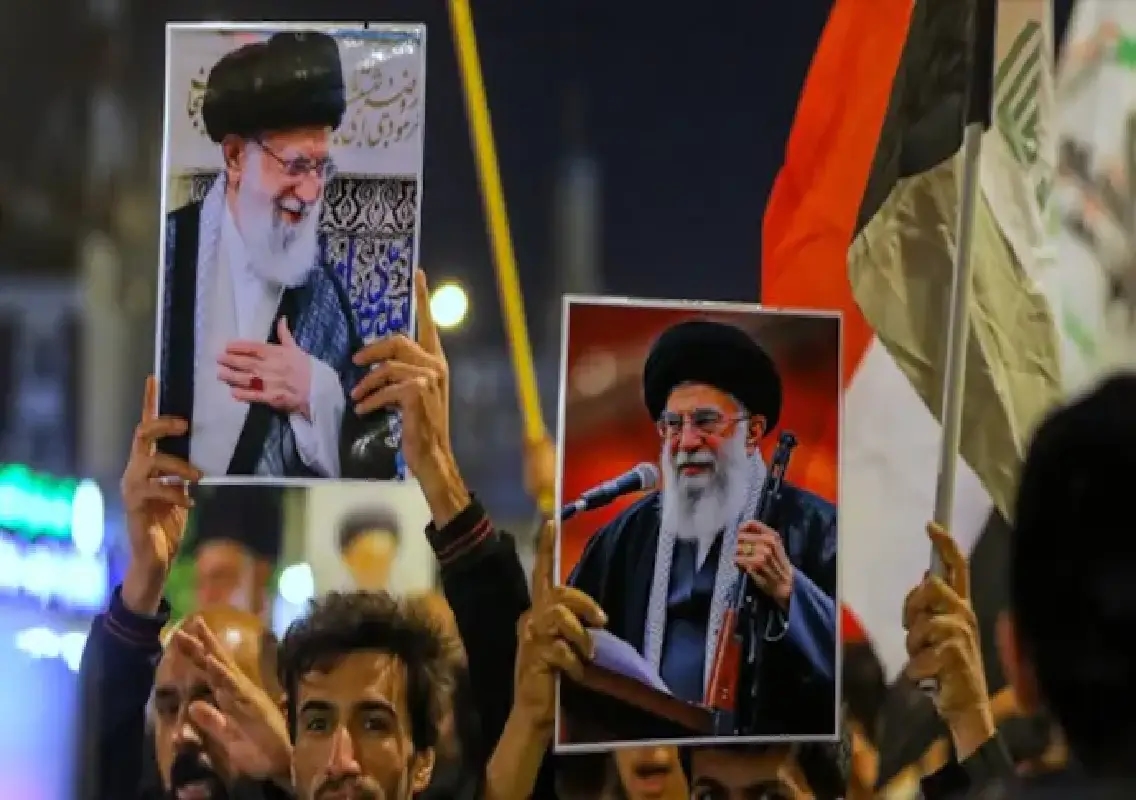


Tehran: Ali Larijani, secretary of Iran’s Supreme National Security Council, has ruled out any negotiations with the United States, dismissing reports that Tehran had used intermediaries to seek renewed talks with Washington amid the intensifying conflict triggered by American strikes that reportedly killed Supreme Leader Ali Khamenei.
In a post on X, Larijani, a long-time adviser to Khamenei, sharply criticised US President Donald Trump, accusing him of pushing West Asia into turmoil. He alleged that Trump had “plunged the region into chaos with his false hopes” and was now concerned about rising American military casualties.
Larijani further claimed that Trump had transformed his “America First” doctrine into “Israel First”, accusing him of sacrificing American soldiers for Israel’s strategic ambitions. He also rejected allegations that Tehran had initiated hostilities, asserting that Iranian forces “did not initiate the invasion”.
Missile exchanges intensify
Larijani’s remarks came as Iranian state media reported a fresh wave of missile launches from central parts of the country on Monday morning targeting what it described as “enemy locations”. The conflict has now entered its third day, with both sides escalating military operations.
The Israeli military said late Sunday that its air force had achieved aerial superiority over Tehran and carried out extensive strikes across the capital. According to Israeli officials, intelligence, security and military command centres were among the primary targets.
Explosions were reported across Tehran on Monday, with residents describing loud blasts in multiple districts. Regional tensions spilled over as fresh explosions were also reported in Doha, Dubai and Jerusalem, raising fears of a broader confrontation involving Gulf nations.
Kuwait stated that its air defences intercepted hostile drones for the third consecutive day amid what it termed Iranian retaliatory actions targeting Gulf states. In the eastern Mediterranean, Britain confirmed that a suspected drone strike hit the RAF Akrotiri base in Cyprus overnight, causing limited structural damage but no casualties.
Washington signals continued military campaign
A senior White House official told Reuters that while President Trump may eventually engage with potential new Iranian leadership, the ongoing US military campaign would continue.
“President Trump said new potential leadership in Iran has indicated they want to talk and eventually he will talk. For now, Operation Epic Fury continues unabated,” the official said.
The US has not officially detailed the full scope of Operation Epic Fury, but defence analysts estimate that multiple air and naval assets have been deployed across the region, significantly increasing the American military footprint.
Meanwhile, uncertainty surrounds Iran’s political leadership following reports of Khamenei’s death in the initial US strikes. Iranian President Masoud Pezeshkian announced on Sunday that a temporary leadership council — comprising himself, the judiciary chief and a member of the Guardian Council — had assumed the duties of the supreme leader.
The formation of the interim council signals an attempt to maintain constitutional continuity amid the escalating crisis. However, observers note that Iran’s internal political dynamics could further complicate the regional security situation.
Regional and global implications
The confrontation has sparked global concern over potential disruptions to energy supplies and maritime security. The Strait of Hormuz, through which nearly 20 per cent of the world’s oil shipments pass, remains under heightened surveillance.
International markets reacted sharply, with crude oil prices witnessing volatility in early trading. Several countries have issued travel advisories and urged their citizens to avoid non-essential travel to affected regions.
Diplomatic efforts by European and Asian nations are reportedly underway to prevent further escalation. However, Larijani’s categorical rejection of negotiations suggests that prospects for immediate de-escalation remain slim.
A region on edge
As missile exchanges continue and aerial strikes intensify, West Asia stands at a critical juncture. With both Washington and Tehran hardening their positions, the risk of a prolonged and wider conflict looms large.
Larijani’s message underscores Iran’s current stance: resistance over reconciliation. Meanwhile, the United States appears committed to sustaining military pressure under Operation Epic Fury.
The coming days will be pivotal in determining whether backchannel diplomacy can gain traction or whether the region will slide deeper into confrontation with far-reaching global consequences.