







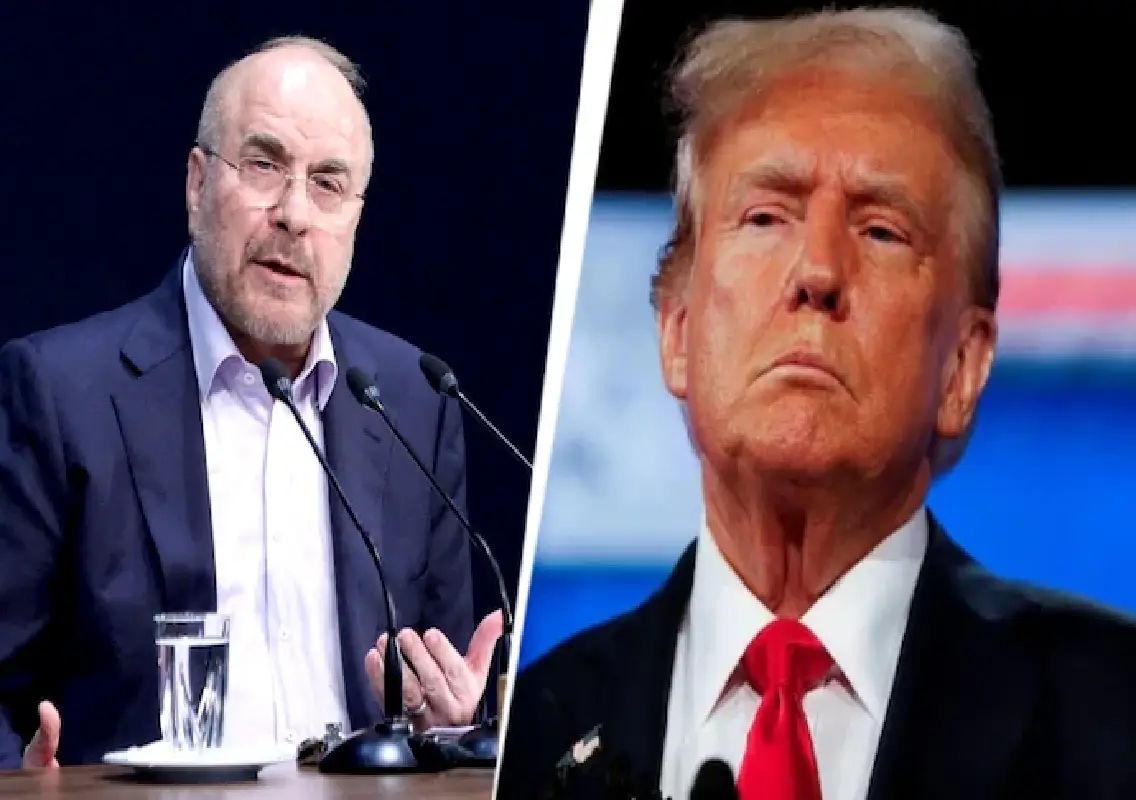


Tehran: Iran’s parliament speaker Mohammad Bagher Ghalibaf has indicated a dual-track approach in dealing with tensions involving the United States, stating that Tehran remains open to diplomacy while maintaining a high level of military preparedness.
In a televised address on Sunday, Ghalibaf asserted that Iran is ready to pursue negotiations but from what he described as a position of strength following recent developments.
Warning against escalation
At the same time, he issued a strong warning against any potential escalation, saying Iran would respond decisively to provocation.
“We are fully prepared — if they make the slightest mistake, we will respond with full force,” he said, underlining a firm stance even as diplomatic efforts continue.
Ghalibaf also claimed that Iran’s military capabilities have significantly improved compared to earlier conflicts, highlighting advancements in offensive strategy and preparedness.
Acknowledges US advantage, stresses strategy
While maintaining a confident tone, Ghalibaf acknowledged that the United States has superior resources, equipment and global military experience.
“We are not militarily stronger than America. They have more resources and experience,” he said, adding that Iran has relied on strategic planning to counter such advantages.
He described the situation as an asymmetric conflict, where Iran’s approach has focused on preparedness and tactical design to offset disparities in strength.
Criticism of US policy and Israel’s role
Ghalibaf criticised Washington’s regional policies, alleging that decisions are influenced by Israel. He claimed that despite the stated “America First” approach, US actions reflect prioritisation of Israeli interests.
He further alleged that reliance on what he described as inaccurate inputs has contributed to strategic miscalculations by Iran’s adversaries.
Claims of economic pressure tactics
The Iranian leader also accused external actors of attempting to destabilise the country economically. He said efforts aimed at weakening Iran’s economy and influencing its political system had failed.
According to Ghalibaf, such attempts included strategies to reduce Iran’s economic independence, particularly in the energy sector.
Diplomatic uncertainty continues
The remarks come amid ongoing uncertainty over future negotiations between Iran and the United States. While both sides have expressed openness to dialogue, differences over key issues continue to delay progress.
Recent high-level engagements have ended without a breakthrough, and no clear timeline has been set for the next round of talks.
Conclusion
Iran’s latest stance reflects a balancing act between diplomacy and deterrence. While signalling readiness for negotiations, the country has also reinforced its warning against escalation, indicating that tensions with the United States remain delicate and unresolved.