







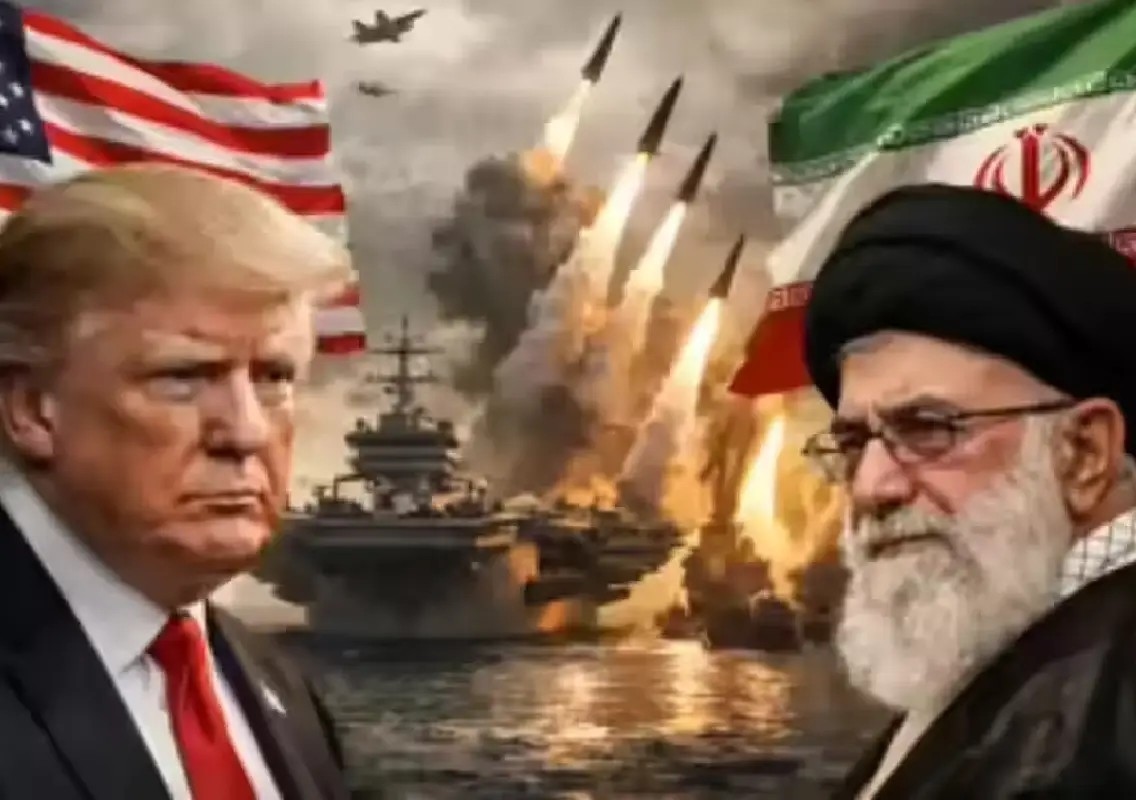


Washington : Iranian strikes damaged or destroyed hundreds of buildings and pieces of equipment at US military facilities across the Middle East, while American diplomatic facilities also sustained significant losses, according to a new assessment by the Pentagon’s official watchdog.
The report represents the US Department of Defence’s first formal accounting of the equipment, infrastructure and diplomatic facility losses suffered during the conflict with Iran. The assessment covers the period from April through June 2026 and provides a broader picture of the impact of Iranian attacks on American assets in the region.
Extensive damage reported at US military facilities
The Pentagon watchdog found that Iranian attacks affected American military installations in several countries, including Kuwait, Bahrain and Saudi Arabia. The damage extended beyond individual buildings, affecting military equipment and logistical infrastructure used to support US operations.
The scale of the damage exposed vulnerabilities in the US military presence across the Gulf and forced American commanders to make adjustments to supply and operational arrangements.
The assessment said hundreds of buildings at US bases were damaged or destroyed. The attacks also contributed to shortages of certain advanced weapons and exposed bottlenecks in the US defence industrial base.
The findings provide an official government assessment of losses that had previously been reported through satellite imagery, military statements and media investigations.
Military equipment also suffered losses
The watchdog’s accounting included significant losses involving US aircraft and unmanned systems.
Up to 30 MQ-9 Reaper drones, each valued at about $30 million, were reported lost or damaged. Seven KC-135 aerial refuelling aircraft were also lost or damaged during the conflict.
The loss of such equipment has implications beyond the immediate financial cost. Reaper drones provide surveillance and strike capabilities, while tanker aircraft are important for sustaining long-range military operations.
The report also identified shortages in strategic weapons inventories, highlighting the pressure that the conflict placed on America’s ability to replenish sophisticated munitions while maintaining military commitments elsewhere.
Diplomatic facilities suffered major damage
The impact was not limited to military installations.
The US State Department reported approximately $184 million in damage to American diplomatic facilities, while another $113 million was spent on emergency response and evacuation operations.
The conflict also resulted in the evacuation of about 9,000 US citizens from affected areas, adding a major logistical and financial burden to the US government’s response.
The damage to diplomatic facilities illustrates the wider consequences of the conflict for America’s presence in the Middle East. Embassies and other diplomatic properties are normally protected facilities, but their proximity to military and strategic targets left them exposed during the escalation.
Supply routes had to be adjusted
Damage to American military infrastructure also affected logistics.
According to the watchdog’s assessment, US Central Command was forced to reroute some supply lines to more distant locations, including Diego Garcia, following damage to facilities in the Gulf.
Such changes can increase the time and resources required to move personnel, equipment and supplies to operational areas.
The disruption also demonstrated how attacks on individual bases can have consequences across a much wider military network. A base may serve not only as a location for troops and aircraft but also as a hub for transportation, maintenance, fuel, communications and logistics.
Human cost of the conflict
The Pentagon assessment recorded 12 US service member deaths, including 11 killed in action during the period covered by the report.
The casualties came amid months of Iranian missile and drone attacks on American positions and facilities in the region.
One of the attacks later highlighted in reporting involved the Muwaffaq Salti Air Base in Jordan, where an Iranian missile strike killed three American soldiers in July. US officials have also investigated the role of intelligence and satellite imagery that may have helped Iran improve the precision of its targeting.
The attacks demonstrated the ability of Iranian forces and allied groups to threaten US assets well beyond Iran’s immediate borders.
Conflict has placed pressure on US defence stocks
The watchdog’s findings have also raised questions about the sustainability of prolonged military operations.
The report identified strategic inventory shortfalls and industrial base bottlenecks resulting from the conflict. The issue is particularly significant because sophisticated missiles, drones and aircraft components cannot always be replaced quickly.
The United States was simultaneously maintaining commitments in other regions while supporting military operations in the Middle East. Prolonged demand for precision weapons and other advanced equipment could therefore place further pressure on production capacity.
The total cost of the war was estimated at $37.5 billion, according to the watchdog’s assessment.
Wider implications for the US presence
The Pentagon report offers a more detailed picture of the costs of maintaining American military and diplomatic infrastructure in a region increasingly exposed to missile and drone warfare.
Iranian attacks have repeatedly targeted or threatened facilities hosting US forces, while Washington’s allies have also faced attacks because of their cooperation with the United States.
Recent attacks have included strikes on American facilities in Jordan and other parts of the Gulf. The continuing violence has also contributed to wider concerns over energy security, shipping routes and regional stability.
The findings could influence future decisions about the deployment of American forces, the protection of overseas bases and the positioning of military equipment.
For the United States, the assessment highlights a difficult balance between maintaining a strategic presence in the Middle East and protecting personnel and infrastructure from increasingly capable missile and drone attacks.
The report also demonstrates the broader cost of the conflict. Beyond battlefield losses, the war has damaged military facilities, affected diplomatic operations, disrupted logistics and placed additional pressure on America’s defence manufacturing capacity.
As tensions in the region remain high, the Pentagon watchdog’s assessment is likely to contribute to continuing discussions in Washington over military preparedness, regional deployments and the long-term cost of the US confrontation with Iran.