







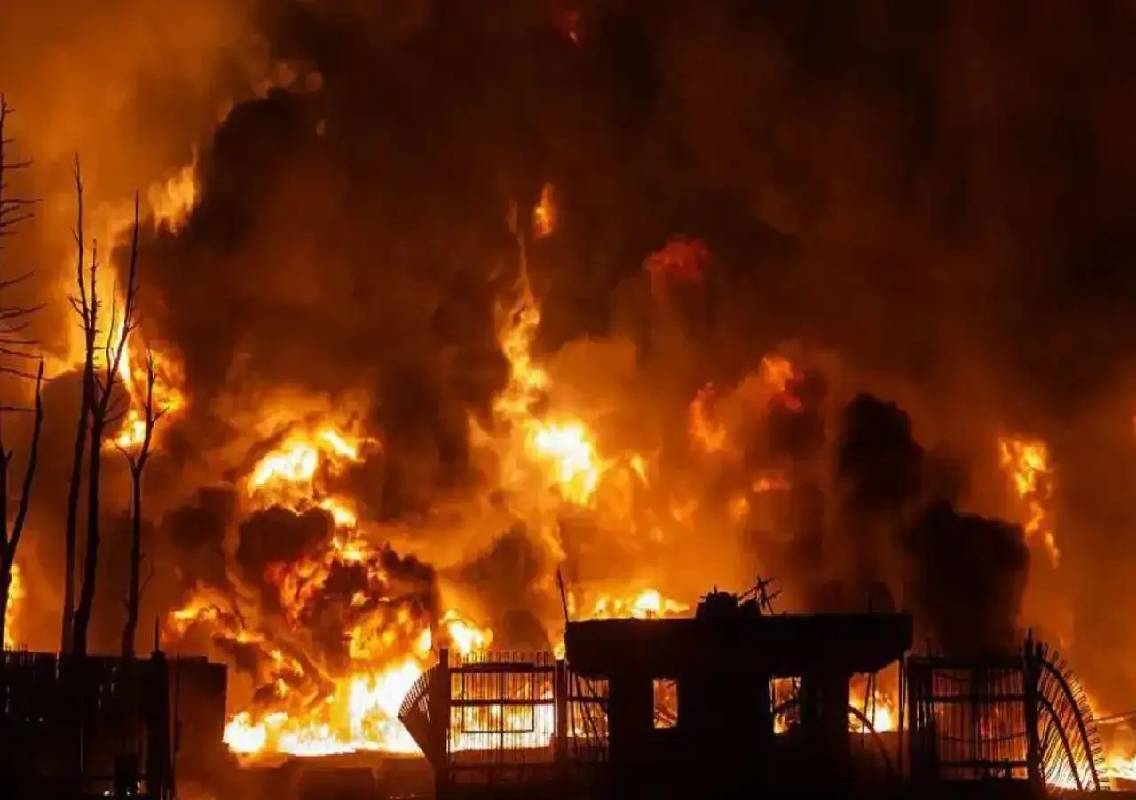


Kuwait City: Tensions across the Gulf region escalated sharply after Iran launched missile attacks targeting US military facilities in Kuwait and Bahrain following American strikes on Iranian sites near the Strait of Hormuz. The latest exchange has raised fresh concerns about regional stability and the possibility of a wider conflict involving multiple Gulf nations.
Air raid sirens sounded across Kuwait and Bahrain as air defence systems responded to incoming missiles and drones. The developments mark another serious challenge to an already fragile ceasefire and ongoing diplomatic efforts between Washington and Tehran.
Iran launches retaliatory strikes
Iran’s Islamic Revolutionary Guard Corps (IRGC) said it carried out missile attacks against what it described as enemy military targets in the Gulf region. Iranian state media reported that the operation was conducted in response to recent US military actions targeting Iranian infrastructure near the Strait of Hormuz.
According to Iranian statements, the strikes targeted US military facilities in Kuwait and Bahrain. Tehran has maintained that the attacks were a response to what it considers American aggression against Iranian territory and strategic installations.
The exchange represents one of the most significant flare-ups between the two countries in recent weeks and highlights the growing risk of miscalculation in the region.
Kuwait and Bahrain activate air defences
Authorities in Kuwait and Bahrain activated air defence systems after missile and drone threats were detected. Air raid sirens were heard across both countries as military personnel moved to intercept incoming projectiles.
Reports indicate that several missiles and drones were successfully intercepted before reaching their intended targets. Initial assessments from US and regional authorities suggested that most of the projectiles were neutralised, limiting potential damage.
The alerts nevertheless caused widespread concern among residents, highlighting how regional states are increasingly being drawn into the confrontation between Washington and Tehran.
US strikes Iranian radar sites
The latest Iranian action followed US military strikes on Iranian coastal radar and surveillance facilities.
According to the US Central Command (CENTCOM), American forces intercepted four Iranian attack drones that were heading towards the Strait of Hormuz and posed a threat to maritime traffic. Following those interceptions, US forces conducted strikes against radar installations in Goruk and on Qeshm Island.
Washington described the operation as a defensive action intended to protect commercial shipping routes and military assets operating in the region. US officials stated that forces remain prepared to respond to additional threats if necessary.
Strait of Hormuz remains a key flashpoint
The Strait of Hormuz continues to be at the centre of the growing confrontation. The narrow waterway is one of the world’s most important maritime chokepoints, handling a significant share of global oil shipments. Any disruption in the area can have immediate consequences for international energy markets.
Iran has long viewed the strait as a strategic asset and has repeatedly warned that military pressure could affect maritime traffic passing through the region.
Analysts believe the latest military exchanges increase the risk of further incidents involving commercial vessels, naval forces and energy infrastructure operating near the waterway.
Rising concerns over regional security
The latest escalation follows several days of military exchanges, including drone and missile attacks that have already affected Gulf states. Security experts warn that repeated retaliatory actions increase the likelihood of a broader regional conflict.
Governments across the Gulf are closely monitoring developments, while international observers continue to call for restraint from both Washington and Tehran.
Energy markets are also watching the situation closely, as any prolonged disruption in the Gulf could affect oil prices and global supply chains.
Conclusion
The latest exchange of missile strikes, drone interceptions and military operations has pushed Gulf tensions to a new level. With Iran and the United States continuing to trade accusations and military responses, fears of a wider regional conflict remain high. As the Strait of Hormuz becomes an increasingly important flashpoint, diplomatic efforts may prove critical in preventing further escalation across one of the world’s most strategically important regions.