







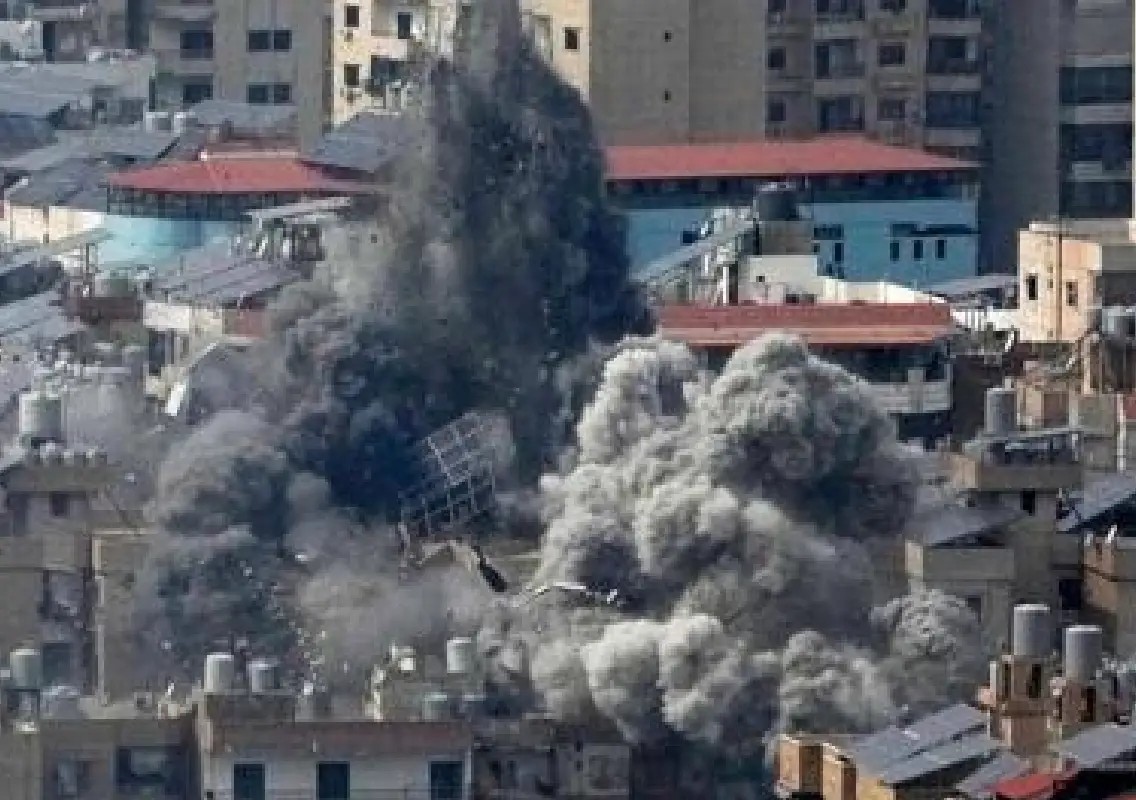


Cairo/Washington: The latest escalation in the war involving the United States and Iran has renewed international concern over civilian casualties, after Iranian authorities reported that 18 people were killed and 108 wounded in US strikes across the country.
Among the reported casualties were people attending a wedding near the Strait of Hormuz. The Iranian Red Crescent said four people were killed and 67 injured when a strike reportedly hit the area around the wedding ceremony. The incident has intensified scrutiny of the human cost of the renewed fighting.
The escalation comes after a period of relative calm since July, followed by the collapse of efforts to advance peace talks. The latest US attacks prompted Iran to launch missiles and drones towards US targets and facilities in Bahrain, Jordan, Kuwait and Iraq.
The renewed exchanges have raised fears that the conflict could widen further across the Middle East.
Wedding attack puts civilians at centre of concern
The reported strike near the wedding gathering in southern Iran has become one of the most prominent examples of the civilian danger posed by the renewed hostilities.
Iranian officials said four people were killed and dozens more injured. Images released by the Iranian Red Crescent showed debris around a damaged building and a large hole in its roof. Reuters said it was able to verify the location using satellite imagery.
The United States has maintained that its military does not target civilians. US Central Command spokesperson Captain Tim Hawkins said the military was aware of reports originating from Iranian state media and contrasted US operations with those of Iran’s Islamic Revolutionary Guard Corps.
The circumstances of the wedding incident have nevertheless drawn international attention, particularly because civilians were reportedly gathered at a private celebration when the strike occurred.
The US military has not publicly confirmed that the wedding gathering itself was the intended target.
US launches fresh strikes on Iranian targets
The latest escalation began with a new wave of US airstrikes against Iranian targets.
The attacks followed a weekend exchange of fire and came after strikes on two tankers leaving the Strait of Hormuz, a crucial international waterway through which a significant share of the world’s oil supply normally passes.
US President Donald Trump has threatened further military action, while Iran has remained defiant and warned that it could prevent oil from being exported from the Gulf.
The renewed military operations have therefore created two interconnected concerns: the immediate safety of civilians in the region and the potential disruption of global energy supplies.
Iran retaliates with missiles and drones
Iran responded to the US strikes with missile and drone attacks against what it described as American assets in several countries.
Bahrain, Jordan, Kuwait and Iraq were among the locations affected by the Iranian response. Kuwait’s military reported further missile and drone attacks early Thursday and said its air defence systems intercepted them.
The widening geographical reach of the attacks has raised concerns among governments across the Gulf and the wider Middle East.
Countries that are not direct participants in the US-Iran conflict could increasingly face risks to military installations, civilian infrastructure, shipping routes and airspace.
The possibility of further retaliation also complicates diplomatic efforts to contain the conflict.
UN calls for immediate halt
United Nations Secretary-General António Guterres has expressed deep alarm over reports of civilian casualties.
His spokesperson, Stéphane Dujarric, said the Secretary-General condemned attacks against civilians and called for an immediate cessation of military action.
The UN also stressed that all parties must comply with international humanitarian law, including the principles of distinction, proportionality and precaution.
Those principles require parties to armed conflicts to distinguish between military targets and civilians and to take precautions to minimise civilian harm.
The UN’s intervention reflects growing concern that continued exchanges of missiles, drones and airstrikes could result in further civilian deaths.
Earlier school strike remains unresolved
The latest reports have also renewed attention on an earlier deadly strike at a girls’ school in Minab.
The attack, which occurred on the first day of the war, killed a large number of people. Reuters reported that the Pentagon has yet to issue an official finding on the incident.
The Human Rights Activists News Agency had documented 3,636 deaths in Iran by April 7, including 1,701 civilians, according to figures cited by Reuters.
Two sources familiar with the matter told Reuters that the school strike may have resulted from the use of outdated targeting data. However, no official US military finding has yet confirmed that explanation.
Democratic members of the US Congress have called for the Pentagon’s investigation findings to be released.
The unresolved questions surrounding the school strike have made the latest reports of civilian casualties particularly sensitive.
Iran’s civilian toll remains disputed
Determining the overall civilian death toll in the conflict remains difficult.
Information from the region is often released by governments, military authorities, rights organisations and humanitarian agencies, with figures sometimes differing substantially.
Reuters cited HRANA’s earlier documentation of civilian and overall deaths while noting that the figures represent the organisation’s records rather than an independently verified final death toll.
The uncertainty makes it difficult to establish the full human cost of the conflict in real time.
What is clear, however, is that civilians continue to face serious risks as military operations intensify.
Strait of Hormuz becomes another flashpoint
The conflict is also affecting one of the world’s most important oil routes.
Iran has threatened oil tankers using the Strait of Hormuz without Iranian authorisation, severely reducing maritime traffic through the waterway. Before the war, the strait carried about 20% of global oil supplies, according to Reuters.
The disruption has already affected global energy markets.
Oil prices have remained volatile as traders assess the possibility of prolonged military confrontation and reduced shipping through the strait. Reuters reported that Brent crude was around $95 a barrel on Thursday, while shipping activity through the waterway had fallen sharply.
Any prolonged closure or major disruption could have consequences well beyond the Middle East, affecting fuel prices, transport costs and economies around the world.
Regional governments face growing pressure
Iran’s retaliatory strikes have placed additional pressure on Gulf governments that host US military facilities or maintain close security relationships with Washington.
Kuwait and Bahrain have reported intercepting Iranian missiles and drones, while other countries have faced heightened security concerns.
The conflict therefore risks becoming increasingly regional even as the main confrontation remains between Washington and Tehran.
Governments in the region have called for restraint and renewed diplomacy, warning that continued escalation could threaten civilians, international shipping and regional stability.
Peace efforts face another setback
The latest fighting comes after attempts to advance diplomatic discussions failed to produce a lasting breakthrough.
The guns had largely fallen silent following the previous exchange in July, but the absence of a durable political agreement left the conflict vulnerable to renewed escalation.
The return to large-scale military action makes the prospects for immediate diplomacy more uncertain.
At the same time, the mounting civilian toll could increase pressure on both sides to find a way back to negotiations.
For civilians living in affected areas, however, diplomatic calculations offer little immediate protection from missiles, drones and airstrikes.
Growing fears of a wider humanitarian crisis
The latest escalation has highlighted the danger that the conflict could develop into a broader humanitarian crisis.
The reported deaths at a wedding have brought particular attention to the vulnerability of ordinary people who have no role in the fighting. Families, children and communities can become casualties even when military operations are directed at strategic targets.
The continuing uncertainty surrounding earlier civilian casualty incidents has also strengthened calls for transparent investigations.
Humanitarian organisations face the difficult task of providing assistance while military operations continue and access to affected areas remains uncertain.
Civilians remain at the heart of the crisis
The renewed US-Iran fighting has consequences that extend far beyond military objectives.
Every new exchange of fire carries the possibility of civilian deaths, displacement and damage to homes and essential infrastructure. The reported wedding casualties have become a stark reminder of how quickly ordinary life can be disrupted by war.
The United Nations has urged an immediate halt to the fighting, while governments in the region face growing pressure to prevent the conflict from spreading.
For now, the most urgent concern remains the protection of civilians.
As US and Iranian forces continue to exchange attacks and tensions around the Strait of Hormuz rise, international attention is increasingly focused not only on military strategy but also on the human cost of the war.
The reported 18 deaths and 108 injuries in the latest US strikes, including casualties at a wedding, have once again raised the question of how much more suffering civilians can endure before diplomacy replaces the battlefield.