







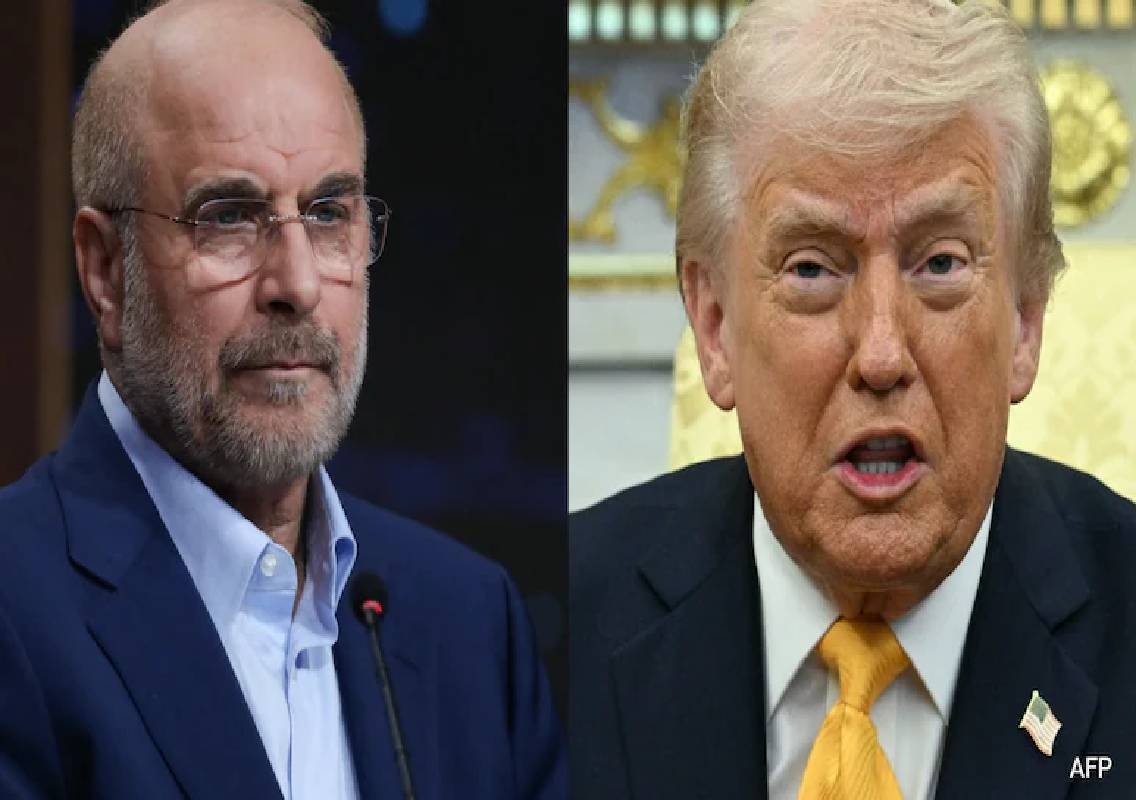


Tehran: Iran has issued a fresh warning to the United States and Gulf nations amid escalating tensions over the Strait of Hormuz, declaring that no country in the region would be able to sell oil if Tehran is prevented from exporting its own crude. The remarks came as the United States and Iran continued exchanging threats and military strikes, raising fears of further disruption to global energy supplies.
Iran’s Parliament Speaker and chief negotiator, Mohammad Bagher Ghalibaf, said Tehran would not allow the strategic waterway to return to its pre-war status and insisted that lasting security in the Strait of Hormuz could only be achieved in the absence of American military forces from the region.
The latest developments underscore the growing risk of a wider regional conflict, with both sides hardening their positions as attacks continue and diplomatic efforts remain stalled.
Iran says oil exports must be equal for all
In a post on X, Ghalibaf said the conflict had reached an “all or none” stage and warned neighbouring Gulf countries against assuming they could continue exporting oil while Iran remained under restrictions.
“In a region where we do not sell oil, no one will sell oil. If our security is not ensured, no infrastructure will be safe, and the security of the strait is in the absence of American forces. We have repeatedly said that the situation of the strait will not return to pre-war conditions,” he wrote.
The Strait of Hormuz is one of the world’s most important maritime chokepoints, handling a significant share of global crude oil and liquefied natural gas shipments. Any disruption in the waterway has immediate implications for international energy markets and global trade.
Trump’s warning to Iran
Ghalibaf’s comments came shortly after US President Donald Trump issued a stern warning to Iran over attacks on commercial shipping in the Strait of Hormuz.
Writing on his Truth Social platform, Trump said the United States would respond forcefully to any future attacks on vessels passing through the strategic waterway.
“From this point forward, any time the Islamic Republic of Iran shoots at a ship in the Strait of Hormuz, whether it be by Missile, Rocket, Drone, or any other device or weapon, the United States will bomb and destroy ONE BRIDGE OR POWER PLANT, including those located next to, or in, the Capital City of Tehran.”
The statement marks a further escalation in rhetoric between Washington and Tehran as military operations continue in the Gulf region.
US continues military strikes
The US military announced that it had carried out a 12th consecutive night of strikes against targets in Iran.
According to the US Central Command, the operations are intended to reduce Iran’s capability to threaten civilian shipping and commercial vessels navigating regional waters.
The strikes form part of Washington’s broader effort to restore maritime security in the Strait of Hormuz and facilitate the resumption of international shipping through the strategic passage.
However, the continued military campaign has raised concerns about the risk of a prolonged conflict, particularly as diplomatic negotiations have shown little sign of progress.
Iran vows ‘eye for an eye’ response
Iranian Foreign Minister Seyed Abbas Araghchi reiterated Tehran’s position, warning that any attack on Iranian infrastructure would invite a strong military response.
In a post on X, Araghchi said Iran would adopt an “eye for an eye” defence doctrine.
“Any aggression against Iran, including our infrastructure, will compel a powerful and decisive response.”
The statement reflects Tehran’s increasingly uncompromising stance as tensions with Washington intensify.
Civilian infrastructure increasingly affected
Iranian state media reported that US missile strikes targeted areas near Ahvaz, Ramshir and Andimeshk in western Iran.
According to the reports, two people were killed in a missile strike in the border town of Shalamcheh near Iraq.
Meanwhile, military officials in Kuwait stated on social media that the country’s air defence systems had intercepted hostile drones following what they described as Iranian aggression.
Iran has also reportedly targeted energy infrastructure and desalination plants in neighbouring Gulf countries in response to US attacks. Desalination facilities are critical sources of drinking water across the Gulf, making attacks on such infrastructure particularly concerning.
Under international humanitarian law, civilian infrastructure is generally protected unless it is being used for military purposes.
Global markets watch developments closely
The ongoing confrontation has renewed concerns over the stability of global energy markets.
With the Strait of Hormuz remaining a crucial artery for global oil exports, prolonged disruption could push crude oil prices higher and affect fuel costs worldwide. Analysts have warned that continued instability in the region may have significant economic consequences, particularly for energy-importing nations.
As military exchanges continue and diplomatic channels remain largely inactive, international attention remains focused on whether the crisis can be contained before it develops into a broader regional conflict.