







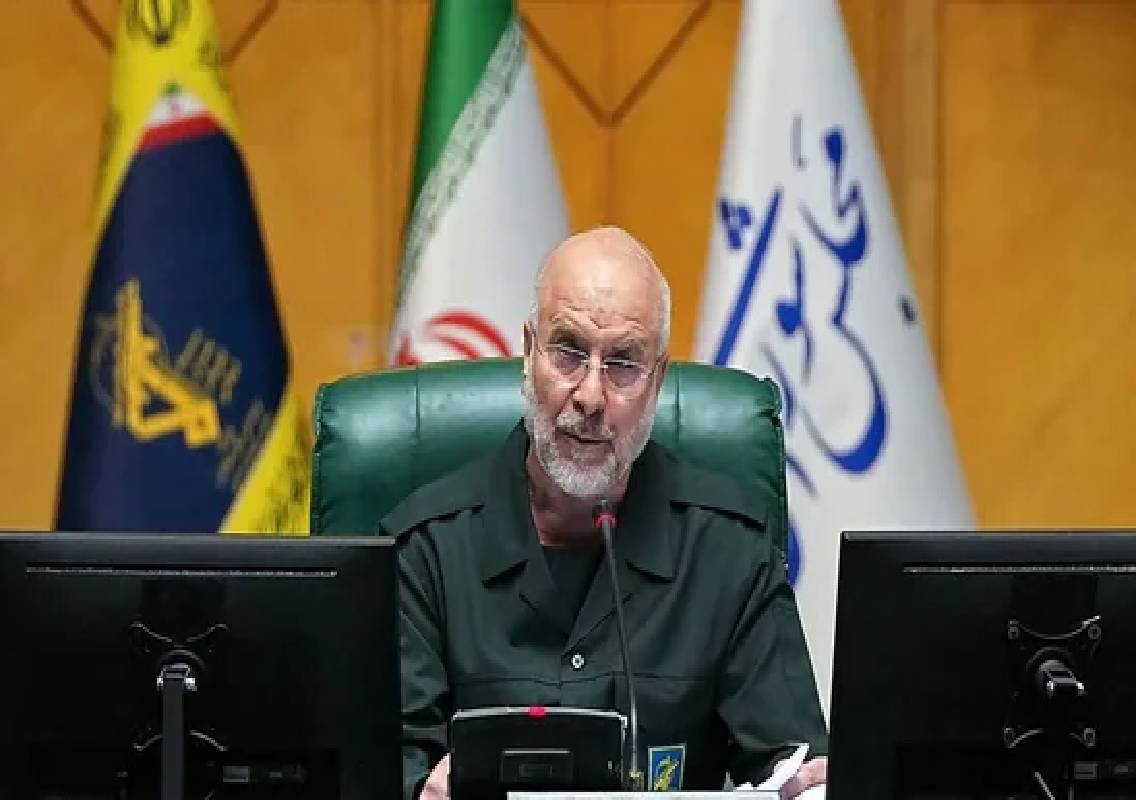


Tehran: Mohammad Bagher Ghalibaf, Speaker of the Iranian Parliament, has issued a fresh warning amid escalating tensions with the United States over the blockade of the Strait of Hormuz. In a cryptic post on social media platform X, Ghalibaf shared a “formula” that appears to outline the strategic leverage held by both sides in the ongoing standoff.
The development comes as the critical maritime route through which nearly 20 per cent of the world’s oil and gas supply passes remains under partial disruption, raising concerns about global energy markets.
Decoding the ‘formula’
Ghalibaf’s equation divided the current situation into two contrasting sides one representing Washington’s actions and the other highlighting Tehran’s potential leverage.
On the US side, he listed “Inventory Release (played) + Demand Destruction (partly played) + More Price Adjustment (to come).” This appears to reference the US government’s past release of oil from its strategic reserves, efforts to curb demand, and the likelihood of further price fluctuations.
On the Iranian side, the formula included “SOH (partly played) + BEM (unplayed) + Pipelines (unplayed).” Here, SOH refers to the Strait of Hormuz, BEM to the Bab el-Mandeb Strait, and pipelines to alternative oil transport routes.
The Iranian leader suggested that while the Strait of Hormuz has already been “partly played” through the ongoing blockade, other strategic options remain unused, signalling potential escalation.
Strategic choke points and global impact
The Strait of Hormuz is one of the world’s most vital oil transit chokepoints, linking the Persian Gulf to international markets. Any disruption in this route has immediate implications for global energy supply and pricing.
Similarly, the Bab el-Mandeb Strait often referred to as the “Gate of Tears” is another crucial maritime passage connecting the Red Sea to the Gulf of Aden. Control or disruption of these routes could significantly affect global shipping and oil flows.
Ghalibaf’s remarks underline Iran’s ability to influence these key routes, which could further intensify the geopolitical situation if tensions continue to rise.
Warning over rising oil prices
In his post, Ghalibaf also hinted at the economic consequences of the ongoing standoff, particularly for American consumers. He made a pointed reference to “summer vacations,” a period when fuel demand typically rises in the US due to increased travel and energy consumption.
The warning comes as global oil prices have already begun to climb. Brent crude recently rose to around $107 per barrel, while West Texas Intermediate (WTI) approached $96 per barrel, reflecting market concerns over supply disruptions and stalled diplomatic efforts.
Analysts note that prolonged tensions in the region could lead to sustained volatility in oil markets, affecting economies worldwide.
Not the first such message
This is not the first time Ghalibaf has used unconventional methods to convey geopolitical messages. Earlier this month, he shared another mathematical expression referencing the potential impact of a blockade in the Strait of Hormuz, suggesting that oil prices could rise sharply if disruptions intensify.
He also posted images of rising fuel prices in the US, reinforcing his argument about the economic fallout of continued conflict.
Broader geopolitical context
The current tensions are linked to ongoing disagreements involving the United States, Iran, and Israel, with peace talks reportedly stalled. The situation has raised fears of further escalation in an already volatile region.
Experts warn that any prolonged disruption to major oil routes could have cascading effects on global trade, inflation, and energy security.
Conclusion
Ghalibaf’s latest “formula” highlights the strategic calculations underlying the US-Iran standoff and serves as a warning of potential escalation. With key oil routes at the centre of the conflict, the situation remains critical for global markets. As tensions persist, the focus will remain on whether diplomatic efforts can ease the crisis or if further disruptions will push energy prices even higher.