


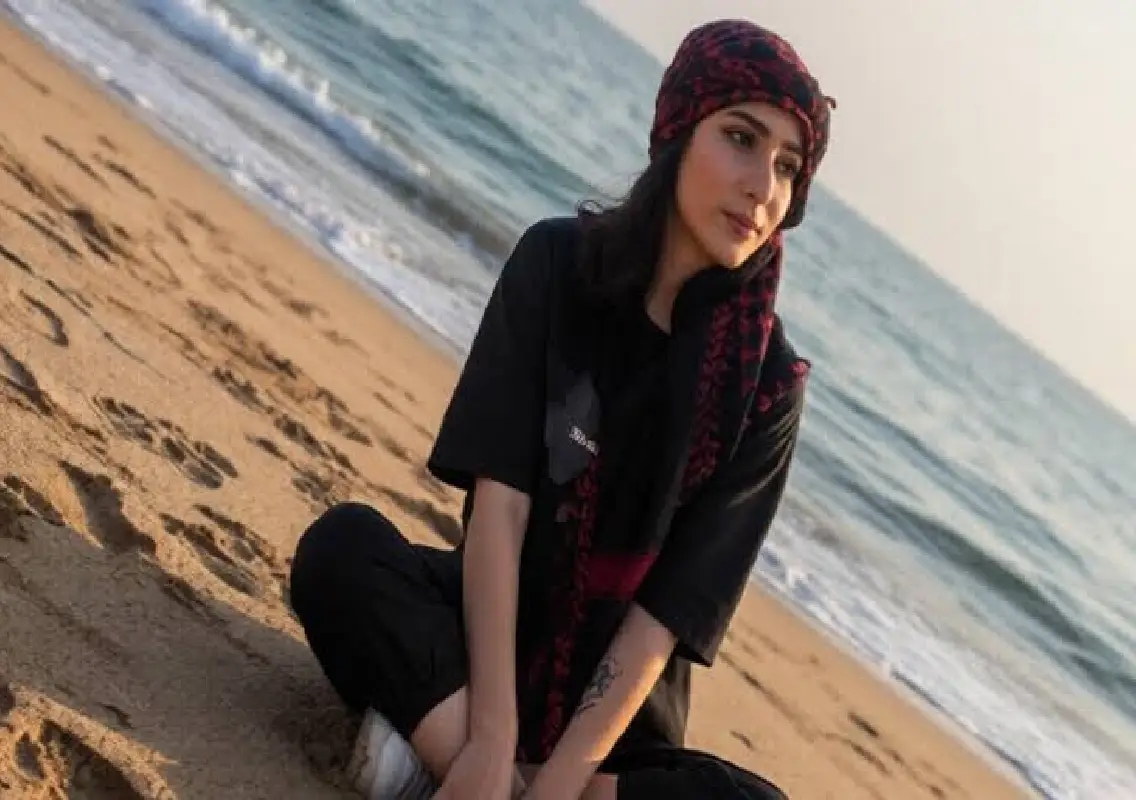


Mashhad, Iran: Najmeh Amini, a 23-year-old Iranian accounting student, has been sentenced to death for allegedly insulting Prophet Muhammad in a social media post, according to reports by human rights organisations. Arrested amid Iran’s January 2026 anti-government protests, Amini is also serving a separate prison sentence of 12 years, six months and one day. Her death sentence remains open to appeal before Iran’s Supreme Court.
The case has drawn international attention amid concerns raised by human rights groups over Iran’s use of capital punishment, the treatment of people detained during protests and restrictions on freedom of expression online.
Amini is being held at Vakilabad Prison in Mashhad, in northeastern Iran. Human rights organisations have called for scrutiny of the proceedings and urged authorities to overturn the death sentence.
Who is Najmeh Amini?
Amini is a 23-year-old accounting student from Mashhad. Her arrest took place during a period of nationwide anti-government protests in Iran in January 2026.
According to the Human Rights Activists News Agency (HRANA), she was detained by Iranian security forces on January 31 at Ferdowsi Shopping Centre in Mashhad. Iran Human Rights, another organisation monitoring capital punishment and human rights cases in the country, has reported February 3 as her arrest date.
The differing dates in the accounts have not been reconciled in the available reports.
Her family initially understood that she had been targeted because of social media activity associated with the protests. She subsequently became the subject of two separate criminal proceedings, including a case concerning alleged blasphemy.
The case has attracted attention because of the severity of the punishment and the reported circumstances surrounding the social media post. Human rights organisations have raised concerns about the legal process and the implications for online expression in Iran.
Why was Najmeh Amini sentenced to death?
Amini was sentenced to death for sab al-nabi, an offence involving insulting Prophet Muhammad, over a social media post. The exact contents of the post have not been made public in the reports cited.
According to Iran Human Rights, the case was heard by Branch 6 of the Criminal Court in Iran’s Khorasan Razavi province. The organisation reported that the court rejected Amini’s defence that the remarks were unintentional.
The Iranian newspaper Khorasan reported that Amini told the court she had consumed hallucinogenic mushrooms with friends and posted the remarks while experiencing a hallucinatory state. Her lawyer reportedly argued that the statements amounted to a slip of the tongue.
However, the court did not accept this explanation, according to accounts reported by HRANA and cited by The Guardian.
Under Article 262 of Iran’s Islamic Penal Code, insulting Prophet Muhammad can carry the death penalty. Article 263 sets out exceptions in circumstances that include inadvertence, intoxication or a slip of the tongue.
The reported rejection of Amini’s defence has become a central issue in discussions surrounding the case. Human rights advocates have questioned the use of the death penalty in proceedings involving expression on social media, particularly when the precise content and circumstances of the post have not been made public.
Death sentence can still be appealed
Amini’s death sentence is not yet final. According to the reports, she can appeal before Iran’s Supreme Court, and the sentence has not been upheld by the apex court.
This distinction is important because the reported ruling does not mean that an execution is imminent or that all legal avenues have been exhausted.
In a separate case, the Mashhad Revolutionary Court sentenced Amini to 12 years, six months and one day in prison. HRANA reported that the charges included acting against national security and spreading propaganda against the Iranian regime.
The second case was separate from the criminal proceedings that resulted in her death sentence. The two rulings therefore concern distinct sets of charges and legal proceedings.
The possibility of an appeal remains a key factor in the case. Human rights organisations have urged further scrutiny, while the final outcome will depend on the relevant judicial process.
Amini appeals to the United Nations and human rights groups
In an audio message released in September, Amini appealed to the United Nations, lawyers and human rights organisations to intervene and examine her case.
“I do not want to make a hero out of myself today. I only want one thing: be my voice,” she said in the recording, as quoted by The Guardian.
Her message has added to calls for international attention to the proceedings. Human rights advocates have argued that the case warrants examination because of the potential consequences of a death sentence linked to online expression.
Mahmood Amiry-Moghaddam, director of Iran Human Rights, warned that imposing capital punishment over online speech could widen the use of the death penalty against people expressing themselves peacefully. His organisation has called for Amini’s sentence to be overturned.
The case also highlights broader concerns about the treatment of people detained during protests and the use of criminal charges relating to national security and expression. However, the circumstances and evidence in each case must be assessed individually.
Wider concerns over capital punishment in Iran
Iran’s use of the death penalty has been the subject of sustained criticism from international human rights organisations. Cases involving alleged blasphemy, national security offences and protest-related charges have frequently drawn calls for greater transparency and due process.
Amini’s case brings these concerns together: her arrest during protests, the separate prison sentence imposed by a revolutionary court and the death sentence arising from a social media post.
For now, the legal position remains unresolved. Her death sentence can still be challenged, and it has not been confirmed as upheld by Iran’s Supreme Court.
The next stage of the appeal process will be crucial in determining whether the sentence stands. Meanwhile, human rights organisations continue to call for scrutiny of the case and for the authorities to reconsider the punishment.