







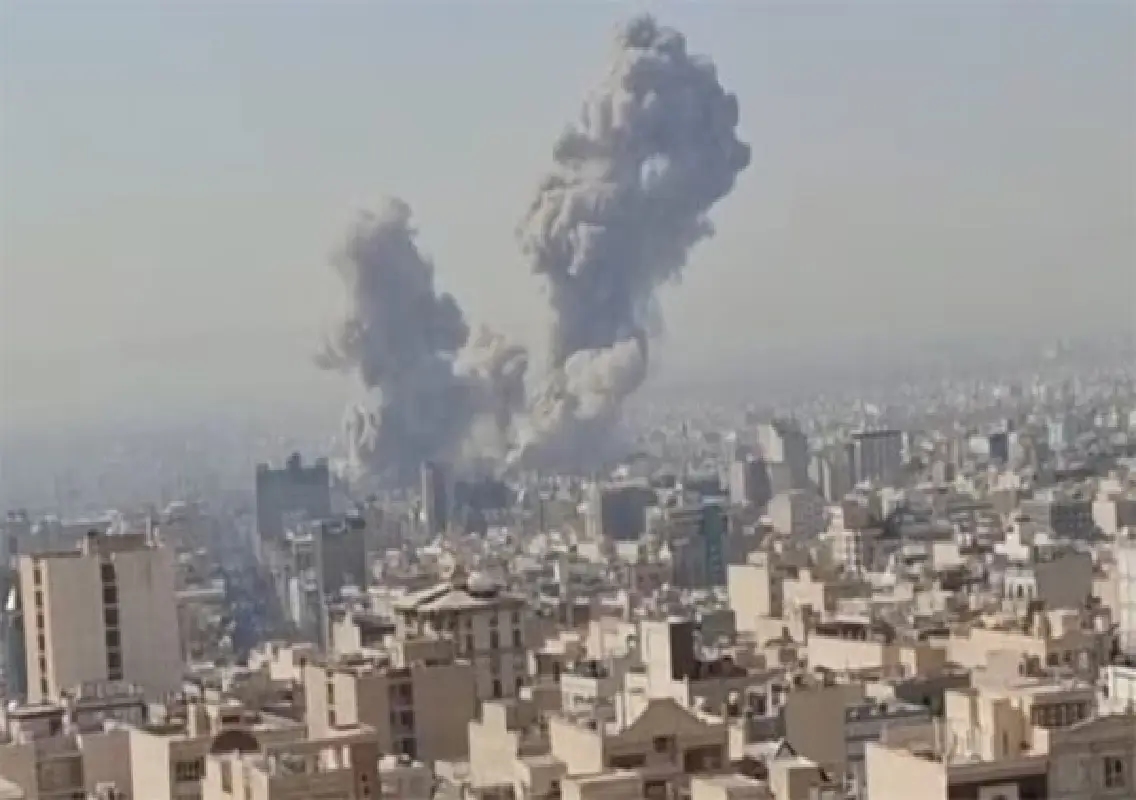


Tehran: A dramatic escalation in hostilities erupted on Saturday, February 28, 2026, as Israel Defense Forces and the United States military carried out coordinated strikes on multiple targets in Tehran and other parts of Iran, marking one of the most serious confrontations in the Middle East in years.
According to reports, the operation — described by some as “Operation Epic Fury” — involved airborne and missile attacks that triggered explosions and smoke plumes over Tehran and other cities. Early indications suggested that areas near the offices of Ayatollah Ali Khamenei and other sensitive sites were struck. Iranian authorities later confirmed that Khamenei was not in the capital at the time and had been moved to a secure location. President Masoud Pezeshkian was also reported to be safe and in good health.
Strike follows failed diplomacy
The joint Israeli-US military action came after months of heightened tension between Washington, Tel Aviv and Tehran, including stalled diplomatic efforts to resolve disputes over Iran’s nuclear and ballistic missile programmes. Israeli officials said the pre-emptive strikes were intended to neutralise what they described as imminent security threats.
Explosions were widely reported in Tehran, and air defence systems were put on alert across multiple nations as the conflict rapidly widened. Both Iran and Israel declared states of emergency and closed civilian airspace. Flights across the region were disrupted, and several countries, including those in the Gulf, suspended or restricted air travel as a precaution.
Iran hits back with missiles
In retaliation, Iran launched a wave of ballistic missiles and drone strikes targeting Israel and US military positions in the region. Sirens sounded across Israeli cities as the Israel Air Force activated aerial defence systems to intercept incoming threats. Iran’s strikes also extended to Gulf countries hosting US bases — including Bahrain, Qatar, Kuwait and the United Arab Emirates — prompting emergency alerts and reports of explosions near key military facilities.
In Manama, sirens were reported after a missile attack allegedly targeted the US Navy’s Fifth Fleet headquarters. Similar air-raid warnings were issued in Abu Dhabi, Doha and Riyadh, reflecting the regional scale of the conflict.
Domestic impact and global alarm
Within Iran, panic and fear were reported as civilians sought shelter, withdrew cash, and evacuated urban centres amid the strikes. Schools and universities were closed in key cities, and communications networks were disrupted. Iranian authorities strongly condemned the attack as “criminal military aggression” and called on the United Nations and the international community to intervene, arguing that the strikes threaten regional and global security.
The rapid escalation also sparked international reactions. Russia condemned the strikes as “unprovoked aggression” and urged the UN Security Council to address the crisis, while other global leaders called for restraint and respect for international law amid fears of wider conflict.
What’s next
With hostilities ongoing and both sides exchanging fire, the situation remains highly volatile. The involvement of multiple nations and military assets across the Middle East has raised concerns about a broader regional conflagration. India has issued advisories urging its citizens in the region to exercise extreme caution amid the unrest.
The coming hours and days will likely determine whether diplomatic channels can be revived or the conflict expands further — with potentially serious humanitarian, economic and strategic consequences.