







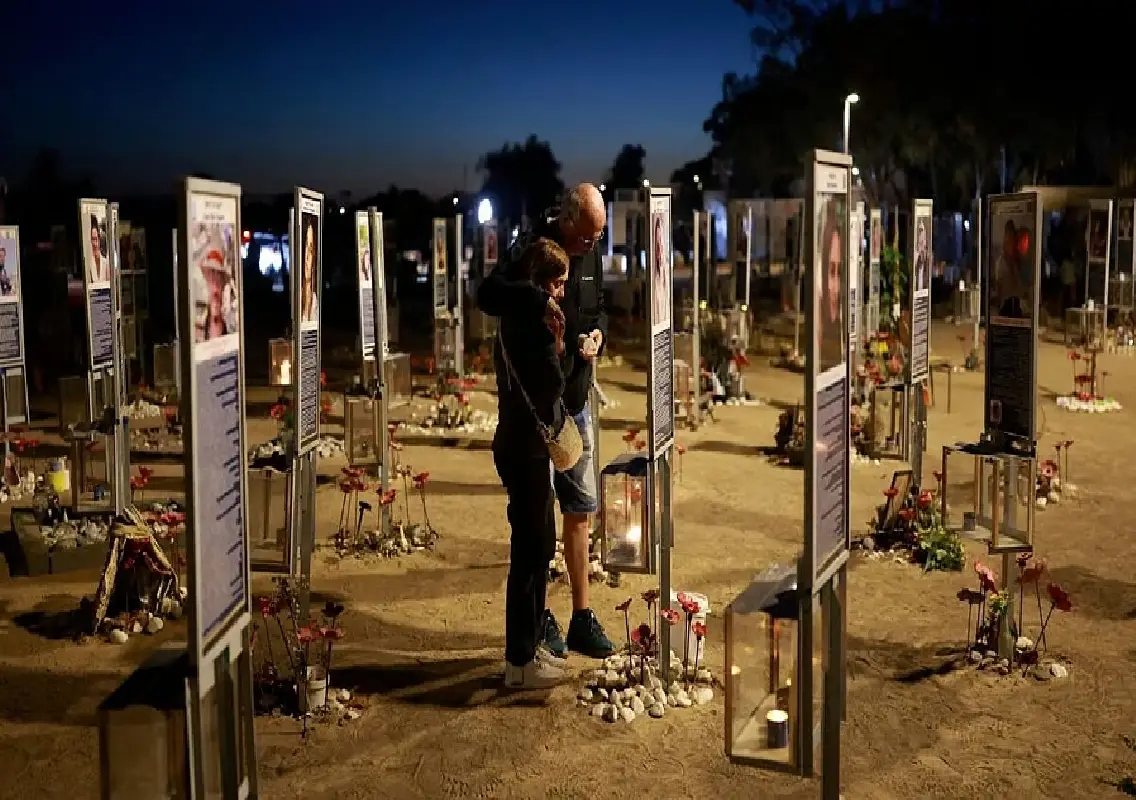


Tel Aviv: Israel on Wednesday marked three years since the Hamas-led October 7, 2023, attack that killed about 1,200 people and resulted in 251 hostages being taken to Gaza, as the country prepares for its first national election since the attack.
Memorial events are being held across Israel, including a vigil near the site of the Nova music festival, where hundreds were killed during the assault, and a commemoration at Hostage Square in Tel Aviv.
This year’s anniversary is the first since all Israeli hostages have either been released or their remains recovered. The remains of the last Israeli hostage were recovered in January, ending a prolonged period in which families continued to campaign for the return of those held in Gaza.
Anniversary comes ahead of crucial election
The anniversary comes just 20 days before Israel’s October 27 general election, the first national vote since the October 7 attack and the war that followed. The conflict and the government’s handling of the security failure remain major issues in the campaign.
Prime Minister Benjamin Netanyahu has rejected responsibility for the security lapse and has resisted calls for an independent investigation. The issue has remained contentious among families of those killed in the attack and others who have criticised the government’s handling of the crisis.
Several people directly affected by the October 7 attack are also contesting the election. Reuters reported that at least nine Israelis from families directly caught up in the attack are running for parliament, with candidates spanning different political positions.
The October 7 attacks have consequently become an important factor in the election campaign. A recent Israel Democracy Institute poll found that 68% of Jewish Israelis surveyed considered the events of October 7 very or fairly central to their decision about which party to support.
Fragile ceasefire has not ended violence
The anniversary is also the first since a US-brokered ceasefire that took effect on October 10, 2025. The agreement resulted in the release of the remaining hostages and hundreds of Palestinian prisoners and detainees, while initially reducing the intensity of the fighting.
However, the ceasefire has not resolved the central disputes over Hamas’ disarmament, Israeli troop withdrawals and Gaza’s future governance. Israeli forces have continued military operations in Gaza despite the ceasefire, while Israel and Hamas remain divided over the next stage of the agreement.
Under the initial phase of the agreement, Israel retained control of roughly 53% of Gaza. Israeli forces have since expanded their effective control to around two-thirds of the territory, according to Reuters. Hamas continues to control the remaining areas, where much of Gaza’s population lives amid extensive destruction and displacement.
Civilian toll remains a major concern
Israeli strikes have continued in Gaza, with Israel saying its operations are aimed at Hamas militants and accusing the group of attempting to rearm and conduct attacks.
Gaza health authorities, however, say the continuing strikes have killed many civilians. According to figures cited by Reuters, more than 1,400 Palestinians have been killed in Gaza since the October 2025 ceasefire. The Gaza health authorities’ figures do not distinguish between civilians and combatants. Five Israeli soldiers have also been killed in fighting or attacks since the ceasefire, according to the Israeli military.
Humanitarian conditions remain severe. Large numbers of Palestinians continue to live in tents or damaged buildings, while reconstruction has made limited progress. A proposed reconstruction fund of $2.45 billion is far below the estimated $71.4 billion required for Gaza’s recovery and reconstruction over the next decade.
Unresolved questions shape Israel’s future
Three years after the attack, Israel is therefore entering its election season with several unresolved questions surrounding security, accountability, Gaza’s future and the country’s political leadership.
The October 7 anniversary has become both a day of remembrance for those killed and a moment of renewed debate over the decisions that preceded the attack and the government’s response to its aftermath.
With the election scheduled for October 27, the continuing Gaza conflict and the events of October 7 are likely to remain central issues for Israeli voters as the country weighs its next political direction.